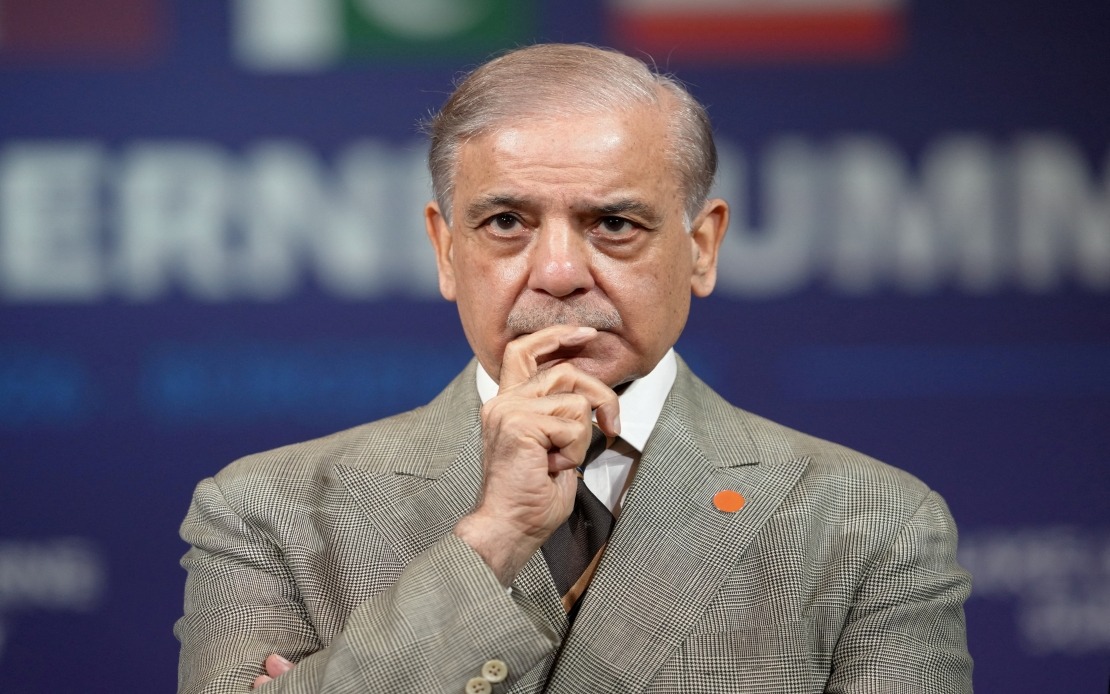
Pakistan and Turkiye have moved to strengthen their bilateral economic relationship, with Prime Minister Shehbaz Sharif and President Recep Tayyip Erdogan reaffirming their commitment to deeper cooperation during high-level talks held in Istanbul on Saturday. The meeting represented an important moment for both nations to chart a more ambitious course on trade and investment, moving beyond traditional political ties to forge concrete commercial partnerships that could reshape their regional standing.
Shehbaz's visit to the Turkish capital was marked by substantive engagement with both government officials and the Turkish private sector, underscoring Islamabad's determination to translate diplomatic goodwill into measurable economic outcomes. Beyond his discussions with Erdogan on broader bilateral and regional matters, the Pakistani premier addressed a Pakistan-Turkiye business conference that brought together significant Turkish industrial players, signalling that this partnership would be built on genuine commercial foundations rather than symbolic gestures alone.
Central to the discussions was an ambitious trade target of $5 billion annually, a figure that would represent a substantial leap from current levels and reflect the scale of opportunity both nations see in deepening their economic relationship. The two governments identified several priority sectors for cooperation, including energy, transportation, critical minerals, and digital technologies—areas where both nations possess complementary strengths and where the geopolitical landscape makes regional partnerships increasingly valuable for enhancing resilience and reducing external dependencies.
Among the more forward-looking initiatives discussed was Shehbaz's proposal to establish a Pakistan-Turkiye digital corridor, a concept that speaks to contemporary priorities around digital infrastructure and cross-border data flows. During a separate meeting with Turkcell chief executive officer Ali Taha Koc, the Prime Minister's Office indicated that this digital corridor would aim to strengthen regional connectivity while maintaining security standards for sensitive data movements. The initiative suggests both nations recognise that twenty-first-century economic competition increasingly centres on digital capabilities and that building integrated digital ecosystems could provide mutual advantages.
Pakistan's diplomatic delegation to the Istanbul talks was notably comprehensive, reflecting the breadth of the economic engagement. Deputy Prime Minister and Foreign Minister Ishaq Dar joined ministers responsible for maritime affairs, power generation, petroleum resources, privatisation, information technology, and telecommunications in separate discussions with Turkish counterparts. This multi-sectoral approach indicates that Islamabad is viewing its relationship with Turkiye not as a single-issue partnership but as a multifaceted engagement spanning the full spectrum of modern economic activity.
The Turkish companies that participated in these discussions represented some of the nation's most significant industrial and commercial interests. Koc Holding, the sprawling conglomerate that dominates Turkey's private sector, alongside Arcelik, a major home appliances manufacturer with considerable regional presence, Aygaz in gas distribution, and Demir Export all engaged directly with Pakistani officials. The participation of these heavyweight firms underscores that the Turkish business establishment views Pakistan as a market and partner worthy of serious strategic investment and operational expansion.
For Malaysian observers, this Pakistan-Turkiye economic push carries several implications. Both nations are seeking to establish regional hubs and corridors that could potentially influence broader Southeast and South Asian connectivity patterns. Pakistan's push for digital infrastructure partnerships mirrors efforts across the region to build indigenous technological capabilities and reduce reliance on external digital ecosystems, a priority that Malaysia has similarly emphasised through various initiatives. The success or failure of this Pakistan-Turkiye digital corridor will likely inform approaches to regional digital cooperation more broadly.
The focus on energy cooperation is particularly noteworthy given current global energy dynamics and the increasing importance of diversified supply chains. Pakistan faces substantial energy challenges that have constrained economic growth, while Turkiye occupies a strategic position in global energy flows. Cooperation between them on energy infrastructure and critical minerals could reshape supply chain patterns in the region, potentially creating opportunities or competitive pressures for other nations including Malaysia, which has its own energy and minerals interests to protect.
The business conference discussions around manufacturing and industrial investment suggest both nations see mutual benefit in integrating their production capabilities. This moves beyond simple trade in finished goods to deeper value chain integration, a model that has proven successful in other regions and could enhance competitiveness for both Pakistan and Turkiye in global markets. Such industrial partnerships, if successfully developed, could create demonstration effects that influence how other South and Central Asian nations approach economic cooperation.
The breadth of sectors covered—from traditional areas like energy and transportation to emerging domains like digital technologies—indicates that both nations are thinking comprehensively about their economic future. Rather than pursuing narrow sectoral advantages, they appear committed to building a diversified partnership that can withstand sectoral shocks and create resilience through economic interdependence across multiple dimensions.
For Pakistan specifically, deepening ties with Turkiye offers access to Turkish manufacturing expertise, investment capital, and technological capabilities. For Turkiye, Pakistan represents a gateway to South Asian markets and a chance to expand its commercial footprint beyond its traditional Middle Eastern and European spheres of influence. This mutual value creation dynamic suggests the partnership has genuine foundations and is unlikely to remain merely aspirational.
The $5 billion annual trade target, while ambitious, is not unprecedented among developing nations that have made deliberate strategic choices to integrate their economies. Whether Pakistan and Turkiye can achieve this goal will depend heavily on follow-through implementation, regulatory harmonisation, and sustained political commitment from both sides. The depth of engagement demonstrated during Shehbaz's Istanbul visit suggests that both governments are serious about moving beyond rhetoric, though time will ultimately judge whether these pledges translate into the sustained economic cooperation that transformative partnerships require.

