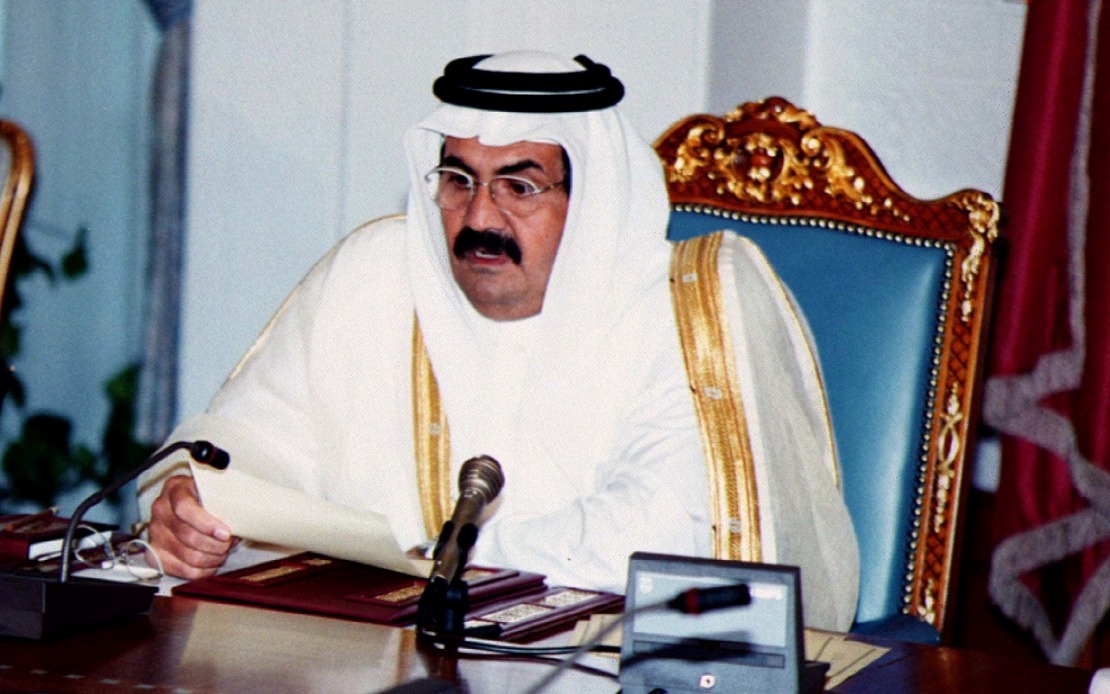
Pakistan's Prime Minister Shehbaz Sharif and Maldives President Mohamed Muizzu have journeyed to Qatar to express their condolences to Qatari Emir Sheikh Tamim Bin Hamad Al Thani and the royal family following the death of former Emir Sheikh Hamad Bin Khalifa Al Thani. The visits underscore the regional significance of the late emir's tenure and the diplomatic ties binding the Gulf state to South Asia and the Indian Ocean region.
Shehbaz Sharif's one-day visit includes a substantial delegation reflecting the importance Pakistan attaches to the occasion. Accompanying the Prime Minister are his elder brother Nawaz Sharif, who previously served as Prime Minister of Pakistan, as well as Deputy Prime Minister and Foreign Minister Senator Ishaq Dar and Information Minister Attaullah Tarar. The composition of the delegation signals both familial continuity and governmental representation at the highest levels.
Sheikh Hamad Bin Khalifa Al Thani, who passed away at the age of 74 on Sunday, steered Qatar through a transformative period spanning nearly two decades. During his reign from 1995 until his abdication in 2013, he oversaw the nation's emergence as a major regional and global player. His leadership coincided with Qatar's petrochemical expansion, the establishment of Al Jazeera as an influential media network, and preparations for hosting the FIFA World Cup.
The late emir's modernisation agenda left an indelible mark on Qatar's institutions and international standing. Leaders worldwide have acknowledged his role in positioning the Gulf state on the world stage through economic diversification, educational advancement, and diplomatic engagement. The condolences pouring in from governments across continents reflect recognition of his influence beyond the Arabian Peninsula.
Both Pakistan and India have declared Monday a day of national mourning, demonstrating the respect accorded to Sheikh Hamad across South Asia. This gesture indicates that his contributions extended beyond Gulf cooperation frameworks to encompass broader relationships with major Asian powers. Such formal recognition carries weight in diplomatic circles and underscores the interconnected nature of contemporary regional politics.
Maldives President Mohamed Muizzu emphasised that Sheikh Hamad's legacy would endure for generations. The Maldivian leader highlighted the former emir's transformative work not only for Qatar but also for the broader Arab and Islamic world. This framing positions Sheikh Hamad as a figure whose influence transcended national boundaries, shaping discourse and development across diverse Muslim-majority nations.
Bangladesh Prime Minister Tarique Rahman similarly articulated the late emir's multifaceted contributions in a formal message to the current Qatari leadership. Rahman specifically referenced Sheikh Hamad's work in regional peace initiatives, economic advancement, educational reform, and international cooperation frameworks. These pillars of his legacy demonstrate how his vision extended across numerous spheres of national and international concern.
The economic dimension of Sheikh Hamad's rule proved particularly transformative for Qatar. His administration leveraged natural gas reserves and sovereign wealth accumulation to fund infrastructure projects, establish world-class universities through branch campuses in Education City, and secure hosting rights for major international events. These investments created lasting institutional foundations that continue shaping Qatar's trajectory under his successors.
For Malaysia and Southeast Asia, Sheikh Hamad's passing marks the end of an era defined by Gulf-Asia engagement that he helped facilitate. Qatar's expansion into Asian markets, its investments in regional education, and its diplomatic presence grew substantially during his leadership. The visit by Pakistani and Maldivian delegations reflects how regional powers view Qatar's continued significance under new leadership, particularly regarding economic partnerships and Islamic world coordination.
The diplomatic visits also serve a forward-looking function beyond ceremonial condolences. They provide opportunities for bilateral discussions with the new leadership while reaffirming long-standing relationships. For countries like Pakistan and Maldives with strategic interests in the Gulf, these occasions facilitate policy continuity and relationship renewal at leadership levels.
Sheikh Hamad's abdication in 2013, though signifying the end of his direct rule, did not diminish his stature within Qatar or regionally. His transition of power to his son Sheikh Tamim established a precedent for orderly succession within the Al Thani family. The current emir has continued many of his father's initiatives while charting his own course on regional and international issues.
The international response to Sheikh Hamad's death, evidenced by these high-level visits and formal condolences, reflects his standing as a moderniser who successfully navigated Qatar's transformation while maintaining regional stability. His influence on Gulf Cooperation Council dynamics, Arab League deliberations, and broader Islamic world affairs created networks of relationships that extend beyond government structures.
As Pakistan, Maldives, and other nations pay their respects, the global community acknowledges not merely a national leader but a figure who shaped broader regional dynamics during a critical period of geopolitical realignment in Asia and the Middle East. The visits signal that relationships forged during his tenure remain valuable for all parties engaged in the complex architecture of contemporary international relations.

