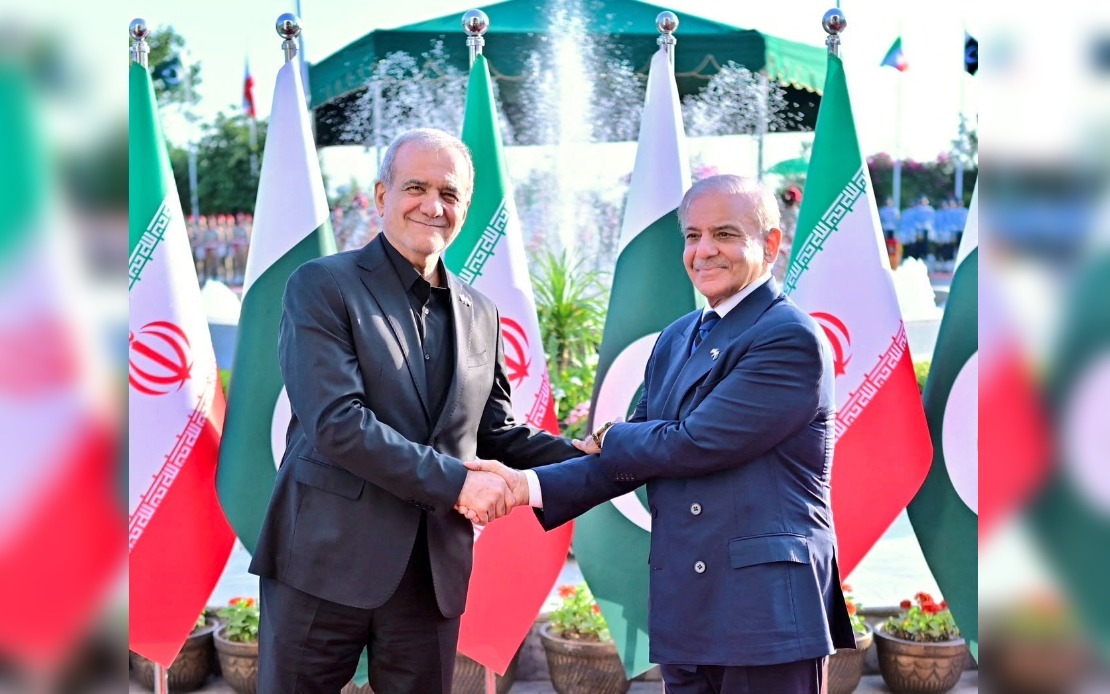
Officials from Pakistan and Iran have entered substantive discussions about restarting the Islamabad-Tehran-Istanbul freight train corridor, a strategically important cross-border transport link that could reshape trade patterns across South Asia, the Middle East and onwards to Central Asia. The renewed momentum came during high-level talks in Islamabad between Pakistan's Railway Minister Muhammad Hanif Abbasi and Iranian Interior Minister Eskandar Momeni, signalling both nations' commitment to unlocking the economic potential of the route.
The ITI service represents far more than a simple goods transport mechanism. By connecting three major regional players—Pakistan, Iran and Türkiye—the corridor would create a physical bridge linking South Asia's export markets with European and Central Asian buyers, potentially reducing shipping times and costs for merchants navigating traditional maritime routes. For Malaysia and other Southeast Asian trading nations, such developments underpin the broader architecture of regional supply chains and cross-continental commerce that increasingly defines global logistics.
The historical context illuminates current challenges. The cargo train service had already demonstrated viability, resuming operations in December 2021 after lying dormant for a decade, yet operational difficulties forced its suspension just months later in 2022. These earlier obstacles—encompassing logistical bottlenecks, technical coordination failures, and procedural complications—remain unresolved, making the current diplomatic engagement a genuine test of whether both nations can address systemic infrastructure and bureaucratic hurdles that derailed previous attempts.
Pakistan's commitment to the project extends beyond diplomatic rhetoric. The country is undertaking substantial capital investment in its Main Line-3 corridor, the critical railway artery linking the provinces of Sindh and Balochistan and serving as the fundamental transport spine connecting Pakistan with Iran. Railway Minister Abbasi outlined an ambitious timeline, with construction commencing in the current fiscal year and completion targeted for December 2029. This multi-year, multi-billion rupee investment demonstrates Islamabad's serious intent to position itself as a transit hub between South Asian production centres and markets further west.
Iran's contribution to the partnership mirrors Pakistan's infrastructure ambitions. Officials indicated that Iran expects to complete modernisation of the Zahedan–Mirjaveh railway within approximately one month, addressing long-standing technical deficiencies that hampered previous operations. However, Iran has simultaneously placed expectations on Pakistan to complete its own section of the standardised rail line running from Mirjaveh to Taftan in Balochistan. This mutual dependency underscores both the opportunity and fragility of cross-border transport partnerships, where one nation's delays automatically compromise the other's economic returns.
The timing of these discussions reflects shifting geopolitical realities in South and Southwest Asia. With traditional shipping routes facing vulnerabilities and regional nations seeking alternative pathways to global markets, overland corridors through Pakistan and Iran gain strategic importance. For Malaysia, whose economy depends heavily on maintaining diverse and resilient supply chain networks, such developments carry indirect significance—successful implementations of ITI could reshape how goods move between Asia's eastern and western peripheries.
From an economic perspective, the corridor promises substantial benefits for participating nations. Pakistan stands to leverage transit fees and logistics services, transforming its geographic position from a peripheral location to a central node in Eurasian trade. Iran gains market access to South Asian consumers and producers while establishing itself as a crucial connector to Central Asia and Russia. Türkiye's participation completes a three-nation consortium capable of channelling commerce across three distinct geopolitical regions.
Yet obstacles remain formidable. Beyond infrastructure deficits, the corridor must navigate complex regulatory environments, security concerns in Balochistan, currency conversion challenges, and potential sanctions considerations that affect Iran's international commerce. Sectarian and ethnic tensions within the Pakistani province of Balochistan have historically disrupted transport infrastructure, and no Pakistani-Iranian agreement can unilaterally resolve these domestic security challenges. These realities suggest that even successful infrastructure completion may not automatically translate into sustained, high-volume freight movement.
The discussions also reveal an implicit understanding that enhanced rail connectivity requires holistic cooperation spanning customs procedures, weight standards, tariff harmonisation, and real-time information systems. Minister Abbasi and Minister Momeni's meeting addressed these broader dimensions of bilateral railway cooperation and cross-border integration, indicating awareness that physical tracks represent merely the foundation for functional commerce. Establishing mutually recognised standards and efficient border crossing protocols will prove equally crucial to infrastructure completion.
For Southeast Asian observers and stakeholders, the ITI corridor's development carries lessons about regional integration's prerequisites and constraints. The project demonstrates how transportation corridors require sustained political commitment, substantial capital deployment, and pragmatic problem-solving across multiple sovereign entities. It also illustrates the vulnerabilities inherent in overland routes dependent on stable governance and security conditions across intermediate territories.
Looking forward, the December 2029 completion target for Pakistan's Main Line-3 represents the critical path item. If both nations maintain momentum and overcome the technical, financial and security obstacles that stymied previous efforts, the ITI service could genuinely transform regional commerce. Conversely, further delays or suspensions would underscore the persistent challenges that complicate regional integration in Asia, offering cautionary lessons for other cross-border infrastructure initiatives across Southeast Asia and the broader Indo-Pacific region.

