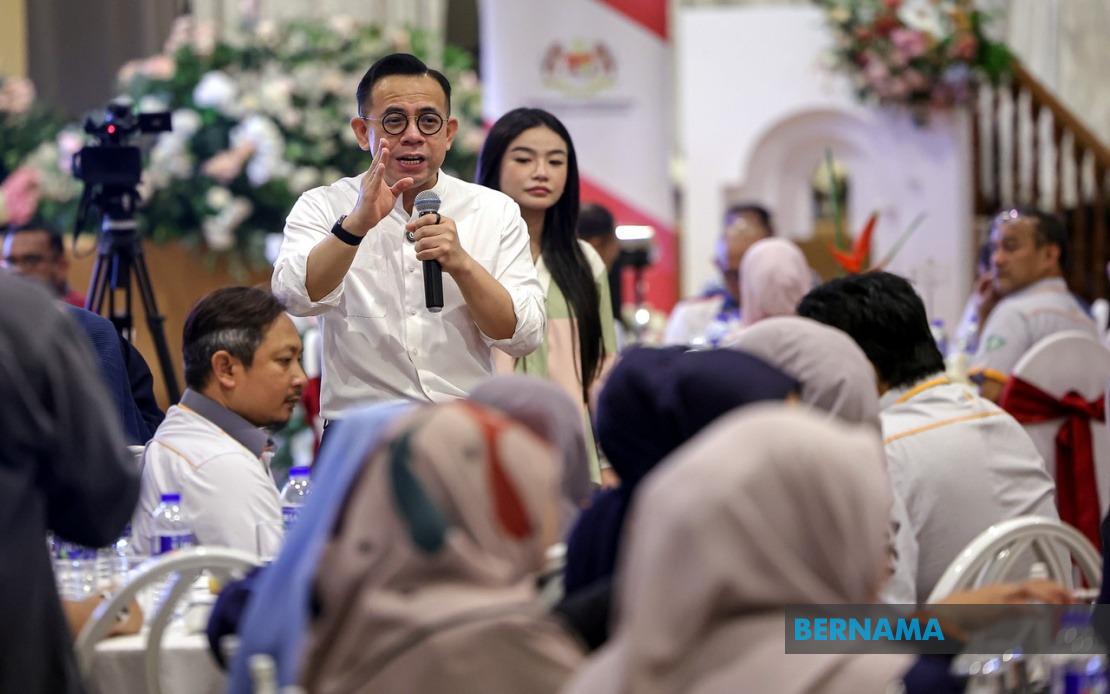
Pakatan Harapan is positioning its manifesto for the upcoming 16th Negeri Sembilan state election as fundamentally different from typical campaign promises—a document grounded in measurable achievements and sustained governance rather than aspirational rhetoric. Speaking in Seremban on July 21, Penang DAP chairman Steven Sim argued that the coalition's credibility rests on its ability to point to concrete results delivered by Menteri Besar Datuk Seri Aminuddin Harun's administration over its tenure in office.
The distinction Sim drew between manifesto and reality reflects a strategic calculation by PH as it prepares for voting on August 1, with early polling set for July 28. In a political landscape where voter scepticism towards campaign pledges remains persistent across Malaysia, the coalition is attempting to reframe the conversation away from what it promises to do and towards what it has already accomplished. This approach acknowledges that many Malaysian voters, particularly in states with established governance records, increasingly evaluate politicians based on demonstrated competence rather than rhetorical flourishes.
Sim's emphasis on "experience and proven achievements" carries particular weight in Negeri Sembilan, where the incumbent administration has had sufficient time to implement policies and measure their effectiveness. Rather than presenting the manifesto as an entirely new vision, PH characterises it as an evolution of successful programmes—an enhancement of what is already working rather than a wholesale departure from current directions. This continuity narrative appeals to voters who value stability and incremental improvement over revolutionary change.
The manifesto's 10 commitments deliberately connect to existing initiatives, creating a narrative of unfinished business and accumulated momentum. By framing the document as a continuation strategy, PH attempts to neutralise a common criticism levelled at any incumbent government: that it has exhausted its ideas or lost momentum. Instead, the coalition suggests that re-election would simply allow proven approaches to mature and expand. This framing also implicitly warns against the disruption that a change in state government might entail, a consideration that resonates with voters concerned about policy consistency.
Minister of Entrepreneur Development and Cooperatives Steven Sim highlighted one specific manifesto commitment—the establishment of a youth entrepreneurs fund (TUB)—as emblematic of this approach. The fund falls under his ministry's portfolio, allowing him to position it as an extension of work already underway rather than a novel idea being introduced for electoral purposes. This grounding of manifesto commitments in existing ministerial mandates and institutional capacity strengthens PH's claim that the promises are achievable rather than theoretical.
Federal support for Negeri Sembilan's economic development would deepen if PH retains control of the state government, Sim indicated, signalling that alignment between state and federal administrations yields tangible benefits. This messaging carries implications for voters evaluating their ballot choice. A vote for PH at the state level, the argument suggests, translates into enhanced access to federal resources and coordination—a practical consideration that transcends ideological preference. The availability of federal backing for state-level priorities like entrepreneurship and cooperative development represents a material advantage that opposition parties cannot readily replicate.
The emphasis on economic development and entrepreneurship reflects PH's assessment of voter priorities in Negeri Sembilan. Rather than focusing predominantly on traditional themes like education or healthcare, the manifesto prioritises business enablement and job creation, particularly for younger demographics. This targeting suggests demographic analysis indicating that economic opportunity and youth employment constitute primary concerns for the state's electorate. The youth entrepreneurs fund specifically addresses a gap where young Malaysians struggle to access startup capital and mentorship, issues that resonate across urban and semi-urban constituencies.
Sim's insistence that PH's manifesto delivers benefits that are "tangible, not merely reflected in figures and slogans, but truly felt by the people" represents an attempt to shift discussion from aggregate statistics to individual household impact. Governments often tout economic growth rates or infrastructure projects without clearly connecting these achievements to daily lived experience. By invoking what Negeri Sembilan residents actually perceive and experience, Sim implicitly critiques opposition framing that might question whether state-level governance has genuinely improved ordinary citizens' circumstances. The challenge for PH lies in substantiating this claim through voter testimony and observable improvements rather than relying solely on official metrics.
The timing of the manifesto launch and Sim's tour of state institutions suggests a coordinated campaign strategy designed to reinforce the narrative of continuity and institutional capacity. By announcing commitments at ministerial assemblies and institutional gatherings, PH embeds its campaign message within bureaucratic and administrative contexts, suggesting that the manifesto enjoys institutional legitimacy and feasibility. Civil servants and agency staff attending such events become implicit endorsers of the coalition's programme, their presence at these announcements signalling organisational readiness to implement promised initiatives.
For Malaysian voters observing this election from other states, the PH strategy offers a template for how incumbent parties attempt to consolidate power: by converting track record into electoral currency, by positioning existing programmes as evidence of competence, and by leveraging federal-state alignment for perceived mutual benefit. Whether this approach proves persuasive depends significantly on whether Negeri Sembilan voters perceive the state government's actual performance as commensurate with PH's claims. Voter satisfaction with services, employment conditions, and infrastructure quality will ultimately determine whether the manifesto's grounding in "proven achievements" resonates or rings hollow.

