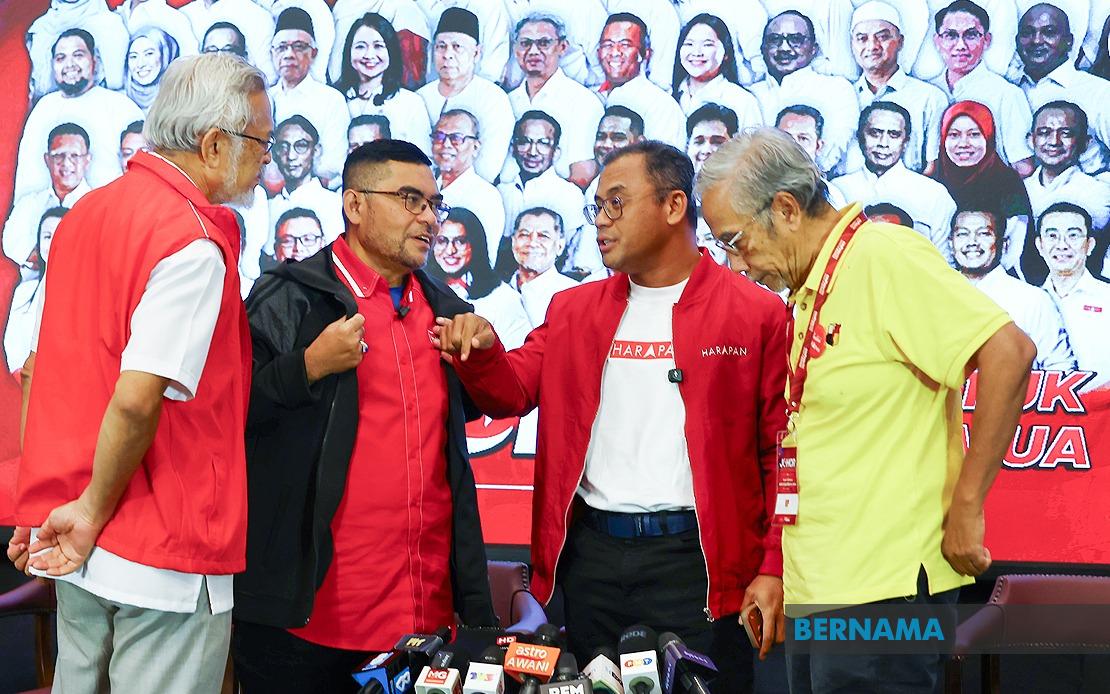
Pakatan Harapan's leadership has committed to a detailed examination of its performance in the Johor state election, using the findings to recalibrate its approach for the coming Negeri Sembilan contest. Speaking at the opposition coalition's operations centre in Johor Bahru on the evening of the polls, Selangor Menteri Besar Datuk Seri Amirudin Shari signalled that PH would conduct an extensive post-mortem within days, recognizing that a sophisticated understanding of what went wrong—or right—would be essential for the next electoral battle in Malaysia's small but strategically important central state.
The Johor election, held as the 16th state poll in the sultanate, dealt Pakatan Harapan another setback in a region where it has struggled to maintain traction against Barisan Nasional's entrenched machinery. As results accumulated through the night, Barisan Nasional secured 29 of the 56 state seats, giving the government coalition a commanding majority exceeding 50 per cent of the chamber. For PH, the outcome underscored the persistent challenge of translating federal-level support—evident in Datuk Seri Anwar Ibrahim's appointment as Prime Minister—into consistent performance at the state level, where local grievances and ground-level organization often override national narratives.
Amirudin, who also serves as PKR's election co-director, explicitly acknowledged that definitive conclusions about the Johor result could not yet be drawn, noting that several seats remained unconfirmed as the night progressed. This measured stance reflected both the ongoing counting process and a broader political calculation: rushing to blame specific factors—whether voter apathy, candidate quality, or organizational failure—could undermine morale within the coalition at precisely the moment unity was needed. Instead, he emphasized the importance of returning to granular data, examining voting patterns across individual polling streams to establish a factual foundation for strategic decisions. The emphasis on taking a week to fully digest the results suggested PH was preparing for a serious internal reckoning rather than a superficial damage-control exercise.
Among the specific areas PH intends to investigate are shifts in voter behaviour and the level of support the coalition attracted among younger Malaysian voters. These metrics matter considerably in contemporary Malaysian politics, where demographic change and generational attitudes towards governance have become increasingly important. Understanding whether PH lost youth support to Barisan Nasional or to lower turnout among that cohort would point towards fundamentally different remedies. If younger voters drifted to BN, it would suggest messaging or policy failures; if they simply stayed home, it would indicate mobilization shortcomings. For a coalition still rebuilding after the traumatic 2020-2023 period, when internal divisions and policy missteps damaged its brand, such diagnostic clarity could be the difference between recovery and continued decline.
Despite the Johor setback, PH has pinned considerable hopes on retaining Negeri Sembilan, where it currently holds the state administration. Amirudin expressed confidence in the state government's track record under Menteri Besar Datuk Seri Aminuddin Harun, suggesting that solid local governance and visible development achievements could insulate the state from broader anti-PH sentiment. Negeri Sembilan's relatively compact size and more manageable political landscape mean that a well-executed ground campaign and candidate selection process could yield better results than in larger, more fractious states. The coalition's decision to hold candidate selection discussions immediately after the Johor polls and before the official July 14 announcement date indicated a determination to learn from recent errors and field stronger, more locally rooted nominees.
The mechanics of PH's candidate selection process for Negeri Sembilan reveal broader tensions within the coalition about balancing internal party interests with the need to present a unified face to voters. With Amanah deputy president Datuk Seri Dr Mujahid Yusof Rawa, Amanah vice-president Datuk Dr Mohd Hatta Ramli, and Amanah Communications director Khalid Abdul Samad present at the Johor operations centre, the selection discussions were clearly shaping up as a multi-party negotiation. These dynamics can either strengthen the coalition by ensuring diverse interests are represented or weaken it through compromise candidates who satisfy no one fully. The tight timeline between the Johor election and the Negeri Sembilan announcement suggested PH was attempting to move quickly enough to maintain momentum while allowing sufficient time for deliberation.
From a federal perspective, Amirudin sought to reassure observers that state-level electoral volatility would not destabilize the government in Kuala Lumpur. He cited the commitment of all component parties—including Barisan Nasional—to preserve the federal administration until the Prime Minister chooses to dissolve Parliament. This statement reflected a notable evolution in Malaysian political culture: whereas past administrations might have been toppled by state-level losses triggering defections, the current configuration appeared more stable, with parties willing to compartmentalize state and federal contests. Yet the caveat that only the Prime Minister's decision would trigger fresh federal elections also underscored Anwar Ibrahim's centralized control of the governing timeline—a concentration of power that could prove either stabilizing or dangerously dependent on his personal longevity and political acumen.
The broader context for PH's Negeri Sembilan campaign involves understanding the state's specific political economy and voter priorities. Unlike Johor, which has seen substantial migration, urbanization, and economic diversification attracting younger, more volatile voters, Negeri Sembilan retains a somewhat more traditional political structure. Agriculture, small-scale business, and public sector employment remain important, and voter loyalty patterns are often more rooted in community relationships and historical allegiances. A state government that has delivered on basic services, infrastructure, and perceived fairness in resource distribution can accumulate considerable goodwill. Amirudin's invocation of Aminuddin's performance suggested PH intended to run on a development and competence platform rather than on ideological grounds—a pragmatic shift that might resonate in a state where voters prioritize tangible benefits over grand political narratives.
The Johor election also occurs within the context of Malaysia's longer-term political realignment. The fracturing of traditional BN dominance, the emergence of Perikatan Nasional as a competitive force in certain regions, and the persistence of state-level variation in party support all complicate national political projections. For Pakatan Harapan, each state election serves as both a test of whether the federal government's legitimacy and policy performance translate downward and an opportunity to demonstrate resilience after setbacks. Losing Johor was damaging; losing Negeri Sembilan would be far more so, as it would suggest that even states where PH currently governs cannot be held against organized opposition pressure. Conversely, a Negeri Sembilan win would provide crucial evidence that PH can retain ground where it has had time to govern and establish a record.
Looking ahead, the intensity with which PH is approaching the Negeri Sembilan election reflects a recognition that the coalition's political trajectory has not been assured. The euphoria that greeted Anwar Ibrahim's appointment as Prime Minister in late 2022 has gradually given way to more sobering assessments of the challenges facing the government. Economic pressures, persistent corruption allegations, internal coalition fissures, and the need to balance competing regional and communal interests have all taken their toll. State elections, far from being peripheral contests, have become crucial venues where the government's viability is tested and where opposition parties can demonstrate that federal power does not automatically translate into electoral dominance. PH's commitment to a thorough post-mortem of Johor and a sophisticated, data-driven approach to Negeri Sembilan reflects an organization learning—sometimes painfully—that Malaysian electoral politics demands constant adaptation and that taking voters for granted, regardless of national-level achievements, remains a recipe for defeat.

