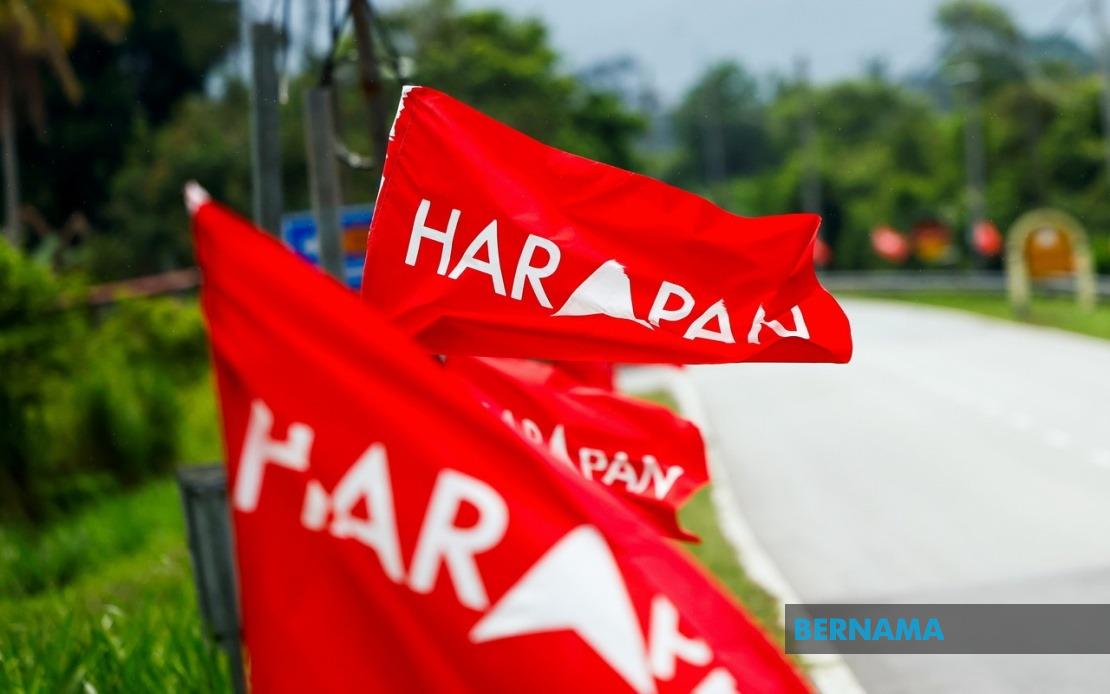
Pakatan Harapan is preparing to unveil its election manifesto for the 16th Negeri Sembilan state election, with the document set for presentation tomorrow evening. The coalition's manifesto strategy centres on consolidating the progress achieved under its administration since capturing the state government six years ago, according to Datuk Muhammad Zaki Md Sabri, the PH operations director for Negeri Sembilan.
The manifesto has undergone extensive development involving PH's senior leadership cadre, crafted to deliver tangible outcomes across both economic and social dimensions affecting ordinary citizens. Party officials stressed that the document represents a comprehensive blueprint rather than a collection of disconnected promises, reflecting the coalition's commitment to evidence-based policymaking. Senior party officials will attend the launching ceremony, though the specific venue and attendance details remain subject to formal announcement by PH's central secretariat.
Muhammad Zaki's emphasis on "continuity of the state's success and progress" signals PH's campaign positioning: rather than presenting a radical transformation agenda, the coalition is asking voters for validation of its existing track record. This approach reflects the broader challenge facing incumbent administrations in state-level elections across Malaysia, where voters must weigh demonstrated performance against opposition promises of change. For Negeri Sembilan specifically, the message frames governance as an extension of initiatives already underway rather than a fresh start.
The campaign has entered its second operational day, and PH operatives report satisfaction with their organisational readiness and logistical coordination. Early voter response appears favourable among local communities where PH candidates are canvassing, suggesting baseline support persists despite the competitive electoral environment. However, campaign dynamics remain fluid, with polling day still more than a fortnight away, providing ample time for political momentum to shift based on emerging issues or opposition messaging.
Muhammad Zaki has appealed for all participating parties to maintain campaign conduct standards that avoid inflammatory rhetoric or deliberate provocation. His specific reference to respecting sensitivities concerning religion, royalty, and race—commonly abbreviated as the 3R—reflects Malaysian electoral conventions that typically set boundaries around divisive identity politics. Such calls for restraint, while standard in formal political discourse, sometimes mask underlying tensions that emerge during campaigning as parties compete for votes in multiethnic constituencies.
The Negeri Sembilan State Legislative Assembly was dissolved on June 5, setting the election machinery in motion after lengthy political processes. The Election Commission has designated August 1 as polling day, with early voting opportunities scheduled for July 28 to accommodate military personnel, police staff, and their family members. This compressed timeline—roughly six weeks from dissolution to election day—creates intense pressure on party machinery to mobilise resources efficiently and reach dispersed voter populations across the state.
Nearly 890,000 registered voters are eligible to participate in this election, comprising 867,151 ordinary voters alongside 22,339 early voters from security forces and related households. This electorate size situates Negeri Sembilan as a mid-tier state election in terms of voter numbers, substantial enough to demand coordinated campaign infrastructure but manageable compared to larger peninsular states. The distribution of voters across diverse constituencies—spanning urban centres, suburban developments, and rural areas—requires campaigns to tailor messaging to locally relevant priorities.
For Pakatan Harapan, the Negeri Sembilan contest carries significance beyond the state itself. The coalition's performance here will contribute to broader perceptions about its viability as a national governing force, particularly given the complex landscape of Malaysian coalition politics where state-level results influence federal political calculations. A strong showing would reinforce PH's narrative of stable, competent governance; conversely, disappointing results would invite questions about its electoral momentum heading toward potential general elections.
The manifesto launch represents PH's opportunity to crystallise its campaign narrative into concrete commitments, moving beyond abstract appeals to demonstrate specific policy priorities and resource allocations. Voters will scrutinise not merely the ambitions articulated but the realism of proposed timelines and funding mechanisms. Given Malaysia's context of constrained state finances and competing demands from federal programmes, manifestos that acknowledge fiscal realities while offering tangible improvements tend to resonate more effectively than aspirational documents disconnected from practical implementation capacity.
Opposition parties contesting in Negeri Sembilan will likely present alternative manifestos highlighting different priorities or criticising PH's record. The resulting marketplace of competing visions should theoretically enable voters to make informed choices based on policy substance. Whether campaign debate actually achieves this depends partly on media coverage quality and voter engagement levels—factors that vary considerably across Malaysian constituencies. In practice, many voters make electoral decisions based on factors beyond manifesto content, including personality assessments of candidates, community relationships, and historical party loyalties.

