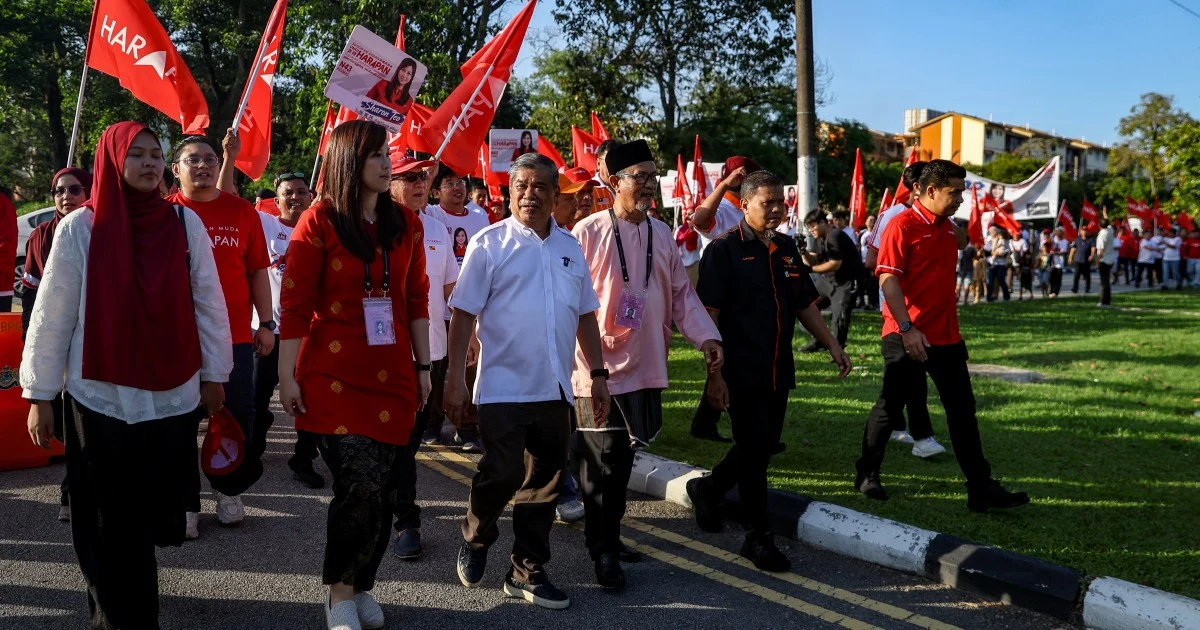
Sharon Teo, the Pakatan Harapan coalition's chosen candidate for the Permas state constituency, arrived at her nomination centre in Pasir Gudang to scenes of energetic grassroots support. The venue, Dewan Muafakat Taman Mawar, reverberated with chants from assembled coalition workers and supporters urging voters to back Pakatan Harapan in the upcoming Johor election. The display of vocal enthusiasm underscores the coalition's determination to reclaim ground in a state where it has faced significant electoral challenges in recent years.
The spirited reception for Teo reflects broader mobilisation efforts by Pakatan Harapan ahead of what promises to be a closely contested Johor election. Permas, located in the Pasir Gudang district within the industrial and heavily populated southern Johor region, represents a constituency the coalition has targeted as winnable given demographic shifts and changing voter sentiment. The nomination process itself serves as a crucial moment for candidates to galvanise their base and generate momentum heading into the campaign period.
Pakatan Harapan's electoral strategy in Johor has evolved considerably following its narrow defeat in the 2023 state election, when Barisan Nasional managed to secure a one-seat majority despite widespread expectations of a coalition breakthrough. The party leadership has invested significant resources in rebuilding its organisational machinery across the state, with particular focus on constituencies in the southern and central regions where urban voters and younger demographics present receptive audiences for the coalition's messaging.
The Permas nomination carries particular significance because it represents an area where socioeconomic issues—cost of living pressures, housing affordability, and industrial employment concerns—resonate strongly with local voters. Teo's candidacy reflects the coalition's broader effort to field candidates with credible connections to community needs and local issues. The energetic support witnessed at the nomination centre suggests that grassroots organisers have successfully mobilised party members and sympathetic voters around her candidacy.
Furthermore, the chanting of "Johor undi Pakatan Harapan" carries strategic messaging weight beyond the immediate moment. The slogan reinforces a coordinated campaign narrative that positions the coalition as the agent of change for Johor, contrasting with the incumbent administration's stewardship. This type of coordinated messaging during nomination events typically precedes intensified campaign activity, with campaign buses, roadshows, and grassroots engagement efforts ramping up substantially in the following weeks.
The visual spectacle of enthusiastic supporters at nomination centres has become an important element of Malaysian electoral politics, providing media-friendly imagery that parties leverage across social media platforms and traditional news outlets. For Pakatan Harapan, photographing and publicising the vocal backing for their candidates helps counter perceptions of organisational weakness and galvanises the broader base of party members and sympathisers. In a state where electoral margins have narrowed considerably, every demonstration of organised grassroots energy matters in the broader battle for narrative control.
Permas itself has been a competitive battleground in recent elections, reflecting the mixed political affiliations that characterise southern Johor constituencies. The Pasir Gudang district more broadly has experienced rapid demographic and economic changes, with substantial numbers of migrants and workers moving into the region to support the petrochemical and refining industries. These population movements have created electoral volatility, as newer residents do not necessarily maintain traditional voting patterns and are more receptive to messaging around bread-and-butter issues.
Teo's nomination also comes at a time when Pakatan Harapan is attempting to rebuild public confidence following governance challenges at the federal level. The coalition's performance in managing inflation concerns, energy costs, and healthcare access has drawn criticism from various quarters, creating headwinds for its messaging. Accordingly, state-level campaigns become critical opportunities to demonstrate responsive local governance and build political momentum that can assist federal efforts to recover electoral ground.
The nomination process itself involves formalised procedures requiring candidates to submit required documentation and obtain nominations from registered party members. The event thus serves multiple purposes simultaneously: it fulfils formal electoral requirements, provides a platform for public endorsement from the party machinery, and generates grassroots enthusiasm that can sustain campaign energy over the coming weeks and months. The vocal support captured at Teo's nomination reflects calculations by party organisers that visible demonstrations of unity and enthusiasm enhance candidate profile and broaden awareness among voters.
Looking ahead, the energy displayed at Permas will require translation into sustained canvassing effort, effective communication of policy positions, and credible engagement with constituent concerns if Pakatan Harapan is to convert enthusiasm into electoral gains. The nomination centre atmosphere provides a necessary foundation for campaign activities, but Johor elections ultimately turn on how effectively candidates and their teams connect with voters across neighbourhoods, markets, and community gathering points. The coming weeks will test whether this demonstrable grassroots energy can translate into the kind of sustained voter contact effort needed to shift electoral dynamics in the coalition's favour.

