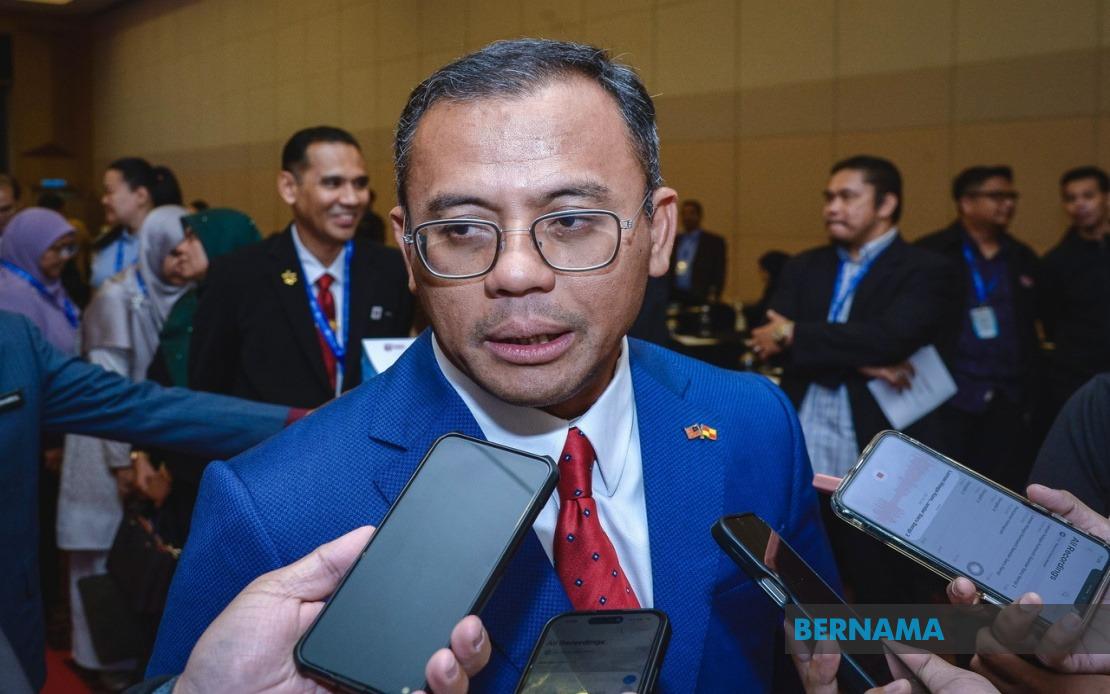
Pakatan Harapan remains willing to explore political cooperation with other parties and coalitions provided such arrangements serve two fundamental objectives: maintaining political stability and advancing the public interest. This position was outlined by Datuk Seri Amirudin Shari, a member of PH's Presidential Council and vice-president of PKR, during remarks made in Bangi on August 10.
Amirudin's statement reflects a pragmatic stance towards coalition-building in Malaysia's fluid political landscape. Rather than closing the door to potential partners, PH has established clear guardrails that would govern any future arrangements. The emphasis on stability and public welfare serves as a litmus test for evaluating overtures from other political entities, whether from Bersatu, Perikatan Nasional, or any other party seeking dialogue. This framework suggests PH recognises that political durability requires principled engagement rather than opportunistic alliances.
The timing of Amirudin's remarks is significant given recent media speculation about potential Selangor-level cooperation between PH and Bersatu. The Selangor Menteri Besar took the opportunity to categorically deny that any such arrangement had been formalised or even discussed at the state level. This clarification appears designed to quell rumours that might undermine party discipline or suggest that Selangor PH had unilaterally entered into commitments. By explicitly stating that no decisions involving Bersatu had materialised, Amirudin signalled that any strategic pivots would require consensus at the central leadership level rather than individual state initiative.
The distinction Amirudin drew between speculative commentary and substantive political engagement is important for understanding PH's internal governance. He acknowledged that external voices—whether from party members, observers, or stakeholders—frequently propose various political alignments. However, he made clear that such suggestions do not constitute policy or strategy unless they are formally evaluated and endorsed by PH's central command structure. This emphasis on institutional decision-making reflects awareness that premature or uncoordinated signals could complicate negotiations, alienate coalition partners, or create internal divisions.
Contextualising cooperation proposals within broader political cycles is another aspect of PH's cautious approach. Amirudin noted that decisions about working with other parties must account for the timing of elections and prevailing political conditions. The upcoming general election, state-level contests such as the Melaka state election, and other electoral contests create a complex strategic environment where partnerships might be tactical, temporary, or long-term depending on circumstances. This calculation requires deliberation beyond any single state or moment in time.
For Malaysian observers, PH's stance underscores the reality that coalition politics in the country has become increasingly fluid since the 2022 general election. Unlike the more rigid bloc politics of earlier decades, contemporary Malaysian politics sees frequent discussions about realignments, mergers, and cooperation frameworks. PH's willingness to engage in such conversations—while maintaining principled boundaries—represents an attempt to remain flexible without appearing unprincipled or desperate for power.
The reference to national-level political realignments provides broader context for understanding why such cooperation discussions emerge periodically. At the state level, circumstances may encourage or discourage working with particular partners. Selangor, as Malaysia's economically most significant state and a PH stronghold, represents a crucial asset that other coalitions might wish to access or constrain. Similarly, Melaka's electoral dynamics could prompt parties to explore novel configurations to strengthen their competitive positioning. Against this backdrop, PH's insistence that any cooperation be rationalised at the central level ensures that such strategic moves reflect coalition-wide interests rather than parochial state-level considerations.
The principle of evaluating cooperation through the lens of stability and public interest also carries implications for how PH differentiates itself from other coalitions. By making these criteria explicit, PH attempts to establish moral and political ground that contrasts with purely transactional or opportunistic alliances. This rhetorical positioning appeals to voters who value principled governance over naked power-seeking, though sceptics might question whether actual decision-making consistently reflects these stated values.
Amirudin's acknowledgment that he shares responsibility with central leadership reflects PH's collective decision-making culture, at least in its public articulation. In practice, this means that Selangor, despite its significance, cannot unilaterally commit to major political arrangements. Such structures can either strengthen coalition coherence by preventing rogue actors or limit dynamism and responsiveness to local political opportunities. For Southeast Asian observers accustomed to more personalised or centralised leadership models, PH's emphasis on institutional consultation may appear refreshingly collegiate or frustratingly slow.
Looking ahead, PH's openness to cooperation—combined with its stated principles—suggests the coalition intends to remain a central player in Malaysian politics rather than retreating into opposition rigidity. However, the implementation of these principles will ultimately determine whether such flexibility strengthens PH's long-term viability or merely postpones difficult decisions about its coalition's fundamental direction and purpose.

