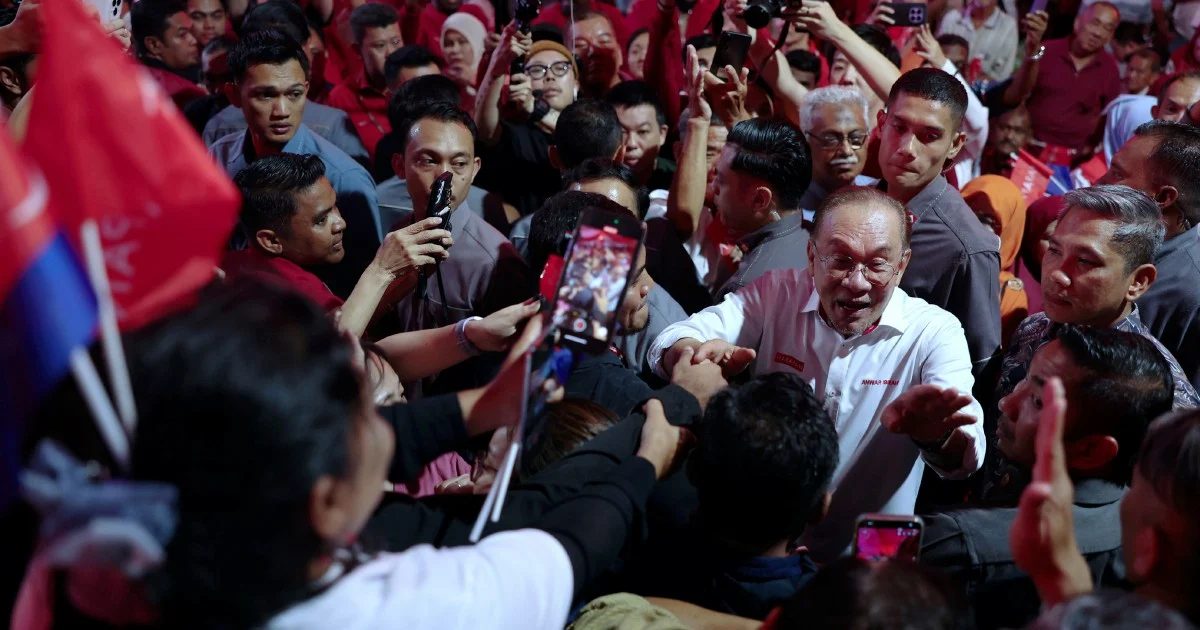
Pakatan Harapan made its formal campaign declaration for the upcoming Johor state election with coalition chairman Datuk Seri Anwar Ibrahim presenting the complete roster of 56 candidates at an event in Tangkak. The announcement represents a critical moment in the opposition alliance's strategy to expand its electoral footprint beyond Penang and Selangor, two states where it currently holds executive authority.
Johor holds considerable strategic importance within Malaysian politics. The southern state has historically served as a stronghold for Barisan Nasional, particularly the United Malays National Organisation. Securing representation here would substantially strengthen Pakatan Harapan's claim to be a credible alternative government capable of winning beyond peninsular heartlands. The July 11 election date provides the coalition with a compressed campaign window to mobilise voters and challenge established power structures in a state where traditional politics remains deeply entrenched.
The unveiling of a full candidate slate signals that Pakatan Harapan has moved beyond preliminary discussions and entered active contestation mode. Fielding candidates across all contested seats demonstrates organisational capacity and commitment to the electoral process. The composition of the 56-candidate list likely reflects internal negotiations among the coalition's constituent parties—primarily the Democratic Action Party, Amanah, and the People's Justice Party—each seeking to maximise their respective representation while maintaining coalition unity.
Anwar Ibrahim's personal involvement in the candidate announcement underscores the political weight attached to this election. As Prime Minister, his presence adds gravitas to the campaign and signals that Putrajaya views the Johor contest as significant beyond state-level politics. His leadership of the coalition carries implications for national political trajectories, particularly regarding the sustainability of the current federal government and the balance of power in Parliament.
For Malaysian voters in Johor, the election presents an opportunity to assess whether Pakatan Harapan's governance model in Penang and Selangor translates successfully across different demographic, economic, and cultural contexts. The state's industrial base, port facilities, and geographical proximity to Singapore make it economically distinct from other states, potentially affecting voter priorities regarding economic management and development policies.
The timing of Johor's election reflects broader electoral calendars across Malaysia. States holding elections within compressed timeframes create momentum for particular coalitions and provide opportunities for national narratives to dominate local campaigns. Voters in Johor will inevitably consider national political dynamics alongside state-specific issues when casting ballots.
Pakatan Harapan's candidate selection process carries internal political significance for coalition dynamics. The distribution of candidacies among member parties influences their relative bargaining power within the alliance. Parties securing larger slates can claim greater mandate from voters, potentially translating into enhanced ministerial positions or policy influence should the coalition succeed electorally. The candidate announcement thus simultaneously serves as an internal message to coalition members about perceived institutional strength and external positioning against rivals.
Opposition politics in Malaysia traditionally faces structural disadvantages including media access disparities and incumbent resource advantages. Johor's electoral terrain presents particular challenges given historical voting patterns and established political networks favouring incumbent powers. Pakatan Harapan's capacity to overcome these obstacles will depend partly on campaign effectiveness, partly on voter sentiment regarding national governance, and partly on the appeal of individual candidates to their respective constituencies.
The opposition coalition's performance in Johor will provide valuable data about electoral dynamics in states beyond its current strongholds. Success would validate claims about broadening appeal; underperformance would suggest persistent geographic limitations to coalition support. Either outcome carries implications for federal political stability and the viability of alternative governance arrangements heading toward the next general election.
Voter engagement in Johor assumes heightened importance given the state's population size and economic contribution to Malaysia's overall prosperity. The electorate's verdict on Pakatan Harapan's governance credentials and policy proposals will reflect broader public sentiment about the coalition's readiness for expanded responsibilities. Campaign messaging likely emphasises economic competence, anti-corruption credentials, and institutional reform—areas where Pakatan Harapan differentiates itself from traditional power brokers.
The July 11 election date provides a focal point for political mobilisation across southern Malaysia. Candidates nominated by Pakatan Harapan will require substantial organisational support from party machinery to achieve electoral success. The campaign period will determine whether the coalition can translate its federal position into state-level electoral gains or whether traditional voting patterns reassert themselves.