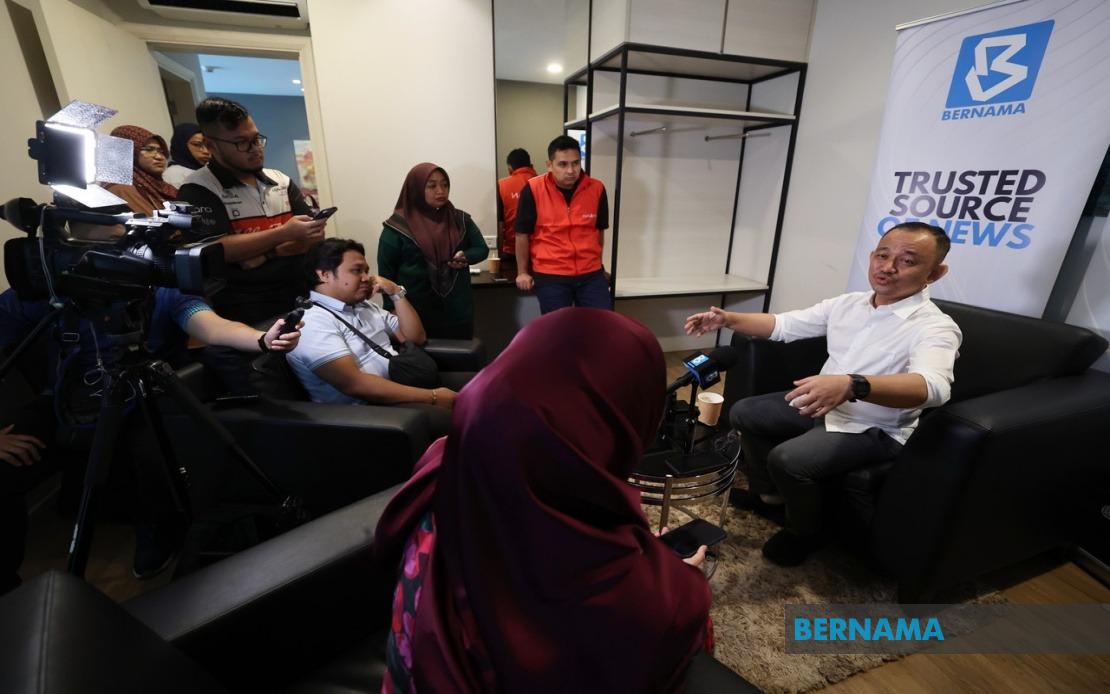
Pakatan Harapan has made clear its position on leadership selection for Johor, declaring that it will leave the critical decision of appointing the state's next Menteri Besar entirely in the hands of the Sultan of Johor should the coalition secure victory in the forthcoming state election. The statement came from PH's Puteri Wangsa candidate Dr Maszlee Malik during remarks made in Johor Bahru, effectively putting to rest speculation about succession planning that has circulated across social media and political commentary.
Maszlee's comments represent a deliberate distancing from the kind of pre-election jockeying that often characterises Malaysian state politics, where factions within coalitions frequently position preferred candidates for top positions before voters have even gone to the polls. By invoking the State Constitution and the Sultan's established prerogative, the coalition is attempting to present an image of institutional respect and deference to constitutional monarchy, a significant consideration in Johor given the historically strong role of the palace in state affairs.
The PH candidate emphasised that internal discussions within the coalition have not ventured into the territory of determining who should hold the Menteri Besar position. Instead, he indicated that the coalition's strategic focus remains entirely concentrated on mobilising a cohesive effort to deliver effective governance and public service to Johor residents. This messaging strategy reflects an attempt to shift electoral discourse away from personality-driven politics and towards policy platforms and institutional competence.
Maszlee's framing of the party's approach as a team-based initiative demonstrates how PH is seeking to neutralise potential internal tensions around leadership succession. By characterising all 56 candidates fielded by the coalition across Johor as equal contributors to a collective endeavour, PH hopes to avoid the divisive dynamics that emerge when particular individuals are publicly anointed as frontrunners for senior positions before elections conclude. The invocation of popular culture imagery through the "Avengers" reference attempted to inject contemporary resonance into this appeal for unity.
The constitutional dimension of Maszlee's statement carries particular weight in the Johor context. Unlike some Malaysian states where the Chief Minister selection process is more straightforward, Johor's constitutional arrangements vest considerable discretionary power in the Sultan to determine who shall serve as Menteri Besar, provided that person commands majority support in the State Legislative Assembly. This constitutional reality means that even a winning coalition cannot unilaterally impose its preferred candidate without palace concurrence.
Historically, Johor's monarchy has exercised this prerogative with deliberation and political acuity, sometimes selecting individuals who represent compromise solutions between competing factional interests within the government. By explicitly acknowledging the Sultan's role at this early stage, PH is positioning itself as a constitutionally aware and respectful political force, a positioning that may carry weight with both traditionalist voters and the palace itself. In a state where the institution of monarchy remains deeply embedded in political culture, such deference can translate into electoral advantage.
The timing of Maszlee's remarks, coming approximately two weeks before the scheduled July 11 polling date, appears strategically calculated. At this stage in a campaign, most political organisations are consolidating support and avoiding controversies that might undermine electoral momentum. By clarifying PH's stance on the Menteri Besar question before rather than after the election, the coalition addresses a potential source of voter concern—namely, doubts about whether the party would respect constitutional processes or seek to circumvent them through backroom dealings.
For Malaysian political observers and particularly those in Johor, these remarks carry implications beyond the immediate state election context. They suggest that PH, having experienced the consequences of political overreach and institutional tensions during its previous period of federal governance, has adopted a more cautious approach toward concentrating decision-making power within party structures. The emphasis on collective action and institutional respect reflects lessons learned from complex coalition management at both state and national levels.
The early voting scheduled for July 7, followed by general polling on July 11, will test whether PH's messaging resonates with Johor voters. The coalition's emphasis on team-based governance and respect for constitutional monarchical prerogatives may prove particularly effective in a state where such institutional traditions command substantial social respect. However, the ultimate test will come if PH wins sufficient seats to form government, at which point the Sultan's actual exercise of the appointment prerogative will either validate or complicate the coalition's carefully managed positioning on this sensitive matter.

