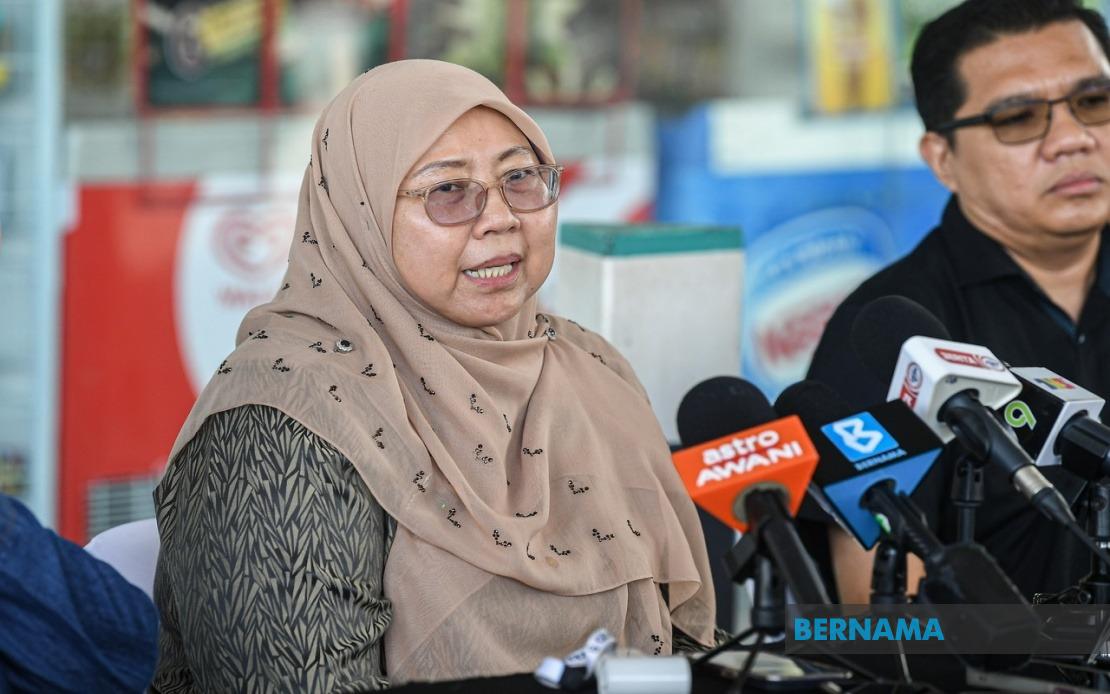
Pakatan Harapan is moving ahead with its Johor state election campaign unperturbed by what it characterises as isolated acts of vandalism, according to PKR secretary-general Datuk Fuziah Salleh. Speaking in Johor Bahru on July 2, Fuziah acknowledged that the coalition has experienced several minor incidents involving damaged posters, defaced billboards, and burned party flags across contested constituencies, yet maintained that these disruptions have not dented the ruling coalition's electoral momentum heading toward the July 11 poll.
The incidents, whilst noteworthy as potential signs of heightened political tensions, have not disrupted PH's organisational capacity or public reception, Fuziah stressed during remarks made at a petrol station event reviewing the Budi MADANI Diesel subsidy scheme. As Deputy Minister of Domestic Trade and Cost of Living, her presence underscored the government's focus on sustaining economic assistance programmes even as PH campaigns to retain control of Johor, one of Malaysia's largest and most politically significant states. The framing of these incidents as minor irritants rather than strategic threats reflects PH's confidence in its ground operations and voter base, though it also hints at the intensity of competition in a state where control has shifted multiple times over the past decade.
What distinguishes PH's response is its emphasis on the scale and vigour of its campaign machinery. Fuziah revealed that the coalition's candidates are maintaining exhausting schedules, attending up to 10 events daily from dawn until midnight across their respective constituencies. This relentless campaign tempo suggests PH is prioritising voter engagement and direct contact as its primary strategy, moving beyond digital and poster-based messaging. For a state like Johor, where traditional groundwork and personal relationships often determine electoral outcomes, such intensive on-the-ground presence could prove more decisive than isolated vandalism.
Feedback from voters, particularly among younger demographics and first-time voters, has reportedly tilted toward PH, according to Fuziah's assessment. This observation carries particular weight in Malaysian electoral politics, as youth turnout and shifting preferences among newer voters have increasingly shaped recent state and federal contests. If PH is indeed gaining traction among these groups in Johor, it would suggest that broader policy messaging around economic management and social support—embodied in programmes like Budi MADANI—is resonating beyond traditional party strongholds. The demographic dimension is crucial for PH's broader narrative of being the preferred vehicle for younger, more progressive governance.
A secondary controversy emerged during Fuziah's remarks regarding candidate pledges in the Skudai and Perlis state seats. Some PH candidates had announced what they termed a manifesto addressing local grievances such as waste collection problems. Fuziah took the opportunity to clarify that these were not official party policy positions but rather individual commitments to their constituencies. This distinction matters because manifesto-level pledges carry the weight of state-government-level implementation, whereas candidate-specific commitments operate at the constituency level and may lack resource backing or party-wide coordination.
The clarification also signals potential internal coordination challenges within PH's campaign structure. When candidates are independently framing local grievances as manifestos, it risks fragmenting the party's overall electoral message and creating expectations that state government machinery may struggle to fulfil. By reframing these announcements as localized pledges rather than comprehensive policy, Fuziah sought to manage expectations and maintain clear boundaries between what PH promises at the state level versus what individual candidates can deliver in their constituencies. This approach reflects lessons learned from previous campaigns where overpromised constituency-level commitments created voter disappointment and erosion of support.
The official PH manifesto for the Johor state election was scheduled for announcement the day following Fuziah's remarks, suggesting that the coalition intends to present a coherent, unified policy platform rather than a patchwork of candidate-specific promises. In contemporary Malaysian elections, manifesto announcements have become high-profile events that shape media narratives and voter perceptions for the remainder of campaigns. For PH, which has governed Malaysia federally since 2018 before losing ground in recent contests, the manifesto will need to reconcile the coalition's record in Johor against the electoral challenges it faces nationally. Voters in Johor, particularly those who have experienced both PH and Barisan Nasional governance, will likely scrutinise these promises against PH's track record of implementation.
The Johor state election involves 172 candidates vying for seats, with polling scheduled for July 11 and early voting on July 7. The scale of candidacy reflects both the size of the state and the intensity of competition, as multiple coalitions and independent candidacies fragment the electoral landscape. For PH, which governs the state currently, retaining a majority requires not only defending existing seats but expanding support in constituencies where recent opinion has shifted. The party's emphasis on campaign intensity and positive voter feedback suggests internal confidence, though state-level elections in Malaysia have proven unpredictable, with national sentiment, local issues, and leadership dynamics all playing decisive roles.
For Southeast Asian observers, the Johor contest offers insight into how Malaysia's complex multiethnic democracy manages electoral campaigns amid occasional instances of vandalism and political tension. The fact that PH characterises poster damage and flag burning as manageable nuisances rather than systemic threats reflects the broader institutional resilience of Malaysian electoral processes, even as it acknowledges that political competition can occasionally turn destructive. The coalition's strategic choice to focus on grassroots engagement, positive messaging, and demographic appeals rather than escalating confrontation over vandalism incidents suggests confidence in its ability to win votes through direct persuasion.
Looking ahead, the next two weeks will test whether PH's campaign momentum withstands the final push from rival coalitions. The Johor result will carry implications beyond the state itself, serving as a barometer of federal coalition support and potentially influencing calculations around future national elections. For PH, demonstrating that it can manage a state election campaign effectively despite external disruptions and internal coordination challenges would reinforce its credentials as a stable governing force. Conversely, a disappointing outcome would intensify questions about whether PH's federal government retains sufficient political capital to deliver state-level victories in key electoral battlegrounds.

