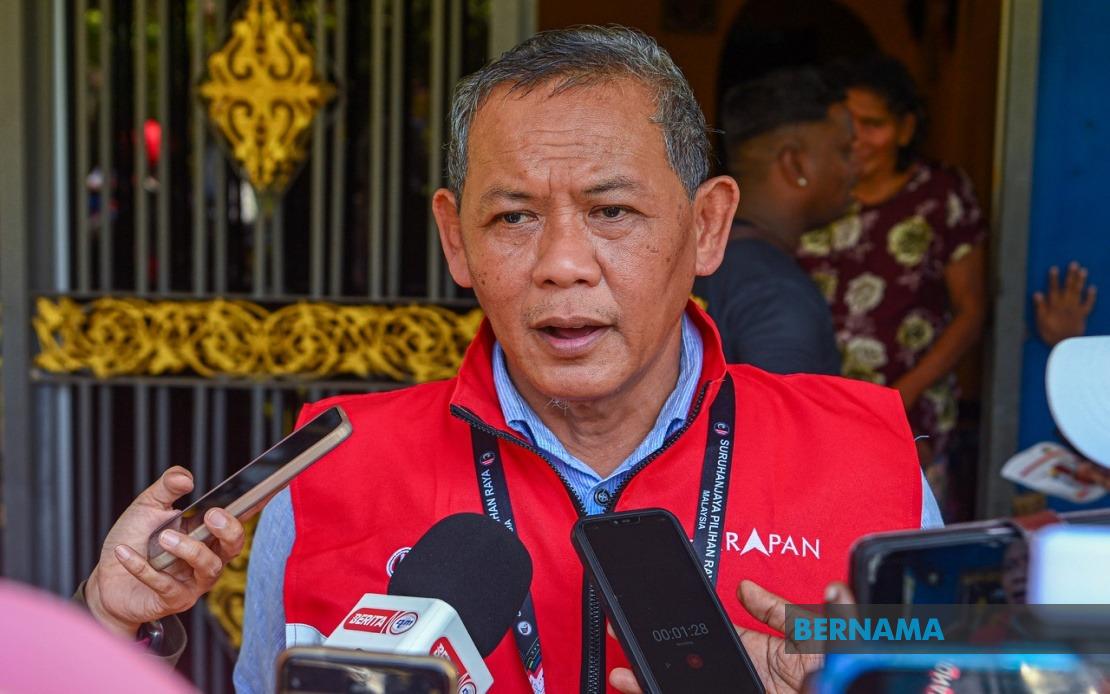
Pakatan Harapan has significantly broadened its electoral platform for the upcoming 16th Negeri Sembilan state election, extending welfare and development initiatives beyond low-income earners to encompass middle-class households. The coalition's newly unveiled manifesto, titled 'Negeri Sembilan Kekal Harapan' (Negeri Sembilan Stays with Harapan), outlines ten primary policy commitments designed to create wider social impact across the state's population demographics.
State PH chairman Datuk Seri Aminuddin Harun disclosed the strategic shift at a community engagement session with Negeri Sembilan's Indian community at Sekang Estate in Linggi. The expansion of the coalition's welfare focus represents a notable departure from its previous policy concentration, which primarily targeted the bottom 40 per cent of income earners designated as the B40 group. By including the middle 40 per cent bracket, or M40 group, Pakatan Harapan aims to demonstrate relevance across a broader socioeconomic spectrum and address concerns from the increasingly significant middle-income voter base.
Aminuddin emphasised that the revised approach would deliver tangible benefits to a substantially larger cross-section of Negeri Sembilan's population. He underscored that previous policy frameworks had necessarily limited their reach to the most vulnerable B40 cohort, but the coalition now recognises the necessity of supporting middle-income families struggling with rising living costs, education expenses, and healthcare burdens. This recalibration reflects evolving electoral mathematics across Malaysia, where middle-class voters increasingly determine electoral outcomes, particularly in state-level contests where traditional urban-rural divides have blurred.
Education emerged as a primary policy domain benefiting from this expanded scope. The manifesto extends educational access and support programmes to include children from M40 households, recognising that middle-income families often face considerable financial pressure when managing schooling costs alongside mortgage obligations and daily expenses. This targeted expansion addresses a genuine policy gap, as many middle-income families earn insufficient income to qualify for government subsidies yet lack sufficient resources to comfortably afford private educational alternatives.
Aminuddin, who simultaneously serves as Negeri Sembilan's Menteri Besar, faces a competitive three-cornered contest in the Linggi state seat. His challengers include incumbent Datuk Mohd Faizal Ramli representing Barisan Nasional and Zamri Md Said, 54, fielded by Parti Pribumi Bersatu Malaysia. The personal nature of this closely-fought contest underscores the broader electoral competition, with Negeri Sembilan's political landscape remaining highly competitive despite Pakatan Harapan's successful tenure since 2018.
The coalition's leadership emphasised its six-year track record of translating electoral promises into implemented policies. Aminuddin stressed that Pakatan Harapan distinguishes itself through demonstrable commitment to manifesto delivery rather than opportunistic pledge-making. He argued that governance implementation, particularly when balancing competing budgetary pressures and varying constituent needs, demands substantially greater effort than electoral campaigning. The state government's accomplishments since 2018 ostensibly provide supporting evidence for this narrative of competent, accountable administration.
Aminuddin, additionally serving as Port Dickson Member of Parliament and PKR vice-president, urged all participating political entities to maintain elevated campaign standards and eschew divisive rhetoric. His appeal for mature electoral conduct specifically cautioned against raising contentious communal issues that could fracture Negeri Sembilan's existing social cohesion. This measured tone reflects a strategic calculation that voter concerns about stability and religious harmony increasingly supersede purely economic or partisan considerations in Malaysian electoral contexts.
The timing of this manifesto launch occurs within a compressed election cycle. The Negeri Sembilan State Legislative Assembly dissolution on June 5 initiated proceedings, with the Election Commission scheduling voting for August 1. Early voting is slated for July 28, providing limited campaign windows for coalition messaging and voter mobilisation efforts. This constrained timeline intensifies pressure on political parties to communicate their policy platforms effectively within the available media environment.
Packatan Harapan's strategic repositioning reflects broader Malaysian political trends where coalitions must navigate increasingly fragmented voter preferences and rising expectations regarding inclusive policymaking. The M40 group expansion demonstrates recognition that electoral viability depends upon addressing middle-income anxieties about economic security, educational opportunity, and social mobility. Negeri Sembilan's competitive political environment, where the coalition maintains control but faces determined opposition, has likely accelerated this policy evolution.
The manifesto's ten commitments represent an attempt to construct a comprehensive governing agenda addressing multiple policy domains simultaneously. Rather than narrowly concentrating resources, Pakatan Harapan seeks to demonstrate breadth across healthcare, education, economic opportunity, and infrastructure development. This comprehensive approach seeks to position the coalition as a government of inclusive growth rather than targeted welfarism, appealing to aspirational middle-class voters concerned about both their immediate circumstances and longer-term prosperity prospects.

