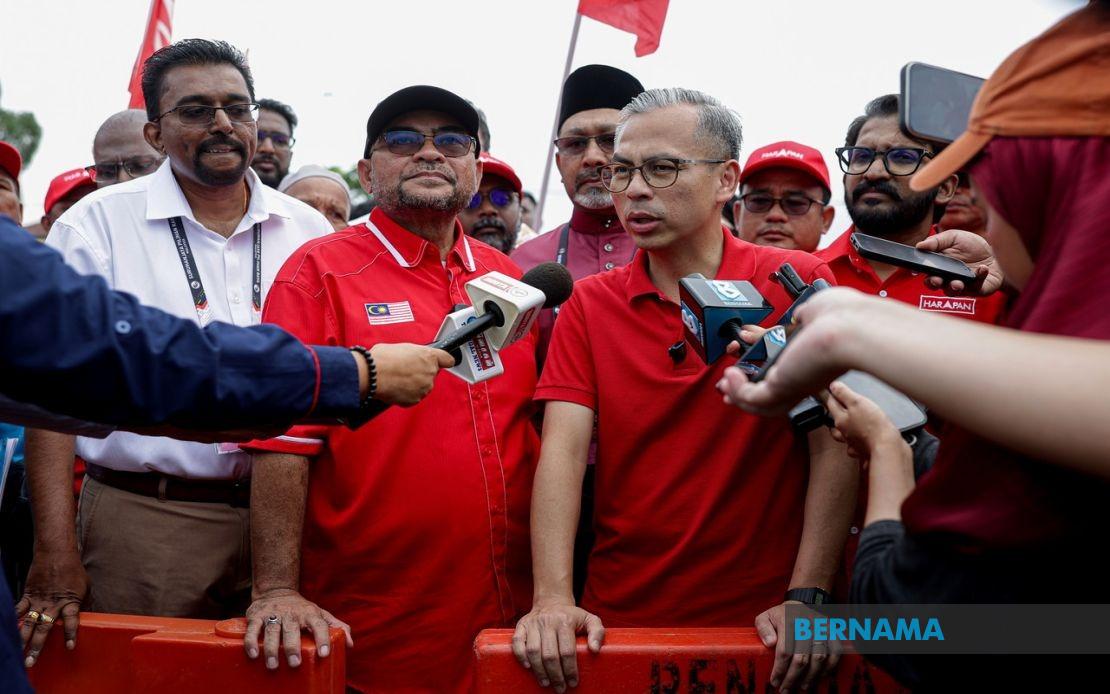
Pakatan Harapan is framing its Negeri Sembilan state election strategy around a straightforward message: the continuity and proven performance of Menteri Besar Datuk Seri Aminuddin Harun's administration since 2018. At the Jempol nomination centre on July 18, Communications Minister and PH director Datuk Seri Fahmi Fadzil articulated the coalition's core campaign theme, emphasizing that voters should recognize the tangible benefits already delivered to the state under Aminuddin's leadership. The approach reflects a conventional playbook for incumbents seeking re-election—consolidate support among existing constituencies by demonstrating concrete results rather than promising transformative change.
The economic achievements Fahmi highlighted form the centrepiece of PH's argument for continuity. Rising zakat collections, improved state revenue, and a consistent stream of foreign direct investment signal fiscal competence to Muslim voters and business communities respectively. The construction of a new port represents infrastructure ambition that connects Negeri Sembilan to broader regional trade networks, suggesting forward-thinking governance. For Malaysian voters, particularly those in smaller states often overshadowed by Selangor and Johor, the narrative of a capable administration stewarding investment and growth locally carries genuine appeal. Aminuddin's tenure has coincided with relative economic stability in a state that historically lacks the industrial dominance of its neighbours, making these achievements measurably significant within Negeri Sembilan's development trajectory.
However, the emphasis on continuity also reflects a potential vulnerability. In a political climate where Malaysian voters have demonstrated appetite for change—evidenced by the 2018 federal election result that brought PH to power—the reliance on incumbent performance invites scrutiny of unfulfilled promises and implementation gaps. Opposition parties will likely argue that six years should have yielded more transformative outcomes, particularly if ordinary residents in constituencies feel that investment and revenue gains have not meaningfully improved their daily lives. The messaging strategy essentially asks voters to judge the incumbent government primarily by metrics like zakat collection and port construction rather than bread-and-butter concerns such as wage growth, housing affordability, or service quality.
The four-cornered contest in Jeram Padang illustrates PH's broader campaign complexity. The constituency faces a fragmented opposition split between Barisan Nasional, Perikatan Nasional-aligned Bersatu, and the Orang Asli focused Asli party. PH's candidate G. Manivannan, a lawyer serving as political secretary to Prime Minister Anwar Ibrahim, will centre his campaign on employment opportunities for young voters—a pragmatic focus on generational economic anxieties. This targeted approach within a single constituency suggests PH recognizes that a blanket continuity message, while compelling at the state level, requires granular attention to localized grievances. Employment, particularly for educated youth in smaller towns, remains a chronic challenge across Malaysia's non-metropolitan regions, and Manivannan's positioning signals that PH is listening to demographic-specific concerns rather than operating on autopilot.
The broader nomination process across the four Jempol parliamentary constituency seats reveals a mixed competitive landscape. In Bahau, DAP's Teo Kok Seong faces a straight contest against MCA's Chong Fui Ming, suggesting consolidation within the two-party dominant structure and potentially easier electoral arithmetic for PH in that seat. Conversely, Serting presents a three-way battle where Perikatan Nasional's incumbent Mohd Fairuz Mohd Isa must defend against both PH's Yaacob Mahmood and Bersatu's Muhammad Noraffendy—a dynamic that could fragment anti-PH votes. Palong similarly features a three-cornered fight, with BN's Datuk Mustapha Nagoor defending against PH's Muhammad Zahin Zinal Abidin and Bersatu's Rebin Birham. The proliferation of three and four-cornered contests across these seats elevates the strategic importance of voter consolidation and turnout, where even modest shifts in campaigning effectiveness could determine outcomes.
Fahmi's emphasis on responsible campaign conduct, particularly regarding the so-called 3Rs (Religion, Race, and Rulers), reflects heightened sensitivity to social division in an election that occurs against a backdrop of deepening political polarization nationally. The explicit caution against spreading misinformation and slander signals PH's concern that digital platforms, where younger voters increasingly encounter political messaging, could amplify incendiary content. For Malaysian observers, this warning underscores the extent to which electoral competition now pivots on controlling narratives in spaces beyond traditional media. The Communications Minister's personal commitment to monitoring media practitioners' welfare suggests institutional awareness that the campaign environment carries occupational risks for journalists covering contentious local politics.
The timeline matters considerably for campaign momentum. With nomination completed on July 18, early voting on July 28, and polling day on August 1, campaigns operate within a compressed two-week window. This brevity favors incumbents with existing grassroots infrastructure and name recognition while disadvantaging challengers attempting to build visibility from scratch. PH's strategy of anchoring messaging to Aminuddin's proven record aligns well with this timeline—reinforcing existing perceptions requires less persuasion work than shifting voter allegiance. The short campaign period also limits opportunities for opposition parties to construct comprehensive alternative narratives, a structural advantage that may explain PH's confidence in the continuity approach.
For Southeast Asian and broader regional observers, the Negeri Sembilan election signals how Malaysian electoral politics have matured since 2018. The competition now involves multiple established coalitions—PH, BN, and PN—each with distinct organizational capacity and messaging frameworks. The fragmentation visible in several contests, where four candidates compete in single seats, reflects the proliferation of viable political vehicles beyond the historical BN dominance. This pluralization creates both opportunities and risks: voters enjoy greater choice, but electoral outcomes become less predictable and governance coalitions potentially more fragile. Negeri Sembilan's relatively smaller scale offers a testing ground for campaign tactics and coalition strategies that may influence larger state contests later in the electoral cycle.
The economic framing PH has chosen—zakat collections, revenue growth, foreign investment, infrastructure—carries implicit assumptions about voter priorities. If the electorate indeed prioritizes macroeconomic stability and state coffers over service delivery improvements, PH's strategy succeeds. Conversely, if constituencies feel that economic aggregates mask stagnation in their own neighborhoods, the continuity narrative falters. This tension between state-level performance metrics and constituency-level lived experience represents the fundamental challenge for any incumbent campaign, and Negeri Sembilan will provide early evidence of whether Malaysian voters in 2024 prioritize demonstrated administrative competence or perceived failure to translate growth into tangible quality-of-life improvements. The August 1 result will offer instructive data on the durability of the incumbent-performance messaging strategy in contemporary Malaysian electoral competition.

