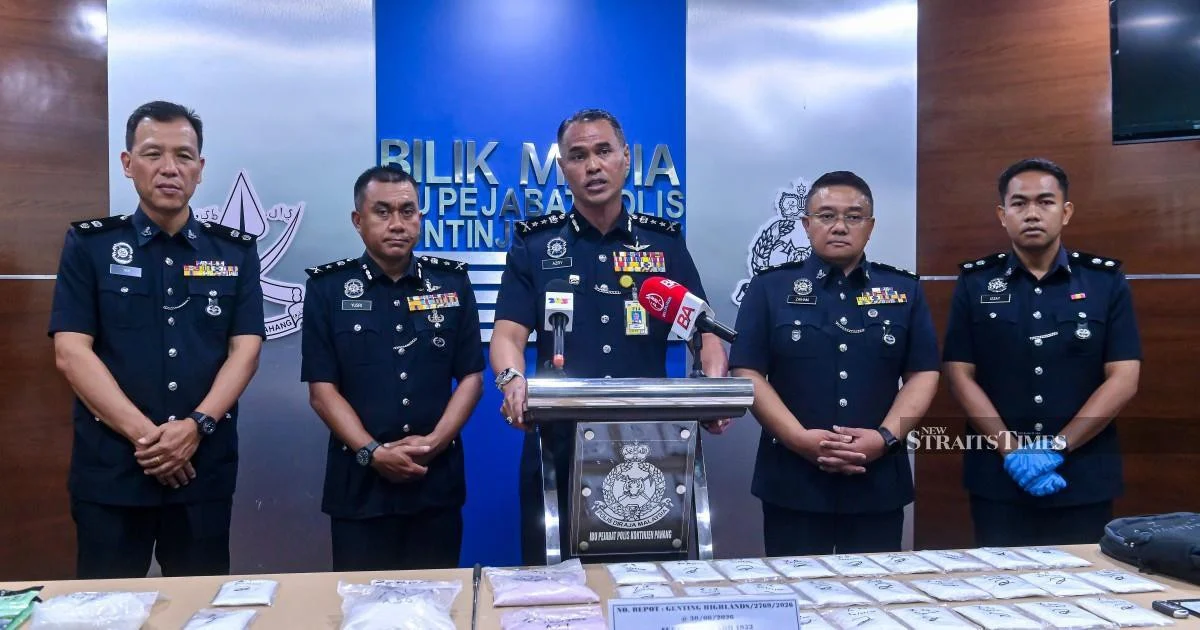
A comprehensive three-day anti-drug enforcement campaign across Pahang has concluded with authorities arresting 333 individuals and confiscating drugs, currency, and vehicles totalling more than RM500,000 in value. The operation, which blanket all 11 districts in the state, represents a significant push by Pahang law enforcement to dismantle supply networks and disrupt street-level trafficking in communities struggling with substance abuse problems.
The geographical scope of Operation Hawk underscores the pervasiveness of drug distribution channels throughout the state. By simultaneously targeting neighbourhoods and commercial areas across Kuantan, Pekan, Temerloh, Raub, Bentong, Jerantut, Maran, Rompin, Lipis, Kota Bharu-adjacent regions, and surrounding municipalities, authorities sought to prevent dealers from simply relocating operations to less-scrutinised locations. This multi-district approach reflects evolving policing strategy in Malaysia, where organised crime networks have demonstrated ability to shift their base of operations when enforcement concentrates narrowly on specific zones.
The haul of seized materials provides insight into the scale of commercial drug trafficking in Peninsular Malaysia's eastern region. Drugs themselves formed the primary focus, though the recovery of significant cash holdings suggests law enforcement intercepted proceeds from ongoing sales. The inclusion of vehicles in the seizure total indicates authorities targeted major distribution operations rather than marginal street dealers; vehicles often serve as mobile supply depots for mid-level traffickers supplying multiple retail zones within a district. These assets, once forfeited, may be recovered by the government and converted to alternative public use under existing asset forfeiture frameworks.
The 333 arrests encompass individuals of varying roles within drug distribution hierarchies. Some may face charges as users or petty dealers, while others could be prosecuted under trafficking statutes carrying substantially harsher penalties. The Malaysian criminal justice system distinguishes sharply between possession quantities defined as personal consumption and those indicating distribution intent. Individuals arrested during such operations typically undergo toxicological and forensic examination to establish whether seized materials link directly to them, and their prior criminal histories inform whether courts classify them as first-time offenders or habitual traffickers.
Pahang's experience with organised narcotics enforcement reflects broader challenges across Malaysia. The state, while less urbanised than Selangor or Kuala Lumpur, has experienced rising demand for illicit substances among younger populations and in industrial clusters where migrant worker populations concentrate. Traffickers have exploited road networks connecting Pahang to larger metropolitan areas, establishing supply chains that move product from production sources towards consumer markets in more densely populated regions. Disrupting these supply arteries requires sustained enforcement rather than episodic operations.
The financial dimension of the seizure—exceeding half a million ringgit—represents meaningful impact on trafficking economics. In street-level retail markets, this volume of confiscated narcotics would represent weeks or months of sales revenue for distribution networks operating across multiple neighbourhood areas. The cash recovered provides direct evidence of commercial drug activity, distinguishing this enforcement action from routine possession arrests. For organised trafficking groups dependent on consistent income streams to finance operations and maintain organisational structure, such losses create pressure to reallocate resources and recoup losses through increased activity.
The three-day timeframe suggests this represented a concentrated enforcement blitz rather than routine patrol-based interdiction. Such operations require coordination across district police contingents, advance intelligence gathering to identify priority targets, and deployment protocols ensuring simultaneous arrests minimise warning time for suspected traffickers. Planning and execution of statewide operations involves substantial resource commitment from state police leadership, suggesting Pahang authorities prioritised drug enforcement in their operational calendar during this particular period.
For Malaysian communities dealing with substance abuse impacts, enforcement operations of this scale generate competing effects. Arrests and asset seizures do create temporary disruptions to local supply, potentially increasing prices and reducing immediate user availability. However, enforcement alone rarely sustains lasting demand reduction without complementary treatment, rehabilitation, and demand-reduction initiatives. International evidence indicates that enforcement operations prove most effective when integrated with expanded addiction treatment capacity and harm-reduction programming targeting dependent users.
The operation's statewide scope also reflects police recognition that drug markets function as integrated systems rather than isolated neighbourhood problems. A dealer arrested in Kuantan may have sourced supplies through distribution networks spanning multiple districts; shutting down one node without disrupting upstream supply sources simply creates opportunities for competitors to expand market share. This sophisticated understanding of trafficking networks has gradually influenced Malaysian police strategy, moving beyond earlier approaches that treated each locality's drug problem as independent phenomenon requiring only local intervention.
Looking forward, sustainability of such enforcement momentum will depend on continued operational prioritisation and resource allocation. Pahang's geographical characteristics—extensive road networks, substantial forest areas, and significant international border exposure—create ongoing vulnerabilities to trafficking that require consistent law enforcement attention. The success of this particular operation will be measured not merely by arrest and seizure totals, but by whether it produces lasting reduction in drug availability within affected communities and whether seized assets are successfully converted toward public benefit through forfeiture programmes.

