The Pahang government has moved to clarify its approach toward degazetting Permanent Forest Reserves, asserting that the process operates within a framework of careful oversight and established protocols rather than arbitrary decision-making. Menteri Besar Datuk Seri Wan Rosdy Wan Ismail made the remarks in Kuantan on August 30, addressing public concern about the state's forest management procedures and its deviation from certain safeguards introduced at the national level.
The clarification comes amid scrutiny of Pahang's status as one of only four states that has not fully adopted the protective measures outlined in the National Forestry Act (Amendment) 2022. Specifically, the state has opted not to implement a mandatory public inquiry process before removing areas from Permanent Forest Reserve designation, nor has it committed to providing replacement land as compensation. These two provisions were designed to enhance transparency and environmental accountability across Malaysia's forestry sector.
Wan Rosdy's defence rests on the constitutional principle that land and forest management remain predominantly within state jurisdiction. He contended that Pahang's decision to proceed without public inquiries reflects the state's legitimate authority to manage its terrestrial resources according to procedures it deems appropriate. This interpretation of state powers places Pahang within a broader pattern, as the Menteri Besar noted that several other Malaysian states have similarly opted out of implementing the full suite of amendments introduced by the 2022 legislation.
The distinction between what states are legally permitted to do and what environmental advocates argue they should do represents a significant tension in Malaysia's federal structure. While the Constitution does grant states considerable autonomy over land matters, the amendment process at the national level was intended to establish consensus-based best practices that transcend state boundaries. The fact that multiple states have chosen not to adopt these provisions suggests either disagreement with their necessity or differing priorities regarding development and resource utilization.
For Malaysian environmental groups and civil society organizations tracking deforestation and land-use changes, Pahang's approach raises concerns about the adequacy of procedural safeguards. Public inquiries serve multiple functions beyond mere formality: they create opportunities for affected communities to voice concerns, enable independent scrutiny of environmental impact assessments, and establish a public record of decision-making that can be examined retrospectively. The absence of such mechanisms can undermine public trust, even when individual degazettement decisions may ultimately prove defensible on merit.
The implications extend across Southeast Asia, where forest governance remains contested terrain between state development prerogatives and environmental conservation imperatives. Pahang's experience illustrates how different jurisdictions within a single nation can adopt divergent approaches to resource management, creating a patchwork of environmental standards. This fragmentation can complicate regional environmental initiatives and may influence how neighbouring states approach their own forest policies.
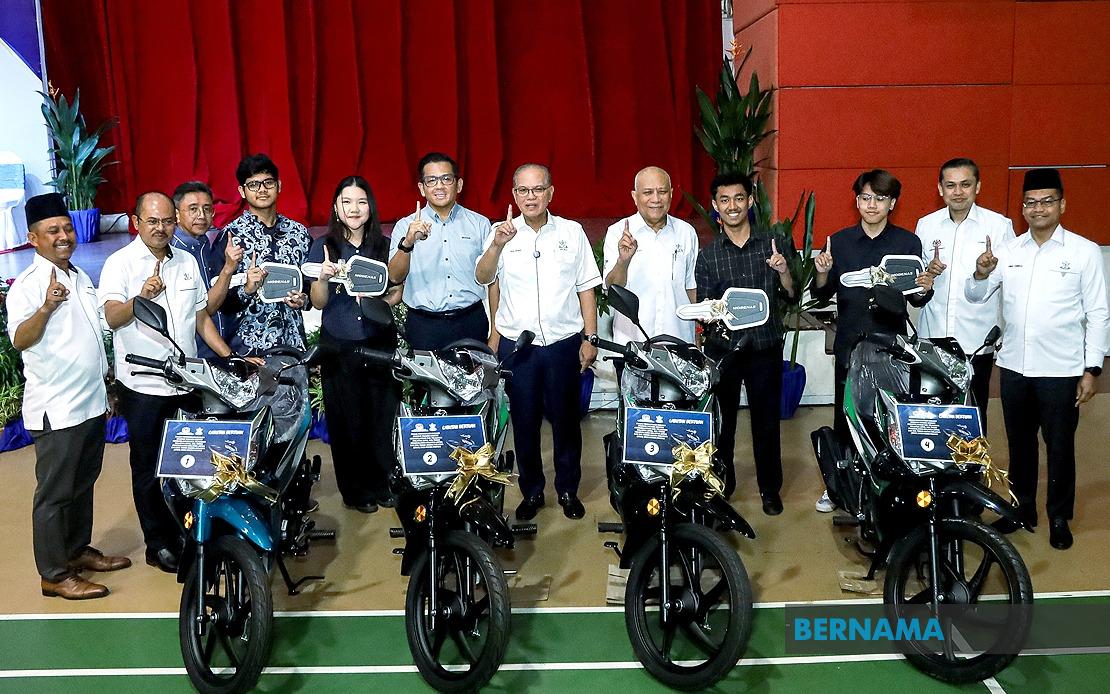
Beyond forest matters, Wan Rosdy used the August 30 occasion to announce a youth-focused economic initiative, revealing plans to introduce an interest-free loan scheme for motorcycle purchases targeting students aged 18 to 21 enrolled in public and private higher education institutions. The programme represents an attempt to support youth financial inclusion and addresses transportation challenges that students frequently encounter. By structuring the initiative as an interest-free loan rather than an outright grant, the government maintains fiscal discipline while providing tangible economic assistance during a critical phase of young Malaysians' educational and professional development.
The initiative will require budgetary allocation during the 2027 Pahang Budget deliberations at the State Legislative Assembly, placing it firmly within the government's medium-term fiscal planning. This forward-looking approach suggests that the state administration is integrating youth support into its broader economic strategy, recognizing that educational accessibility and post-secondary mobility remain pressing concerns for many Malaysian families, particularly in states like Pahang where geographic distances between educational institutions can pose practical obstacles.
The timing of these policy announcements coincides with efforts to recognize academic achievement across multiple examination streams. At the same ceremony where the Menteri Besar addressed the forest reserve issue, over 2,000 high-performing Pahang students received incentives for excellence in the 2025 Sijil Pelajaran Malaysia, Sijil Tinggi Agama Malaysia, and Sijil Tinggi Persekolahan Malaysia examinations. The state allocated RM2.4 million toward these recognition programmes, underscoring a commitment to celebrating educational attainment across diverse academic pathways.
This multi-faceted policy engagement reflects how contemporary state governance in Malaysia increasingly attempts to balance environmental stewardship, youth economic empowerment, and educational advancement within a single administrative framework. Whether these varied initiatives operate coherently or represent somewhat disconnected policy responses remains a question for observers monitoring Pahang's overall development trajectory. The forest reserve degazettement decisions will likely have long-term implications for the state's environmental profile, while the youth loan scheme and educational incentives may influence how younger Malaysians perceive opportunities within Pahang's economy.

