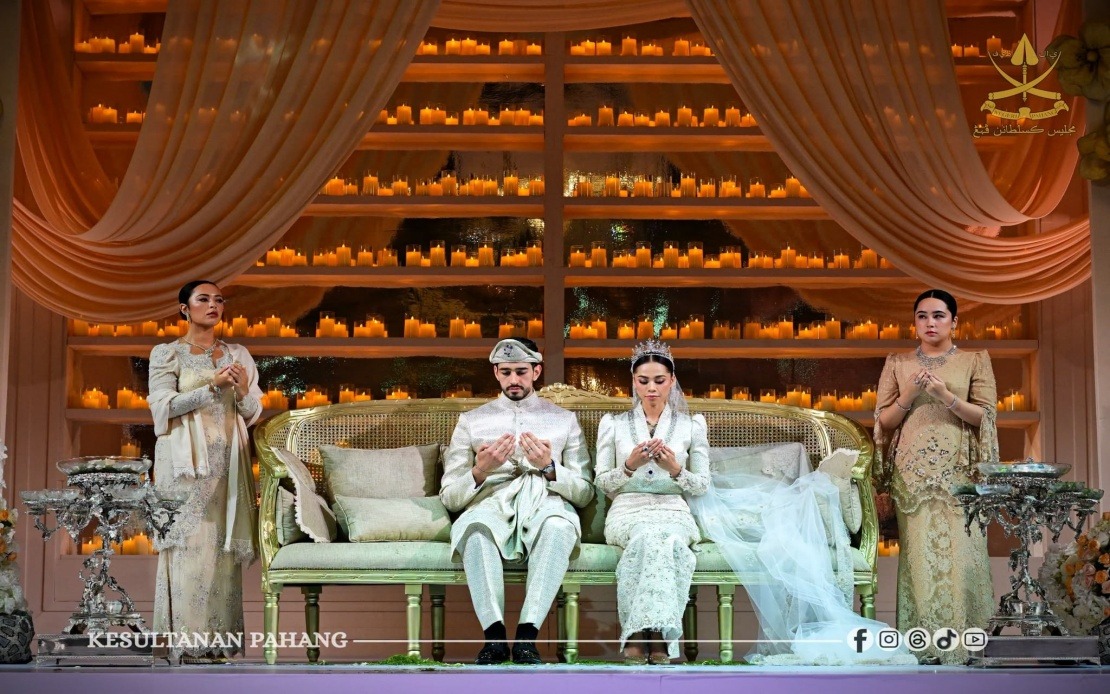
The Sultan of Pahang, Al-Sultan Abdullah Ri'ayatuddin Al-Mustafa Billah Shah, graced the wedding reception of his daughter, Tengku Puteri Raja Tengku Puteri Ilyana Alia, and her husband Christopher Lionel Froggatt, at a Kuala Lumpur hotel, underscoring the significance of the union within Malaysia's royal circles. The high-profile ceremony drew members of the extended royal family and distinguished guests, reflecting the importance accorded to the occasion by the state's monarchy.
Accompanying the Sultan were several prominent figures from Pahang's establishment, including Tengku Hassanal Ibrahim Alam Shah, who holds the position of Regent, alongside the monarch's siblings and other members of the royal household. The gathering demonstrated the broad cross-section of the royal family's involvement in the celebration, a customary practice for significant wedding events within Malaysia's sultanate system.
Guests of national and international standing also attended the reception, including Pahang Menteri Besar Datuk Seri Wan Rosdy Wan Ismail, representing the state's administrative leadership. The presence of Shaikh Mohammed Hamad Tahnoon Al Nahyan, as the representative of the President of the United Arab Emirates, added diplomatic significance to the event and highlighted the international dimensions of the royal family's connections.
The ceremony itself followed traditional protocols deeply rooted in Malay-Islamic customs that govern royal weddings throughout the federation. The newlyweds took centre stage on an elevated dais, positioned according to customary arrangements that distinguish royal ceremonies from ordinary celebrations. This ceremonial setup allowed the gathering to witness the key moments of the reception while maintaining the formal hierarchy expected in such formal occasions.
A pivotal moment came with the 'Istiadat Menyuap Nasi Semangat' ritual, conducted by Tengku Puteri Seri Lela Wangsa Tengku Tan Sri Meriam Sultan Ahmad Shah. This traditional ceremony, involving the symbolic feeding of rice mixed with fragrant ingredients, carries deep cultural significance and is considered an essential component of Malay royal wedding observances, believed to bring blessing and harmony to the married couple.
The Sultan himself played an active ceremonial role, presiding over the 'Istiadat Bersanding dan Merenjis', which saw him perform the ceremonial sprinkling ritual over the newlyweds. This gesture represents one of the most important moments in Malay wedding traditions, as it symbolizes the patriarch's blessing and official recognition of the union. Family members subsequently participated in the same ritual, creating a cascade of blessings from the extended royal lineage.
Further underlining his paternal blessing, the Sultan conducted the 'Istiadat Meletakkan Panca Bicara', a formal gesture reserved for royal prerogatives that acknowledges and honours the newly married couple. The ceremony carries ceremonial weight beyond mere formality, signifying the royal household's formal acceptance and elevated status granted to the marriage. This ritualistic sequence reflects centuries of Malay royal tradition adapted within the modern context of contemporary royal weddings.
The spiritual dimension of the proceedings received recognition when Pahang Mufti Datuk Dr Asmadi Mohamed Naim offered a prayer for the couple's future together. This invocation added religious solemnity to the proceedings and grounded the celebration within Islamic values that underscore Malaysian royal family observances and state-level ceremonies throughout the federation.
The wedding represents a notable moment within Pahang's contemporary royal narrative, as the marriage of a reigning sultan's daughter traditionally carries implications for the state's future institutional arrangements and dynastic considerations. Such unions often reflect and strengthen diplomatic and social networks among Malaysia's royal families and, in this case, extend those connections internationally through the involvement of Emirati representation at the ceremony.
Christopher Lionel Froggatt's marriage into one of Malaysia's reigning houses marks an instance of international intermarriage within royal circles, a phenomenon that has become increasingly visible across Southeast Asia's monarchies in recent decades. The formal recognition of this union through elaborate traditional ceremonies demonstrates the royal institution's ability to adapt and incorporate contemporary realities while maintaining the ceremonial frameworks that define royal identity and legitimacy within Malaysian society.

