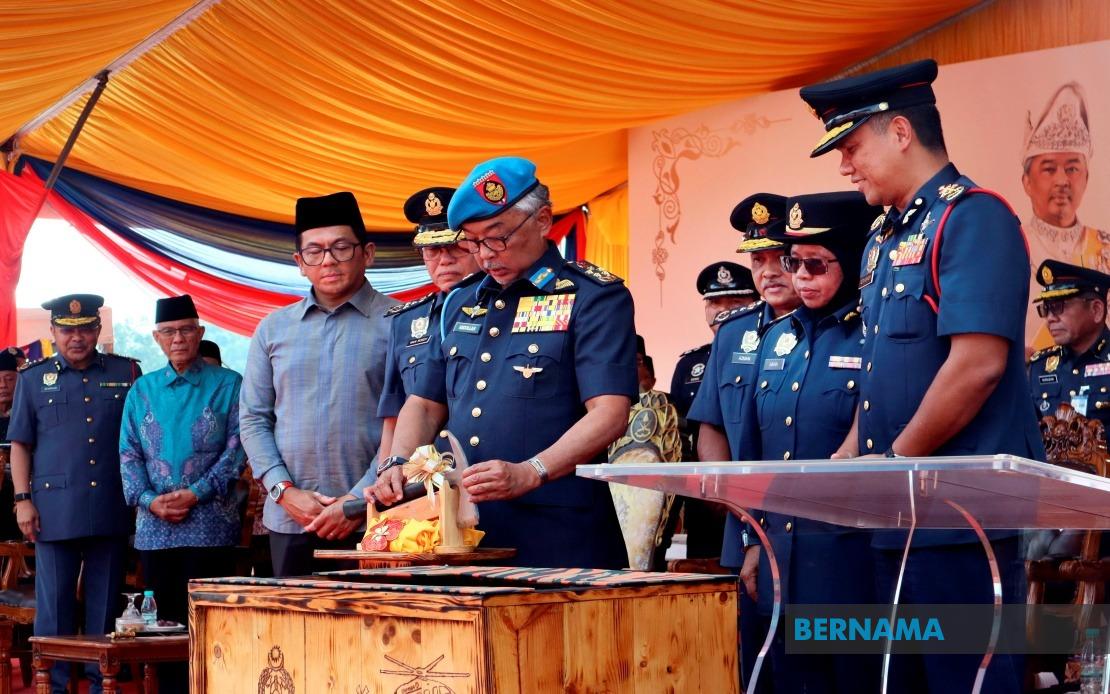
During the opening of the Sungai Lembing Fire and Rescue Station in Kuantan on July 2, Al-Sultan Abdullah Ri'ayatuddin Al-Mustafa Billah Shah voiced his appreciation for the substantial government investments directed towards enhancing public safety and reducing disaster vulnerability across the state. The remarks underscored the growing importance of proactive infrastructure spending in addressing Pahang's recurring environmental challenges, particularly the seasonal flooding that regularly disrupts communities and livelihoods across the east coast region.
The Sultan's emphasis on flood mitigation projects reflects the escalating urgency of climate adaptation in Southeast Asia, where monsoon patterns are becoming increasingly unpredictable. Sungai Lembing, a township in Pahang's Kuantan district, occupies a strategically significant position in the state's flood management landscape. Being among the earliest areas to experience flooding during the monsoon season, the township essentially functions as a natural early warning system for downstream communities, making its protection a priority for broader regional water resource management.
Al-Sultan Abdullah specifically highlighted the financial burden associated with comprehensive infrastructure development, acknowledging that flood mitigation and related projects demand considerable capital outlay from both state and federal budgets. This recognition carries particular weight in Malaysia's complex federalism, where developmental priorities must be negotiated between Kuala Lumpur and state governments. The Sultan's public commendation suggests a harmonious relationship between Pahang's leadership and the central government in pursuing these initiatives, a positive signal for continued collaboration on climate resilience measures.
The royal directive to deepen rivers in proximity to residential settlements represents a practical intervention aimed at increasing channel capacity and reducing overflow incidents during intense rainfall. Such structural modifications form part of conventional flood management strategies, though they require ongoing maintenance and careful environmental consideration. The order demonstrates the Sultan's hands-on engagement with technical solutions rather than merely ceremonial participation in flood response frameworks, indicating a commitment to evidence-based interventions.
Pahang Menteri Besar Datuk Seri Wan Rosdy Wan Ismail, alongside Deputy Housing and Local Government Minister Datuk Aiman Athirah Sabu and Deputy Economy Minister Datuk Mohd Shahar Abdullah, attended the station opening. This configuration of state and federal representation highlights the multi-level governance structure required for effective disaster management in Malaysia. The presence of the Paya Besar Member of Parliament underscores how flood mitigation intersects with parliamentary constituencies and electoral politics, a dimension often overlooked in purely technical discussions of infrastructure.
Beyond flood concerns, Al-Sultan Abdullah extended his appreciation to firefighting and emergency response personnel, recognizing their broader contributions to public safety across multiple disaster categories. His observation that daily news cycles consistently feature Fire and Rescue operations demonstrates the scale and frequency of emergency interventions required across modern Pahang. This acknowledgment validates the operational burden placed on first responders in an era of complex hazards ranging from structural fires to vehicular accidents to weather-related calamities.
The Sultan's commitment to personally visiting disaster sites and engaging with affected populations reflects a distinctive style of monarchical engagement found across Southeast Asian constitutional monarchies. Such ground-level interactions generate goodwill while providing direct exposure to implementation challenges that policy documents may not fully capture. His pledge to continue accompanying Fire and Rescue personnel during emergency operations signals an unusual degree of active participation for a reigning monarch, positioning himself as a stakeholder in operational outcomes rather than maintaining ceremonial distance.
A particularly noteworthy aspect of his remarks was the proposal to establish a volunteer fire brigade in Kampung Bantal, Ulu Tembeling in Jerantut, a remote settlement where response delays constitute a genuine safety impediment. Geographic isolation remains a persistent problem across Pahang's interior communities, where professional emergency services struggle to maintain rapid coverage. Volunteer fire brigades, common in developed nations but less prevalent in Malaysia, could bridge this gap through community-based resource deployment. This suggestion implies recognition that centralized professional services alone cannot adequately protect dispersed populations, requiring complementary local capacities.
The policy implications of the Sultan's remarks extend across several domains of Malaysian governance. His emphasis on intergovernmental cooperation in disaster resilience suggests potential for expanded federal-state partnerships in climate adaptation. The flood mitigation focus reflects broader Southeast Asian vulnerability to intensifying precipitation patterns linked to climate variability. For Malaysian readers and policymakers, the remarks reinforce that adequate budgetary allocation for preventive infrastructure, though expensive, remains more cost-effective than repeatedly managing post-disaster recovery across vulnerable communities.
Pahang's flood challenges are neither unique nor unprecedented, yet they demand continuous reinvestment as development expands into flood-prone areas and rainfall patterns shift. The Sultan's public commendation of government spending potentially normalizes the substantial recurrent expenditure required for effective disaster risk reduction, an important framing in political discourse often focused on competing development priorities. His recognition that such investments are ongoing obligations rather than one-time projects reflects mature understanding of climate adaptation as a permanent feature of state governance.
The opening of the Sungai Lembing Fire and Rescue Station itself represents tangible manifestation of these policy commitments, providing enhanced emergency response capacity to a historically vulnerable locality. Infrastructure investments of this type accumulate across multiple sectors—flood barriers, early warning systems, evacuation routes, medical facilities, volunteer training—to create integrated disaster resilience frameworks. The Sultan's endorsement of such multifaceted approaches positions Pahang as a potential model for other Malaysian states navigating similar vulnerabilities, though resources and geographic conditions vary considerably across the federation.

