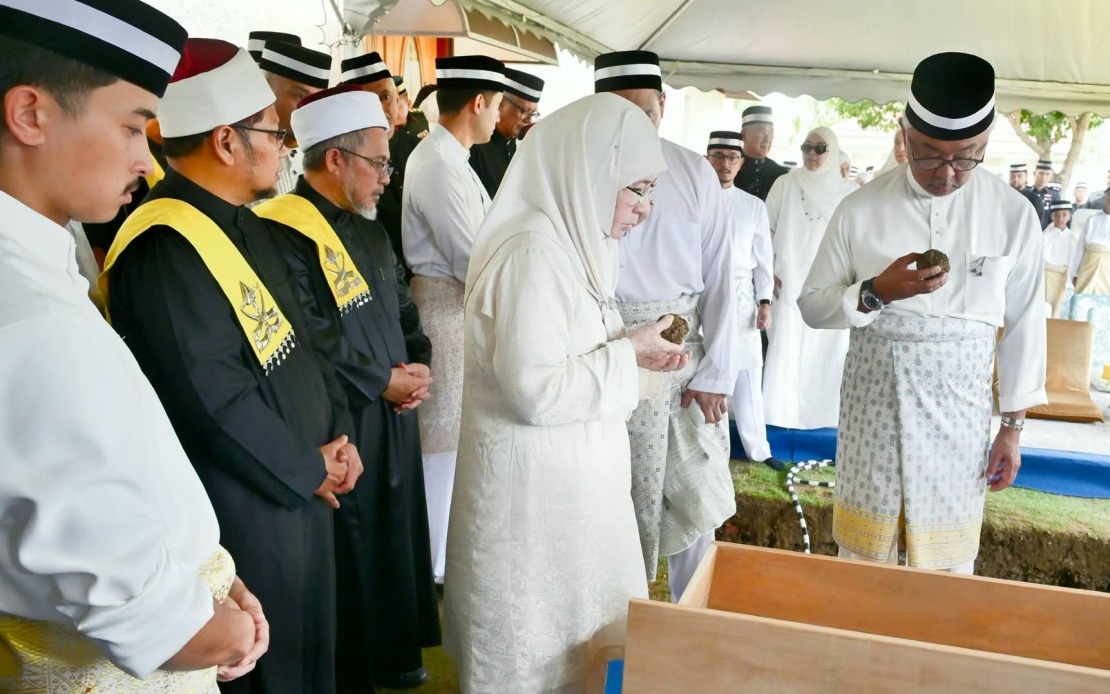
The Sultan of Pahang, Al-Sultan Abdullah Ri'ayatuddin Al-Mustafa Billah Shah, has instructed members of the Pahang royal household to observe a formal mourning period of three days in the wake of his elder sister's passing. Tengku Puteri Seri Kemala Tengku Datuk Seri Aishah, who passed away on Wednesday evening, was a significant figure within the Pahang royal lineage and held an important place in the state's royal protocols and ceremonial traditions.
The mourning period commenced on Wednesday and will extend through to Saturday, according to an official statement released by Maj Gen Datuk Mohamed Zahari Yahya, the Comptroller of the Royal Household of the Sultan of Pahang. The formal observance reflects customary protocols within Malaysian royal households, where structured periods of remembrance provide a framework for the family and the broader public to acknowledge the loss of prominent members of the palace.
During this three-day span, specific dress codes have been established to maintain the solemnity of the occasion. Members of the royal family are expected to wear white attire throughout the mourning period as a visible expression of their remembrance. Male members of the household face additional requirements regarding their formal wear, though the complete details of these specifications were not fully elaborated in the official announcement.
Tengku Puteri Seri Kemala's death represents a considerable loss to the immediate royal family, particularly to the Sultan and to Tengku Ampuan Pahang Tunku Azizah Aminah Maimunah Iskandariah, who holds the position of Raja Permaisuri of Pahang. The passing of senior royal family members carries significant implications for the state's institutional continuity and the broader fabric of ceremonial life within Pahang's palace structure.
The late Tengku Puteri spent her final hours at a hospital facility in Kuala Lumpur, where she succumbed to her illness at 9:15 pm on Wednesday evening. Following the traditional protocols of the Pahang royal family, her funeral rites proceeded swiftly, with her body interred at the Royal Mausoleum in Pekan on the same day. This expedited funeral arrangement aligns with Islamic practices and royal customs observed across Malaysian sultanates, where burials typically occur within 24 hours of death.
The Comptroller's statement carried an appeal to the people of Pahang to participate in the collective mourning through spiritual observance. Citizens have been encouraged to recite Al-Fatihah and to offer prayers on behalf of the deceased, seeking divine mercy and forgiveness for her soul. This inclusive approach extends the mourning observance beyond the palace walls and invites the broader Pahang community to engage in remembrance alongside the royal household.
The death of Tengku Puteri marks another transition within Malaysia's royal institution, a system that continues to evolve as successive generations navigate both modernization and the preservation of traditional protocols. For residents of Pahang and those across Southeast Asia with interest in Malaysian royal affairs, such occasions serve as poignant reminders of the interconnection between state institutions and their ceremonial dimensions.
Royal deaths within Malaysia's sultanates invariably prompt reflection on succession planning, institutional stability, and the ongoing relevance of the monarchy within contemporary governance structures. The Pahang royal family, as one of Malaysia's senior royal houses with deep historical roots tracing back centuries, carries particular significance in the nation's constitutional monarchy framework. The passing of senior members necessitates both internal reflection and public acknowledgment of continuity within these enduring institutions.
The formal three-day mourning period established by the Sultan provides a defined timeframe for both institutional adjustment and public respect. During such periods, royal households typically scale back public appearances and official engagements, creating space for family arrangements and spiritual observance. For Pahang's administration and the broader sultanate structure, such transitions remain integral to the rhythms of palace life and governance.
As Malaysia continues to navigate contemporary challenges across economic, political, and social dimensions, the royal institution maintains its ceremonial and constitutional roles with consistency. The mourning of Tengku Puteri Seri Kemala represents one chapter within the ongoing narrative of Malaysia's royal families, whose presence continues to anchor national identity and institutional traditions across the federation's thirteen states.

