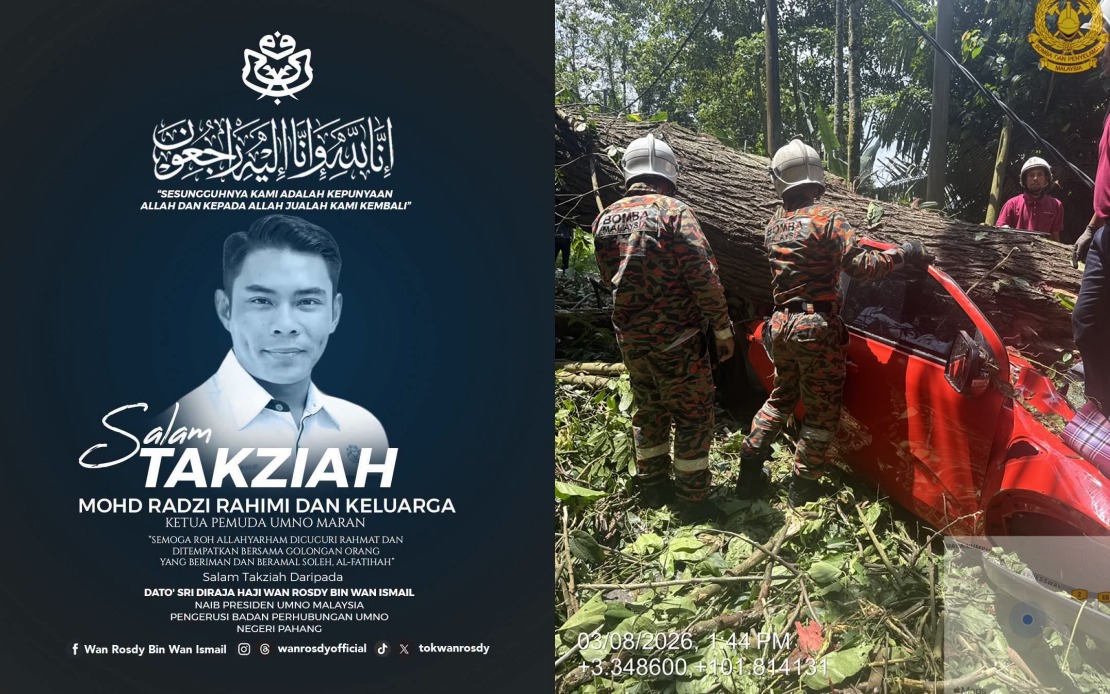
The Pahang political establishment is grieving the loss of a prominent youth leader following a tragic accident on the old Kuala Lumpur-Bentong road near Janda Baik on August 3. Mohd Radzi Rahimi, widely known as Edy Radzi and serving as chief of the Maran UMNO Youth movement, was among four people killed when their four-wheel-drive vehicle was struck by a fallen tree. A fifth occupant, a child, sustained injuries in the incident.
Datuk Seri Wan Rosdy Wan Ismail, who chairs the Pahang UMNO Liaison Committee and serves as Menteri Besar, released a statement describing the accident as a devastating blow to multiple layers of the state's political structure. Beyond the immediate tragedy affecting Mohd Radzi's family, Wan Rosdy emphasised the significant impact on the Maran division of UMNO, the youth wing of the party in Pahang, and the broader state party apparatus. His characterisation underscores how the loss extends across organisational boundaries, touching not just one family but entire institutional networks within the ruling coalition's grassroots structure.
In his Facebook post, Wan Rosdy reflected on Mohd Radzi's dedication to public service and community welfare. The description of the deceased as a committed and people-centred leader suggests a figure who prioritised constituent needs and local engagement over hierarchical advancement. Such characterisations during memorial statements often point to someone who had built genuine rapport within their electoral division and among party activists, reflecting a particular approach to grassroots political work that emphasises accessibility and responsiveness.
The accident also claimed the lives of Nuriani Mohammad Jafri, her son Muhammad Rizz Hazim, and her younger brother Mohammad Nizam. The tragic clustering of fatalities within a single vehicle highlights the randomness and severity of such incidents, particularly on roads traversing forested areas where environmental hazards pose constant risks during certain weather conditions. The inclusion of a child among the injured raises additional concerns about road safety protocols in areas prone to falling debris.
Wan Rosdy's formal condolences, extended through official channels, represent the standard protocol through which political leadership acknowledges significant losses within their party structures. The emphasis on strength, fortitude, and patience reflects Islamic cultural expressions of grief and resilience that resonate across Malaysia's political discourse. Such statements serve multiple functions: they acknowledge loss, demonstrate institutional compassion, and signal continuity within the political structure despite the departure of active members.
UMNO Youth chief Datuk Dr Muhammad Akmal Saleh similarly issued condolences, drawing on religious language to frame the deceased's transition and to comfort bereaved families. The invocation of divine forgiveness and eternal rest situates the tragedy within a spiritual framework, offering consolation grounded in Islamic doctrine. These coordinated expressions of sympathy from multiple levels of party hierarchy underscore the significance afforded to youth leaders within UMNO's organisational structure.
The incident raises broader questions about road safety infrastructure and management in areas connecting major population centres. The old Kuala Lumpur-Bentong route has long served as an alternative to primary highways, attracting traffic seeking scenic routes through the interior. However, such roads often lack the maintenance and hazard-monitoring systems found on modern expressways, leaving them vulnerable to weather-related accidents during monsoon seasons or periods of heavy rainfall.
For Malaysian political observers, the loss of active youth leaders in unfortunate circumstances creates succession questions and momentum shifts within party divisions. Mohd Radzi's role as Maran UMNO Youth chief positioned him as a bridge between grassroots activism and higher party structures, a role critical to maintaining energy and engagement at the local level. His absence will necessitate organisational adjustments and may create vacuums in specific youth mobilisation efforts during the lead-up to electoral cycles.
The incident also highlights the human dimensions of politics that often recede into the background during policy debates and electoral contests. Beyond institutional functions and party loyalty, political activists are individuals embedded in families and communities, whose sudden loss creates ripples extending far beyond formal structures. The presence of a child among the injured serves as a particularly poignant reminder of how such tragedies intersect with broader family narratives and future disruptions.
As Pahang's political community processes this loss, attention will likely turn toward memorialisation efforts and continuity planning within the Maran division. The manner in which UMNO manages the succession and honours Mohd Radzi's legacy will communicate messages about institutional values and commitment to emerging leaders. Whether his contributions are substantially acknowledged in party records and training programmes will influence how such losses are remembered and their implications assessed.
The tragedy underscores persistent vulnerabilities in Malaysia's road infrastructure, particularly in secondary routes connecting major urban areas. Enhanced hazard monitoring, regular maintenance, and public awareness campaigns about risks posed by falling trees during adverse weather could help prevent similar incidents. For families and communities affected by this accident, the immediate challenge lies in processing collective grief and supporting those injured, while the broader political system must adapt to unexpected leadership transitions.

