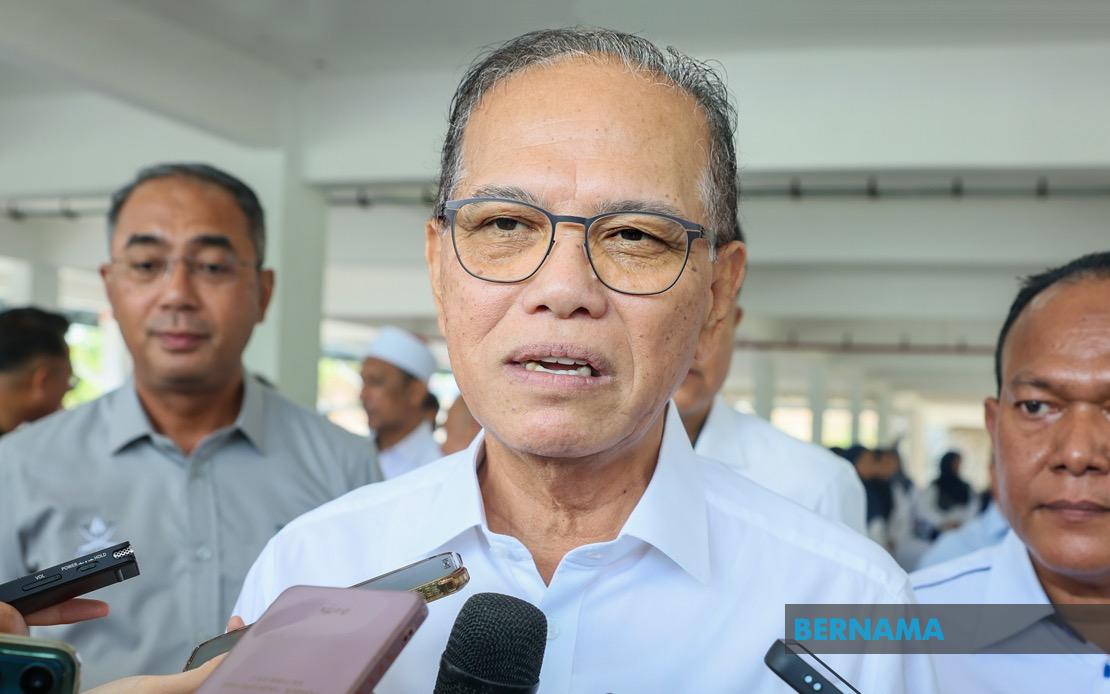
The Pahang state government is making a significant financial commitment to elevate competitive sports performance and nurture athletic talent across the state. Menteri Besar Datuk Seri Wan Rosdy Wan Ismail announced a RM3.5 million injection into three key sports disciplines during the closing ceremony of the Pahang 1st Netball League Championship at the Pahang Sports Complex (SUKPA) in Kuantan on July 5. This strategic investment reflects the state administration's determination to narrow the performance gap with more established sports powerhouses and position Pahang as a serious contender in Malaysia's national sporting competitions.
The funding breakdown demonstrates a priority-based allocation strategy tailored to each sport's development requirements and competitive potential. Football receives the largest share at RM2 million, reflecting its prominence in Malaysian sporting culture and the relatively higher costs associated with developing football infrastructure and talent pipelines. Netball has been allocated RM1 million initially, supported by a commitment to increase this to RM1.5 million in the following year—a 50 per cent boost that signals the state's recognition of the sport's growing importance and women's sports development priorities. Sepak takraw, the traditional Southeast Asian sport, completes the allocation with RM500,000, acknowledging its cultural significance and untapped potential for regional and international recognition.
Wan Rosdy's emphasis on implementation rigour and avoiding half-hearted approaches reveals a fundamental shift in how Pahang approaches sports policy. Rather than distributing funds through generic programmes, the state government appears committed to establishing sustainable development frameworks that yield measurable results. The Menteri Besar underscored that this initiative targets the grassroots level—the essential foundation where young athletes are identified, developed, and trained before advancing to competitive platforms. This long-term perspective suggests recognition that elite performance emerges from robust grassroots systems, a lesson Malaysian sports administration has increasingly emphasised after evaluating the success factors of other high-performing states.
The timing of this announcement, coinciding with the Pahang netball championship, provides practical validation of the state's sporting ambitions. The tournament attracted 42 teams competing across the state, culminating in a championship victory for Semambu, who claimed the trophy and RM10,000 in prize money. This participation level indicates existing grassroots engagement and suggests fertile ground for nurturing competitive excellence. The prize money structure itself—offering financial incentives to champions—reinforces the message that athletic achievement is valued and rewarded, encouraging participants to pursue excellence rather than casual participation.
For Malaysian sports development more broadly, Pahang's initiative carries implications for inter-state competition and national talent pools. States that invest systematically in specific sports often produce disproportionate numbers of national representatives in those disciplines, creating competitive advantages. Pahang's focused investment in football, netball, and sepak takraw suggests the state has identified sports where it possesses existing advantages or where market gaps create development opportunities. This targeted approach contrasts with dispersed funding models and reflects more sophisticated sports planning aligned with contemporary best practices in athlete development.
Wan Rosdy's articulation of sports' broader social functions—fostering unity, cooperation, and discipline across diverse communities—positions athletic development beyond simple medal-chasing. This framing aligns with UNESCO and international sporting body recommendations that view sports as vehicles for social cohesion and community building. For Pahang, particularly in a state with diverse demographics and competing development priorities, sports programmes serve dual purposes: generating national prestige while addressing social integration objectives. This dual benefit enhances the political and social returns on sports investment, justifying continued government commitment even when immediate competitive results remain uncertain.
Netball's significant attention within Pahang's allocation reflects growing recognition of women's sports in Malaysian development. The planned RM500,000 increase in netball funding over the next year—bringing total allocation to RM1.5 million—demonstrates commitment to gender-inclusive sporting development. This emphasis on women's sports gains additional relevance given increasing international prominence of netball in Commonwealth competitions and regional championships, where female athletes generate substantial medal potential and public engagement.
The sepak takraw allocation, while smaller numerically, carries cultural and regional significance that extends beyond conventional sporting metrics. Sepak takraw remains quintessentially Southeast Asian, with established competitive structures across the region and international recognition. Pahang's investment in this traditional sport signals cultural preservation alongside modernised athletic development, appealing to both younger athletes seeking professional opportunities and community members valuing traditional sporting heritage. Regional cooperation in sepak takraw—through tournaments connecting Malaysia, Thailand, Vietnam, and other Southeast Asian nations—could position Pahang athletes as ambassadors for Malaysian sporting culture.
The financial commitment raises questions about resource allocation efficiency and outcome measurement. RM3.5 million, while substantial for a single state government, requires careful deployment to generate meaningful competitive improvements. Success metrics—whether measured by national championship medals, athlete participation rates, talent identification efficiency, or social cohesion outcomes—will determine whether this investment achieves stated objectives. Pahang's government has implicitly committed to rigorous monitoring and evaluation by emphasising serious, non-half-hearted implementation.
Looking forward, the state government's willingness to increase netball funding despite relatively modest initial allocation suggests adaptability and commitment to expanding investment should initial results prove encouraging. This phased approach—starting with RM3.5 million and planning increases—may reflect either budget constraints or prudent fiscal management pending performance assessment. Either way, it signals ongoing resource commitment rather than one-time injection.
The announcement carries broader implications for Malaysian federalism and state government competitiveness. As states increasingly differentiate their development strategies through targeted sectoral investments, sports emerges as a visible, measurable domain where state governments can demonstrate effectiveness and build constituent pride. Pahang's sports initiative thus represents not merely athletic development but also political positioning within Malaysia's competitive state-level governance landscape.
For athletes and sports enthusiasts in Pahang, this investment creates concrete opportunities for improved training facilities, coaching quality, and competitive opportunities. The allocation enables systematic rather than ad-hoc support, transforming sports development from peripheral government activity into prioritised state agenda. Whether measured by medals, participation rates, or community engagement, the coming years will reveal whether Pahang's financial commitment translates into sporting excellence and sustained athletic development.

