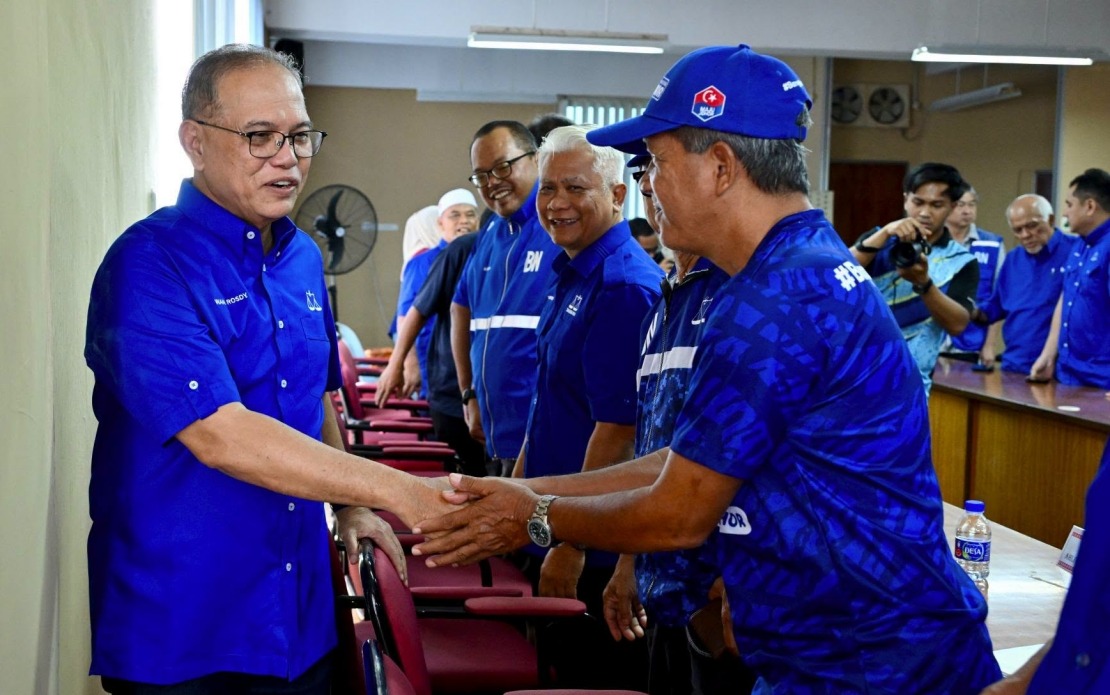
Pahang's Barisan Nasional coalition has mobilised party members to support the ongoing Johor state election campaign, with a concentrated effort focused on four strategically important constituencies, according to Pahang's political leadership. Datuk Seri Wan Rosdy Wan Ismail, who serves as both Pahang's state chairman and Menteri Besar, announced that party machinery from his state has been deployed to assist in campaigning across Pekan Nanas, Pulai Sebatang, Benut, and Kukup. These four seats collectively fall within the Tanjung Piai parliamentary constituency, a region that has proven pivotal in previous election cycles and represents a meaningful portion of the broader Johor battleground.
The cross-state coordination reflects the integrated nature of BN's election strategy across Malaysia's peninsula, where experienced party operatives and campaign infrastructure from one state are redirected to support efforts in neighbouring regions. Wan Rosdy's statement, made during his attendance at a teachers' appreciation ceremony and SPM excellence awards function in Kuantan, underscores the party's intention to deploy senior figures actively in the campaign trail. He further indicated his personal participation in campaign activities, committing to visit the FELDA area in Segamat—another region of electoral significance—where party machinery would require reinforcement and coordination.
The involvement of Pahang BN members carries symbolic and practical importance for the coalition. Pahang maintains substantial organisational capacity and demonstrated electoral machinery, particularly in rural constituencies and organised settlement areas such as FELDA schemes. By redirecting these resources toward Johor, BN signals confidence in its ability to contest multiple fronts simultaneously while leveraging experienced personnel from allied state governments. This approach has historically been employed during major electoral contests, allowing the coalition to pool resources and share campaign expertise across state boundaries.
Wan Rosdy expressed strong optimism regarding BN's electoral prospects in the Johor state election, citing both the internal commitment of the party machinery and what he characterised as a positive reception from voters. His observations from a three-day visit to Johor beginning from the nomination period indicated high morale among BN's campaign operatives and candidates. He highlighted the determination of BN nominees to engage with constituents and address public concerns, framing this engagement as a foundation for electoral success. Such confidence, while typical of campaign rhetoric, reflects the party's assessment of ground conditions and voter sentiment in contested areas.
The Johor state election represents a significant test for BN's electoral machinery in one of Malaysia's economically important states. The election encompasses 56 state seats across the state, with a total of 172 candidates contesting these positions. The scale of this contest necessitates coordination across multiple state-level BN organisations, particularly given the fragmentation of electoral support across Malaysia's peninsula and the need to concentrate resources where competitive advantage appears strongest. The focus on Tanjung Piai's constituent seats suggests BN's strategists have identified these areas as winnable or vulnerable to opposition gains, justifying the allocation of external campaign resources.
Polling day is scheduled for July 11, with early voting available to eligible voters on July 7. This timeline creates a concentrated campaign period in which parties must maximise their outreach and mobilisation efforts. The involvement of Pahang-based BN members and leadership in the final weeks before polling indicates the coalition's intention to maintain campaign momentum and ensure comprehensive coverage of target constituencies. Early voting provisions similarly mean that campaigning intensity must be maintained throughout the entire period leading to election day itself.
The Johor election occurs within the broader context of Malaysian electoral politics, where state-level contests often influence perceptions of federal government performance and provide signals regarding voter sentiment ahead of potential general elections. BN's performance in Johor holds implications for its standing as the dominant federal coalition and for its ability to maintain control of economically significant state administrations. The mobilisation of Pahang resources suggests party leadership views the Johor contest as consequential rather than routine, warranting investment of experienced personnel and organisational capacity from neighbouring states.
For Pahang, providing campaign support to Johor while simultaneously managing its own state administration requires careful coordination of political leadership and party machinery. Wan Rosdy's personal involvement in campaign activities, despite his responsibilities as Menteri Besar, indicates the significance party leadership attaches to Johor's electoral outcome. Such cross-state cooperation is facilitated by the BN coalition structure, which formally binds state-level parties under an overarching federal framework despite their distinct organisational identities.
The specific focus on Tanjung Piai-area constituencies reflects either competitive vulnerability or strategic opportunity in these seats. Historically, Tanjung Piai gained national prominence during a 2019 by-election contest that attracted intense national attention. The involvement of external party resources suggests these constituencies remain electorally sensitive or competitive, requiring reinforced campaign activity to ensure BN's success. The allocation of Pahang-based personnel indicates BN's confidence that its state machinery possesses relevant campaign experience and voter engagement capacity applicable to Johor's electoral context.
Moving forward, the intensity of campaign activities will likely increase as July 11 approaches, with state-level and federal party leadership intensifying their engagement across target constituencies. The deployment of cross-state support mechanisms demonstrates BN's determination to secure electoral victories in Johor, a state whose economic importance and political influence make its electoral results consequential for Malaysian politics generally. The effectiveness of this coordinated campaign approach will ultimately be assessed on polling day, providing indicators of voter sentiment and BN's continued ability to mobilise electoral support in competitive state contests.

