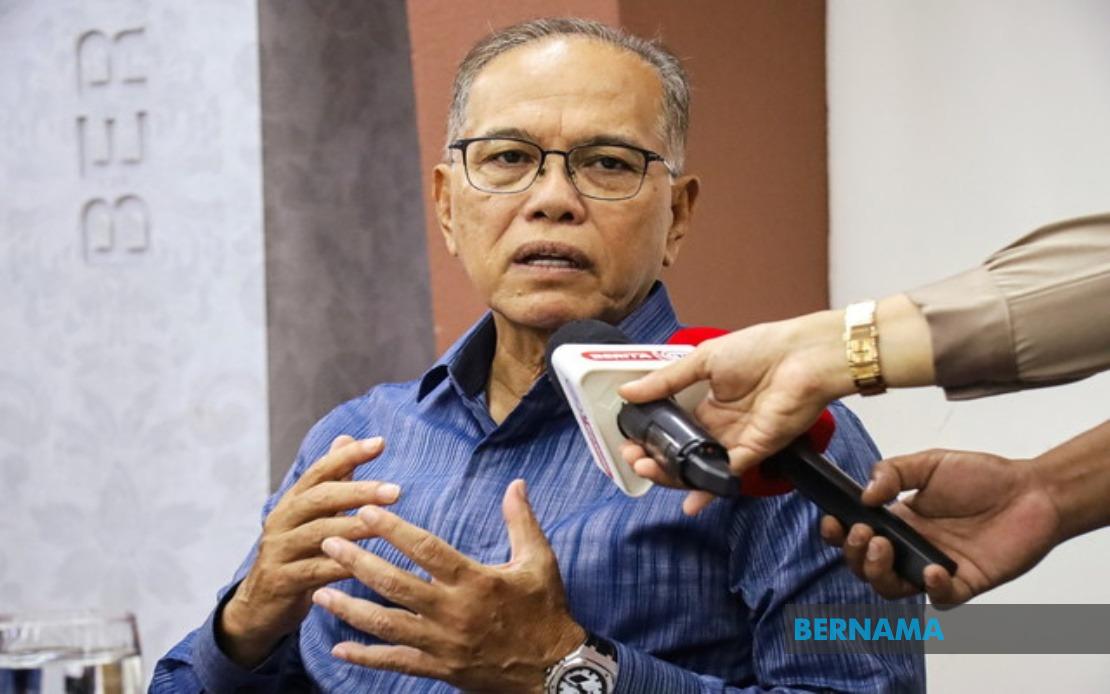
The Barisan Nasional faction in Pahang has doubled down on its commitment to sustaining the coalition arrangement with Pakatan Harapan for the duration until Malaysia's 16th General Election, according to Menteri Besar Datuk Seri Wan Rosdy Wan Ismail. Speaking in Kuantan during a government initiative presentation ceremony, Wan Rosdy expressed confidence that the current partnership would endure, underlining the regional leadership's preference for continued collaborative governance rather than pursuing alternative political arrangements.
The statement carries particular weight given Pahang's fragmented electoral landscape. When voters went to the polls in the 15th General Election, the state legislature became effectively split three ways: Barisan Nasional and Perikatan Nasional each secured 17 seats, while Pakatan Harapan managed eight seats in the 42-member state assembly. This deadlock necessitated the unusual coalition that emerged in late 2022, when the Pahang Regent consented to a partnership between the two largest blocs with Pakatan Harapan providing the crucial additional numbers to form a functional government, leading to Wan Rosdy's appointment as chief minister.
The renewal of this unity commitment now comes at a crucial juncture for Malaysian politics. With the next general election expected within the coming years, coalition arithmetic will reshape how parties navigate state and federal politics. Pahang's experience illustrates the practical necessity of multiparty cooperation in several Malaysian states, a reality that contradicts the winner-take-all mentality that dominates federal politics. The Menteri Besar's willingness to publicly reaffirm this arrangement signals that Pahang's leadership views the partnership as more than a temporary expedient born from electoral necessity, but rather as a model worthy of continuation.
Wan Rosdy also intimated that Pahang Barisan Nasional remains pragmatically flexible about its political posture moving forward. His statement that the state coalition remains open to forming new cooperative arrangements with other parties demonstrates a both-and approach rather than either-or positioning. This calculated ambiguity allows Pahang's BN to maintain current partnerships while preserving negotiating space for potential realignments as the general election approaches and clearer national political trajectories emerge. For voters and political observers, such flexibility reflects the reality that state-level politics frequently operate according to different rules than federal contests.
Beyond the immediate political declaration, Wan Rosdy used the occasion to underscore his administration's focus on substantive governance. The ceremony highlighted the Makmur Pahang Initiative's education assistance programme, which allocated RM118,000 to support 118 students pursuing higher education in Egypt and New Zealand. This emphasis on educational investment reveals how state governments in Malaysia increasingly position themselves as development facilitators, competing for visibility through merit-based assistance programmes that ostensibly transcend partisan divisions. Such initiatives serve dual purposes: they genuinely support students while simultaneously demonstrating governmental capability to voters regardless of coalition composition.
The educational outreach extends beyond Middle Eastern and Oceanic destinations. The Pahang state government has channelled USD1,000 through Yayasan Pahang to support students undertaking tertiary studies in Jordan and Morocco, reflecting a deliberate strategy to position the state as facilitating pathways to diverse international academic opportunities. This geographic diversification of scholarship destinations mirrors broader Southeast Asian trends where governments seek to build human capital through exposure to varied educational systems and cultural contexts, particularly in institutions offering Islamic-oriented curricula alongside secular disciplines.
Wan Rosdy's comments to the scholarship recipients carried implicit messaging about state expectations and values. His exhortation that students uphold Pahang's reputation abroad and return with excellent achievements reframes educational assistance as a mutual obligation rather than one-directional largesse. The emphasis on mental and physical resilience acknowledges the documented challenges international students face while studying abroad, from cultural adjustment to financial pressures. By framing these difficulties as normal rather than exceptional, the Menteri Besar positioned the state government as offering not merely financial support but also psychological preparation for the expatriate student experience.
The Makmur Pahang Initiative itself represents a characteristic approach to state-level development strategy in contemporary Malaysia. Rather than presenting education policy as ideologically driven, the administration has packaged assistance within a prosperity framework, suggesting that investment in human capital serves tangible economic purposes. The initiative's expansion and ongoing enhancement indicate that Pahang's leadership recognises education as a perennial priority that must evolve with changing student needs and emerging academic opportunities.
The careful selection of study fields warrants examination. Wan Rosdy specifically referenced consideration of programmes with Islamic elements alongside courses in strategically relevant disciplines, suggesting that the state applies mixed criteria balancing religious-cultural considerations with economic utility. This balanced approach reflects broader patterns in Malaysian state governance, where Islamic values and capitalist development imperatives are increasingly presented as complementary rather than contradictory. For Pahang, cultivating graduates trained in fields that align with both Islamic principles and labour market demands creates a workforce equipped for positioning the state competitively within Malaysia's knowledge economy.
The timing of these pronouncements about educational initiatives and political commitment carries symbolic significance. By emphasising development outcomes and administrative competence while discussing political stability, Wan Rosdy and his administration signal to voters that regardless of coalition composition, the machinery of state government delivers tangible benefits. This messaging strategy proves particularly potent in Pahang, where the Unity Government represents a relatively novel arrangement that some observers viewed as inherently unstable when it formed two years prior.
Looking toward the 16th General Election, Pahang's experience with coalition governance may offer templates for other states navigating fragmented electoral outcomes. The relative stability achieved through the current arrangement, combined with active development programming, suggests that Malaysian voters increasingly expect state governments to function competently regardless of whether a single coalition dominates or multiple parties must negotiate power-sharing. Wan Rosdy's reaffirmation of commitment to this partnership through the next election cycle effectively signals that Pahang's leadership has accepted—and perhaps even embraced—the necessity of coalition governance as a structural feature of Malaysian democracy rather than treating it as an anomalous interregnum.

