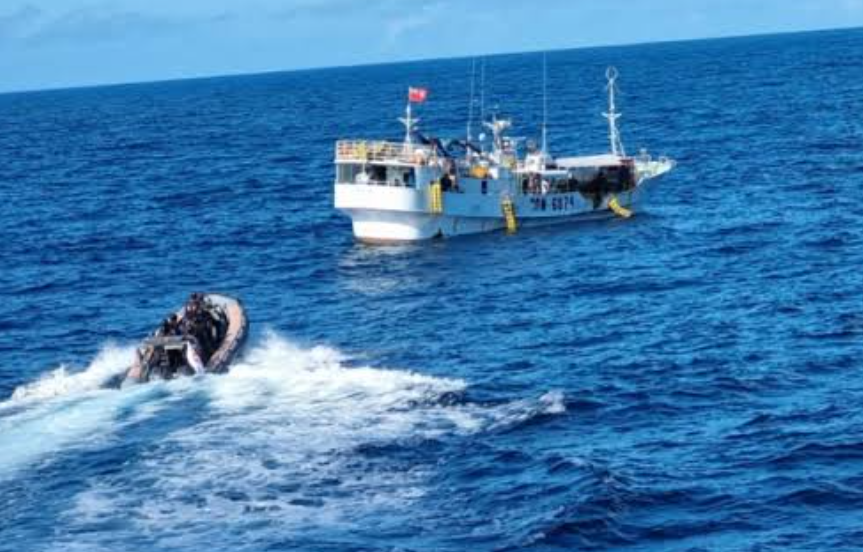
Coordinated enforcement operations across the Pacific have resulted in the detention of multiple fishing vessels from China and Indonesia, marking an intensified push by island nations to combat illegal activity in waters that generate hundreds of millions of dollars annually for their economies. The Pacific Islands Forum Fisheries Agency disclosed that four boats were apprehended or brought to port by authorities in Kiribati, Palau and Papua New Guinea during August, accused of either operating without proper authorisation or violating the terms of their fishing licences. The detentions underscore mounting concerns about the exploitation of fish stocks in a region where livelihoods and government revenues depend heavily on sustainable resource management.
The arrests came as part of Operation Island Chief, an ambitious two-week surveillance initiative launched between August 3 and 14 that involved eleven Pacific island nations working in concert to patrol and inspect vessels across a staggering 28 million square kilometres of ocean. More than 100 fishing boats were boarded during the operation, which employed aerial reconnaissance conducted by an Australian military aircraft alongside surface patrols by a United States Coast Guard vessel and maritime police units from participating nations. The scale of the operation demonstrates the determination of Pacific governments to reclaim control over their exclusive economic zones and combat the sophisticated evasion tactics employed by industrial fishing fleets.
The stakes involved in protecting these waters are substantial. Approximately half of the world's tuna catch originates from Pacific waters, yet Pacific island nations themselves capture and process only around 15 per cent of this harvest. The fishing sector generates roughly US$500 million in annual licence access fees and contributes a further US$1.2 billion through export revenues, providing critical income for governments with limited alternative revenue sources. Beyond these macroeconomic figures, the fisheries sector sustains livelihoods for roughly one-third of Pacific households, making illegal fishing not merely an environmental issue but a direct threat to household food security and economic survival across the region.
The majority of industrial tuna fishing operations are conducted by long-distance fleets that migrate across the exclusive economic zones of smaller island states in exchange for licence fees negotiated between foreign companies and island governments. These vessels typically process their catches aboard ship before transporting the product to Asian markets, meaning Pacific nations lose the economic value-add that domestic processing would generate. The structural imbalance in this arrangement has long frustrated Pacific leaders, who control the resources but lack the capital and infrastructure to develop their own fishing industries.
The detention of Chinese and Indonesian vessels is a particularly sensitive outcome, given the significant presence of Chinese fishing companies operating throughout the region and the existence of joint venture fisheries partnerships between Chinese entities and several Pacific governments. Publicly naming and shaming foreign fishing operators suspected of illegal activity carries diplomatic risks in an environment where economic relationships with major fishing nations remain crucial. Chinese vessels operating in Pacific waters represent some of the largest and most technologically advanced fleets in the region, and any confrontation risks straining relationships with Beijing at a time when many Pacific nations navigate complex geopolitical considerations.
This delicate dynamic was illustrated recently when Tuvalu authorities apprehended a Chinese fishing vessel detected transmitting false location data while engaged in illegal fishing within Tuvalu's territorial waters. The boat was held for 24 days before being released following a fine, according to Peter Hammarstedt, captain of the conservation vessel Sea Shepherd, which coordinated maritime enforcement patrols in the region. Tuvalu's decision to pursue enforcement against a Chinese vessel carries particular weight given Tuvalu's diplomatic recognition of Taiwan rather than the People's Republic of China, making any confrontation with Chinese operators inherently fraught with geopolitical implications.
Data compiled by the Western and Central Pacific Fisheries Commission reveals the persistent nature of enforcement challenges in the region. Between 2008 and 2026, inspectors issued 278 penalty notices to Chinese fishing boats, marking the second-highest infringement tally globally behind Taiwan with 319 notices. These figures suggest that illegal fishing is neither exceptional nor isolated but rather a systemic challenge requiring sustained regulatory attention. The sheer volume of infractions also indicates that formal penalties alone have not deterred continued violations, pointing to the need for more robust deterrence mechanisms or enhanced monitoring capacity.
Fourteen additional vessels were identified as suspicious during Operation Island Chief but the FFA has declined to provide details about these cases or the identities of the vessels involved. This reticence reflects the political sensitivity surrounding enforcement actions, particularly when foreign governments or companies face potential embarrassment or economic consequences. The agency's reluctance to publicise these cases suggests that diplomatic negotiations may be ongoing regarding how violations will be addressed.
An upcoming summit of eighteen Pacific island leaders scheduled to commence August 30 in Palau is expected to deliberate on revised strategies aimed at strengthening Pacific nations' control over their fisheries and maximising economic benefits from their marine resources. Climate change presents an additional urgency to these discussions, as shifting ocean temperatures and changing fish migration patterns threaten to disrupt established fishing grounds and potentially reduce overall stock availability. Pacific island leaders recognise that the window for establishing effective governance frameworks and negotiating more advantageous terms with foreign fishing interests may be narrowing as environmental conditions evolve and global competition for remaining resources intensifies.

