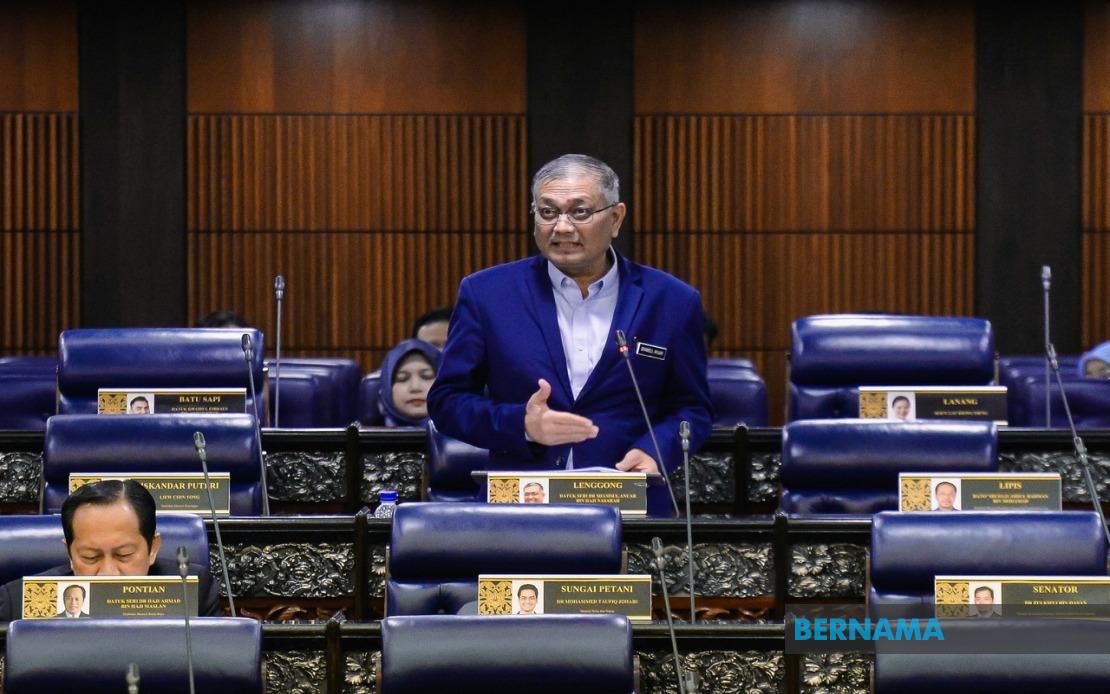
The Royal Malaysia Police and its enforcement partners have intensified their war against unlicensed cryptocurrency mining, seizing over 75,000 machines through more than 3,000 raids spanning from 2022 to May of this year. Deputy Home Minister Datuk Seri Dr Shamsul Anuar disclosed the scale of the crackdown during parliamentary proceedings, highlighting the complexity and reach of an underground industry that has metastasised across the nation. The enforcement tally, which included 629 arrests, underscores the determined response by authorities to a crime that combines theft of state electricity resources with regulatory violations and potential linkages to financial misconduct.
The coordinated operations orchestrated by the Home Ministry reflect a multi-agency approach that pools resources from the Royal Malaysia Police, state power utility Tenaga Nasional Berhad (TNB), municipal councils, and other government bodies. This collaborative framework has become essential given the technical sophistication required to detect and dismantle illegal mining operations, many of which are concealed in industrial zones, residential areas, and even commercial properties. By leveraging TNB's expertise in power distribution monitoring alongside police intelligence capabilities, the authorities have developed a more responsive enforcement system designed to identify potential hotspots before illegal operations can establish themselves firmly.
The persistence of unlawful cryptocurrency mining despite sustained crackdowns reveals the continued economic appeal of the sector for certain segments of Malaysian society. The gap between modest legitimate income and potential returns from mining operations, combined with volatile digital asset prices that can generate windfall profits, creates powerful incentives for operators willing to circumvent regulations. Shamsul Anuar acknowledged this motivation during his parliamentary response, noting that substantial profit margins continue to drive participation in the underground market. However, he stressed that financial motivation does not excuse the illegal means through which mining is often conducted, particularly the systematic theft of electricity that undermines TNB's revenue streams and imposes hidden costs on legitimate consumers.
Electricity theft represents the most damaging aspect of illegal mining from the perspective of both regulatory integrity and public finance. Mining operations consume enormous quantities of electrical power to drive specialised computing equipment, and operators routinely reduce their costs through unauthorised connections that bypass metering systems or through direct tampering with electricity meters. These illicit practices erode TNB's ability to accurately track consumption, distort tariff structures, and effectively transfer costs from lawbreakers to ordinary households and businesses that pay their bills properly. The cumulative effect across thousands of operations creates a substantial financial leak in the national power utility that ultimately affects electricity pricing and service reliability.
Malaysia's regulatory framework establishes clear distinctions between permissible and prohibited cryptocurrency activities, though these distinctions remain poorly understood by the general public. The Home Ministry has clarified that while ownership and trading of digital assets operate within legal parameters, cryptocurrency mining—particularly when executed through illegal electricity connections or equipment tampering—constitutes a criminal activity. This distinction is crucial because it prevents confusion about whether all cryptocurrency-related activities face blanket prohibition. Rather, the specific operational modalities and compliance with licensing requirements determine legality, allowing legitimate enterprises to potentially participate in digital asset activities if they obtain proper authorisation and pay for electricity through official channels.
Regulatory oversight of digital assets in Malaysia is distributed across multiple institutions with distinct mandates. The Securities Commission Malaysia oversees digital asset regulation within its statutory framework, while Bank Negara Malaysia maintains responsibility for broader financial stability, payment system integrity, and anti-money laundering compliance. This bifurcated approach reflects international best practice in cryptocurrency governance, though it also creates potential coordination challenges that authorities must actively manage. The KDN's coordination with both regulators and enforcement agencies suggests recognition that combating illegal mining requires simultaneous attention to regulatory design, market oversight, and direct law enforcement action.
The scale of confiscations—75,000 machines over approximately three years—translates to an average of roughly 25,000 units annually or approximately 68 machines daily, suggesting operations of considerable geographic dispersion. Not all raids yield equipment; many operations may be discovered empty or partially dismantled by operators fleeing enforcement. The geographic spread across over 3,000 distinct enforcement actions indicates that illegal mining does not concentrate in a few industrial clusters but rather pervades multiple states and municipalities. This distribution complicates enforcement strategy because it requires coordination across jurisdictional boundaries and demands intelligence gathering capabilities that can identify emerging hotspots faster than operators can relocate their equipment.
The crackdown has proceeded despite the minimal regulatory recognition afforded to cryptocurrency in Malaysia's financial system. Digital assets lack status as legal tender, placing them outside formal monetary frameworks while still attracting substantial private investment and increasingly organised commercial operations. This ambiguous regulatory positioning creates enforcement challenges because authorities must prevent associated criminality—particularly electricity theft and money laundering—without providing legitimacy to the underlying asset class through regulatory recognition. The balance requires sophisticated enforcement that targets the criminal dimensions of mining without appearing to endorse cryptocurrency adoption more broadly, a messaging challenge that has not always been clearly communicated to the public.
The coordination mechanisms highlighted by the deputy minister suggest institutional learning from earlier enforcement efforts. Previous years of operations presumably revealed which agencies held critical technical capabilities, which jurisdictional boundaries created obstacles, and which intelligence-gathering methods proved most effective. The emphasis on intelligence gathering before operations represents a shift from reactive enforcement toward predictive action, though resource limitations likely prevent this from being deployed uniformly across the nation. TNB's participation reflects recognition that power utility data—consumption patterns, unexpected usage spikes in residential zones, supply disruptions—offers crucial investigative leads that police working alone could not generate.
For Malaysian households and businesses, the crackdown carries indirect significance through its protection of TNB's financial sustainability and the integrity of electricity distribution systems. Widespread illegal mining, if unchecked, would necessitate tariff increases to maintain service quality and infrastructure investment, effectively socialising the costs of criminal activity across the entire consumer base. The enforcement effort thus represents an investment in maintaining equitable burden-sharing for electricity costs. However, the ongoing persistence of illegal operations despite intensive enforcement suggests that current deterrents—whether in the form of arrest risk or equipment confiscation penalties—remain insufficient for certain operators who calculate that profit potential exceeds expected costs of detection and prosecution.

