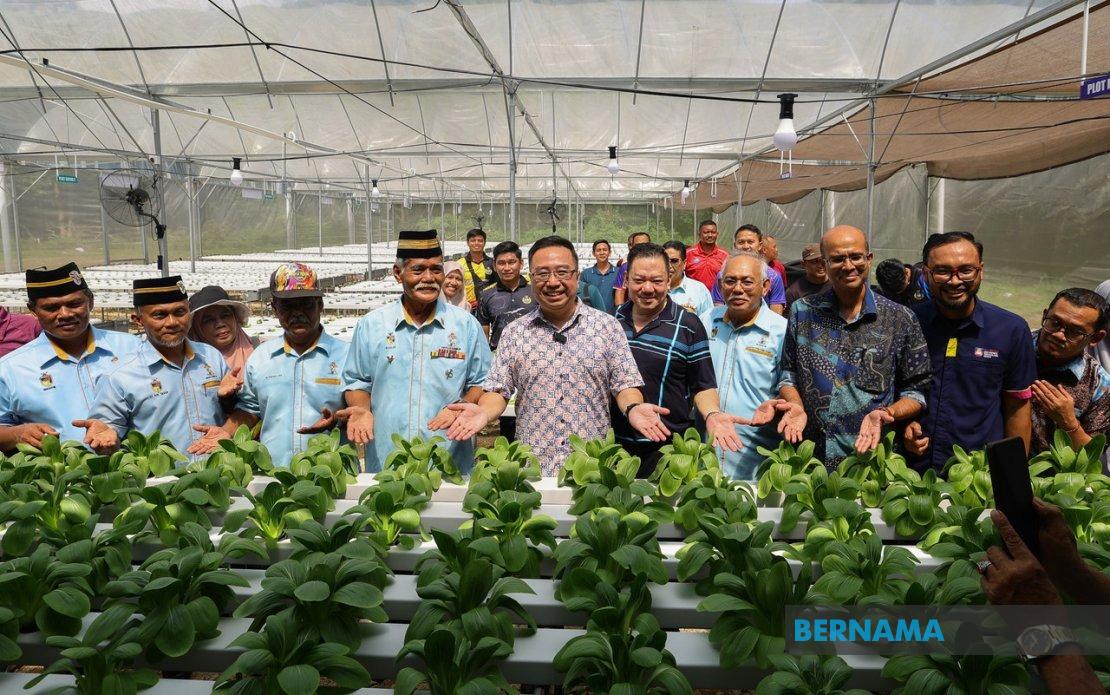
The Malaysia Social Innovation Programme (MyIS Komuniti) has emerged as a significant driver of community development, extending its reach to over 6,700 individuals across the country through an expanding portfolio of 67 projects valued at RM13.97 million spanning the period from 2021 through last year. The initiative, overseen by Yayasan Inovasi Malaysia (YIM) since its inception in 2015, represents a deliberate strategy to harness technology for social good while addressing pressing concerns around food security and economic resilience in vulnerable communities.
Science, Technology and Innovation Minister Datuk Chang Lih Kang highlighted the programme's pivotal contribution to technological adoption and socioeconomic improvement during the official launch of an aquaponics facility at Pasir Panjang in Port Dickson. The minister emphasised that MyIS Komuniti operates with a dual mandate: advancing technology use whilst simultaneously nurturing inclusive, sustainable development pathways that strengthen communities' capacity to lift themselves economically. This balanced approach distinguishes the programme from purely technology-driven initiatives that may overlook the social dimensions of innovation deployment.
The newly launched Pasir Panjang aquaponics project exemplifies this holistic philosophy. With a dedicated allocation of RM251,616 under the MyIS framework, the facility integrates multiple layers of support extending far beyond basic infrastructure provision. Community members receive not merely access to equipment but structured knowledge transfer, hands-on skills training, and sustained technical assistance designed to foster genuine local ownership and long-term operational independence. This comprehensive support architecture recognises that technology adoption fails without accompanying human capital development.
Integrated aquaponics represents an elegant technological solution to multiple agricultural challenges simultaneously. The system merges fish farming with hydroponic vegetable production in a symbiotic relationship where nutrient-enriched water from fish tanks nourishes plants, which subsequently filter and purify the water before it cycles back to the aquatic component. This closed-loop methodology dramatically reduces water consumption, minimises spatial requirements, and virtually eliminates agricultural waste whilst maintaining productivity. For Malaysian communities facing constraints around arable land, water scarcity, and climate unpredictability, such systems offer tangible pathways toward food self-sufficiency and improved nutritional outcomes.
Smartening the aquaponics system through Internet of Things technology and solar-powered renewable energy represents another innovation layer. Real-time monitoring capabilities enable operators to track critical variables including water quality metrics, temperature fluctuations, and overall system functionality with precision previously impossible in smallholder farming contexts. Early warning systems triggered by parameter deviations allow intervention before cascading failures occur, substantially reducing crop and livestock losses that disproportionately harm economically vulnerable farmers. The renewable energy dimension simultaneously addresses electricity cost burdens that often constrain agricultural viability for marginal operators.
Production metrics validate the system's practical effectiveness. The Pasir Panjang installation generated over 800,000 kilogrammes of vegetables during its initial operational year, demonstrating scale-appropriate productivity that can meaningfully contribute to household food security and generate marketable surpluses. Importantly, fish farming operations remain in growth phases, suggesting significant further production potential as operations mature and operators develop expertise. These figures suggest that aquaponics can transition from experimental curiosity to economically viable livelihood strategy for participating communities.
The Negeri Sembilan JLJD Veterans Association membership exceeding 100 individuals constitutes both the primary beneficiary population and crucial implementation partner for the Pasir Panjang project. This dual-role positioning transforms former military personnel into innovation entrepreneurs rather than passive aid recipients, preserving dignity and agency whilst channelling their organisational discipline toward productive enterprise. The partnership arrangement reflects sophisticated programme design recognising that sustainable community development requires enlisting local agency rather than imposing external solutions.
Marketing pathways represent an often-overlooked but essential component of agricultural innovation. The Federal Agricultural Marketing Authority (FAMA) partnership ensures that produce reaching beyond household consumption levels accesses organised market channels, stabilising prices and reducing farmers' vulnerability to exploitative middlemen. Direct-to-consumer selling options further enhance margins and control over value chains. These marketing infrastructure connections distinguish functional programmes from well-intentioned initiatives that produce goods without secure sales mechanisms.
The involvement of Universiti Teknologi MARA (UiTM) through its Research Nexus division illustrates how innovation programmes can bridge academic institutions with grassroots communities. UiTM's technical expertise underpinned the aquaponics system development whilst community engagement provides researchers with real-world validation contexts and application laboratories. This symbiotic arrangement benefits both parties—universities gain practical research grounding whilst communities access sophisticated knowledge without commercial extraction.
For Malaysian policymakers, the MyIS Komuniti programme offers evidence supporting strategic investments in technology-enabled community development. The RM13.97 million cumulative allocation across 67 projects remains modest relative to national budgets, suggesting substantially expandable models if deemed effective. As Malaysia confronts food security pressures amidst climate change, urbanisation, and import dependency, scaling community-level production infrastructure warrants serious consideration. The programme demonstrates that technological solutions exist; implementation and financing represent the binding constraints.
Regional implications merit consideration as well. Southeast Asian nations share comparable challenges around food security, youth underemployment in rural areas, and climate vulnerability. The MyIS Komuniti model, adapted to local contexts, could provide templates for regional governments pursuing comparable development objectives. Malaysia's willingness to invest in and publicly showcase such programmes may encourage regional peer learning and potential collaborative initiatives that amplify impact across borders.
The convergence of sustainability, technology, community empowerment, and economic opportunity within single projects reflects evolving development paradigms increasingly prevalent across Asia-Pacific regions. Rather than pursuing singular objectives—whether purely environmental, purely economic, or purely technological—integrated approaches that pursue multiple objectives simultaneously recognise their inherent interconnections. Communities achieving food security simultaneously develop marketable skills, reduce import dependency, strengthen local institutions, and build climate resilience. This multiplicative value creation justifies continued expansion of such programmes.

