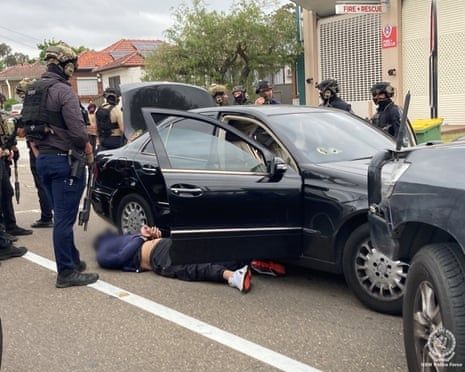
New South Wales authorities have intensified their crackdown on transit violence, announcing the arrest of 356 individuals during the latest phase of a major policing initiative. The NSW Police Force revealed that the three-day enforcement campaign, conducted from Thursday through Saturday, represents the sixth iteration of Operation Waratah and underscores the government's commitment to making public transport safer for commuters across the state.
The scale of the operation reflects an unusual concentration of law enforcement resources. More than 400 uniformed and plainclothes officers were deployed across NSW's sprawling public transport network daily during the operation, examining trains, light rail vehicles, buses and ferries. This level of saturation policing signals the seriousness with which authorities are treating violence and sexual offences on public transport, issues that have garnered significant community concern in recent years.
Operation Waratah was established in 2024 specifically to target individuals who commit violent and sexual crimes aboard public vehicles. Since its inception, the program has achieved cumulative results that indicate a sustained problem requiring persistent intervention. The latest phase brought the total number of arrests under the entire operation to more than 1,800, demonstrating both the prevalence of transit crimes and the consistent enforcement efforts directed at perpetrators.
The 356 arrests during this single phase resulted in 645 separate criminal charges, indicating that many apprehended individuals faced multiple counts. This charging pattern suggests that officers were encountering individuals with diverse criminal histories or those committing multiple offences during single incidents. The breadth of charges underscores the varied nature of crimes occurring on public transport rather than simple isolated incidents.
Weapon seizures formed a significant component of the operation's success. Police recovered 28 knives or other weapons during the three-day period, a finding that highlights the armed nature of some transit crimes and the potential for serious injury to commuters and staff. Beyond weapons, officers recorded 137 drug detections, indicating that substance-related offences and public transport crimes frequently intersect.
The operational deployment figures provide insight into the intensity of the enforcement effort. Officers patrolled 539 trains, 127 buses and 29 light rail trams during the campaign period. These specific numbers reveal a targeted rather than random approach, suggesting police either focused on particular routes or conducted systematic sweeps across the network. The emphasis on rail services, where serious crimes are believed to concentrate, is evident in the higher volume of train patrols compared to other transport modes.
For Malaysian observers, this Australian enforcement approach offers relevant lessons. Southeast Asia has experienced similar public transport safety challenges, with many regional cities grappling with harassment, theft and violence on buses and trains. While Australia's law enforcement resources and established institutional frameworks differ from those in developing nations, the operational model of concentrated, multi-agency deployment during specific timeframes has proven effective and could inform local policy discussions.
The cumulative arrest toll since Operation Waratah's inception speaks to the persistence required to address transit crime effectively. With more than 1,800 arrests across multiple phases, NSW Police have demonstrated that systematic enforcement requires sustained commitment and adequate resourcing. The progression from the first phase to this sixth iteration shows that authorities view transit safety as an ongoing challenge rather than a problem susceptible to quick fixes.
Community confidence in public transport systems depends significantly on perception and reality of personal safety. High-profile enforcement operations, while sometimes controversial, serve to reassure regular commuters that authorities are actively addressing their concerns. The NSW Police's emphasis on publicising Operation Waratah results suggests recognition that communicating enforcement efforts forms part of the broader safety strategy.
The diversity of offences detected during these operations reflects the multifaceted nature of transit crime. While violent and sexual offences represent the stated priority, the presence of drug-related detections indicates that many individuals involved in transit crime engage in broader criminality. This overlap suggests that effective transit safety interventions may require coordinated approaches addressing substance abuse, mental health support and social services alongside direct law enforcement.
Looking forward, the continuation of Operation Waratah into successive phases indicates that NSW Police view transit security as requiring permanent attention rather than episodic campaigns. Whether this intensive approach ultimately reduces crime rates or simply displaces offences to other locations remains a question for ongoing evaluation. The sustainability of such resource-intensive operations also raises questions about long-term policing strategy in an environment of competing public safety priorities.

