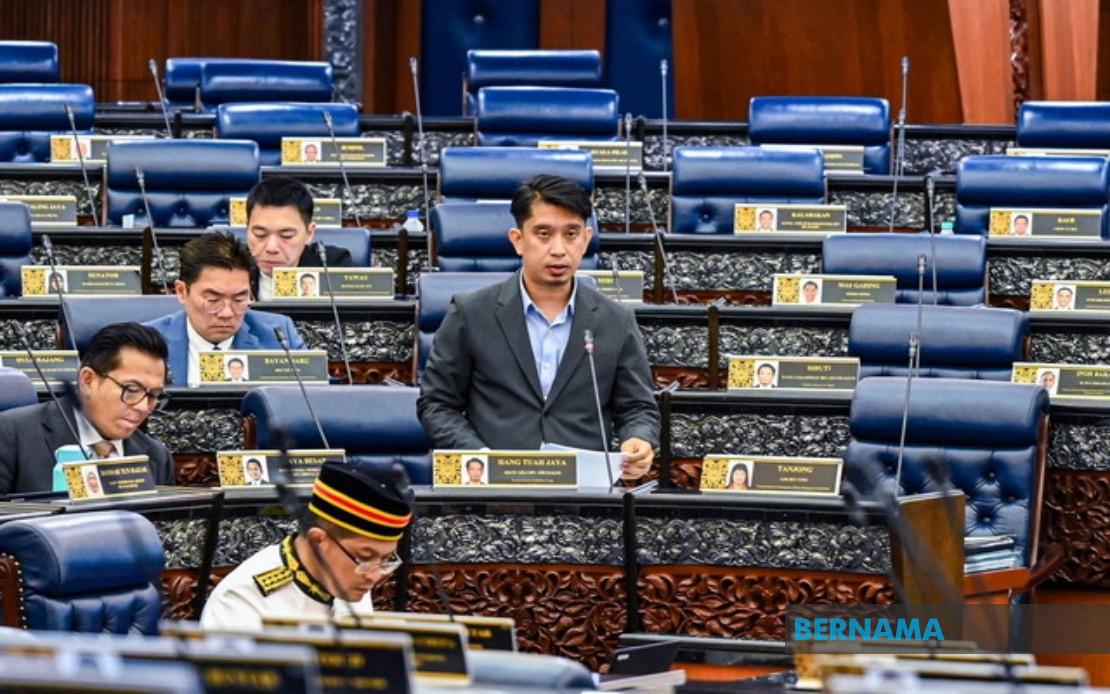
Malaysia's public institutions of higher learning have maintained robust enrolment in science and technology disciplines, with Deputy Minister of Higher Education Adam Adli Abd Halim revealing that 326,419 students pursued STEM fields between 2023 and March 2026—more than half of the 556,556 total diploma and first degree intake during that period. The disclosure underscores the government's strategic commitment to developing a knowledge-intensive workforce capable of competing in emerging technology sectors, though it also raises questions about whether the current pipeline sufficiently meets Malaysia's ambitious industrial ambitions.
The MyMOHES system data presented to parliament shows that STEM enrolments accounted for approximately 58.6 percent of all public university intake, leaving 230,137 students—roughly 41.4 percent—pursuing non-STEM qualifications across education, humanities, social sciences, business and related disciplines. This distribution reflects deliberate policy steering by the Ministry of Higher Education to concentrate resources and student placement in fields deemed critical for the nation's technological transformation and competitive positioning in the regional and global economy.
The emphasis on STEM talent development aligns with Malaysia's broader strategic objectives, particularly the government's push into high-technology manufacturing and services. Deputy Minister Adam Adli contextualised the enrolment figures within the framework of national priorities, highlighting that the intake targets sectors including artificial intelligence, semiconductor design and manufacturing, industrial automation, digital infrastructure and green energy technologies. These sectors represent the frontiers of economic value creation and are expected to generate high-wage employment opportunities for graduates, making STEM pathway selection increasingly consequential for individual career prospects and national economic resilience.
The question that prompted the parliamentary disclosure originated from Datuk Dr Ku Abd Rahman Ku Ismail, a Kubang Pasu representative, who sought comparative data on STEM enrolment ratios between public and private higher education institutions, alongside information about engineering workforce projections under Malaysia's National Science, Technology and Innovation Policy spanning 2021 to 2030. This line of inquiry reflects growing parliamentary interest in ensuring coherence between educational output and labour market requirements, a concern that has become more acute as Malaysia competes for investment in technology-intensive industries against regional rivals with comparable or superior technical capabilities.
Deputy Minister Adam Adli clarified an important distinction regarding Malaysia's approach to workforce planning. The DSTIN 2021–2030 policy, administered by the Ministry of Science, Technology and Innovation, does not establish fixed numerical targets for engineers by specific discipline or field. Instead, the framework adopts a more encompassing ecosystem-based strategy centred on building comprehensive capacity across the Researchers, Scientists, Engineers and Technologists (RSET) professional category. This broader conceptualisation reflects recognition that technological innovation and industrial competitiveness depend not merely on raw numbers of graduates but on the quality of their training, research capabilities, institutional support and integration with industry partners.
Under the RSET framework, Malaysia has established a specific benchmark: achieving a ratio of 200 RSET professionals for every 10,000 workers by 2030. Using the projected national workforce figure of approximately 17.06 million people, the Deputy Minister calculated that Malaysia will require roughly 341,200 RSET professionals by the end of the current decade. This projection underscores the scale of human capital development required and suggests that current enrolment levels, while respectable, may require continued expansion and qualitative improvement to close any emerging gaps between supply and demand.
The target of 341,200 RSET professionals by 2030 presents both opportunity and challenge for Malaysia's higher education system and vocational training infrastructure. Current STEM enrolments in public universities alone have produced significant numbers, but meeting the full target will demand contributions from private institutions, technical and vocational education and training (TVET) providers, and workplace-based skill development programmes. Furthermore, not all STEM graduates necessarily enter RSET-designated roles; some pursue other career paths, and international migration of skilled workers—a phenomenon affecting Southeast Asian economies broadly—potentially diverts qualified talent to higher-wage destinations.
Responding to supplementary questioning from Member of Parliament Onn Abu Bakar regarding institutional capacity building, Deputy Minister Adam Adli identified the Malaysian Technical University Network (MTUN) as the focal point for ministry initiatives to expand expert faculty recruitment, research laboratory infrastructure and advanced technological facilities. MTUN comprises four universities strategically positioned to concentrate national investment in technical excellence and industrial collaboration, particularly in emerging domains such as artificial intelligence, semiconductor engineering and digital systems. This concentration strategy reflects fiscal realities and the recognition that excellence in high-technology fields requires critical mass and institutional specialisation.
The emphasis on MTUN institutions reflects a wider pattern in Malaysian higher education policy: rather than attempting uniform capability development across all public universities, the government has opted for differentiated institutional missions. This approach aims to generate centres of technical excellence capable of producing world-class researchers and engineers while allowing other institutions to focus on different disciplinary strengths and student populations. The strategy carries potential advantages in efficiency and focused resource deployment, though it also raises questions about equitable access to technical education across different regions and student demographics.
Looking forward, the sustainability of Malaysia's technical workforce development depends on several interconnected factors beyond raw enrolment numbers. Teaching quality, laboratory modernisation, industry partnerships that provide internship and employment pathways, and competitive compensation for STEM professionals all influence whether the 326,419 students who entered STEM programmes between 2023 and 2026 ultimately establish productive careers contributing to national technological capacity. International benchmarking and comparative analysis with regional competitors would provide additional context for assessing whether current enrolment and capability-building efforts position Malaysia adequately for emerging economic challenges.
The parliamentary disclosure also suggests ongoing governmental preoccupation with workforce planning in a rapidly evolving technological landscape. The fact that enrolment data was actively tracked through the MyMOHES system and regularly reported to parliament indicates institutional recognition that matching educational supply with labour market demand requires continuous monitoring and responsive policy adjustment. As artificial intelligence, biotechnology, advanced manufacturing and green technologies evolve, educational programmes must anticipate emerging skill requirements, implying that the DSTIN 2021–2030 framework and workforce targets may themselves require refinement as the decade progresses and technological trajectories become clearer.

