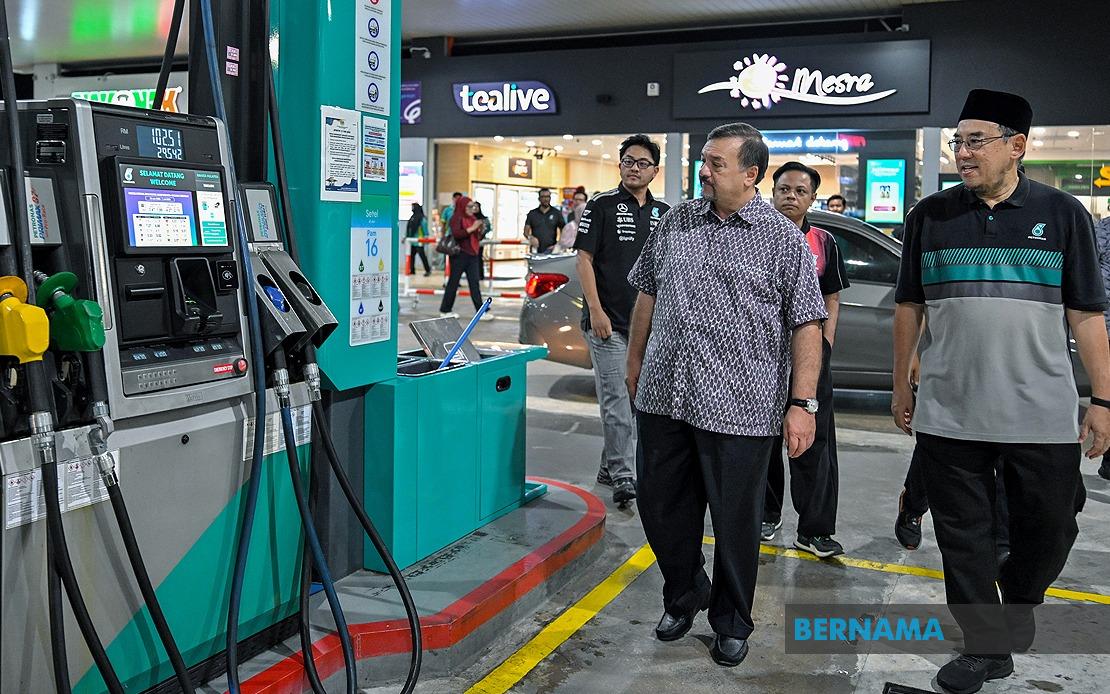
The government's subsidised diesel initiative has demonstrated robust early demand, with the BUDI MADANI portal recording more than 18,000 applications for supplementary fuel allowances by the evening of its second operational day. Second Finance Minister Datuk Seri Amir Hamzah Azizan disclosed the encouraging figures during an inspection of the scheme's rollout at a petrol station along the NKVE Damansara route, signalling that the controversial fuel subsidy programme is gaining acceptance among eligible vehicle owners despite initial concerns about system readiness.
The early implementation phase of BUDI MADANI Diesel, which commenced yesterday across Peninsular Malaysia, has witnessed cumulative transaction volumes exceeding 40,000 as users take advantage of subsidised diesel priced at RM2.15 per litre. The quantum of eligible applications suggests that awareness campaigns and portal accessibility are functioning effectively, with the government appearing to have successfully communicated eligibility criteria to owners of diesel-powered pickup trucks and SUVs. This uptake trajectory indicates that administrative mechanisms established to manage the programme are absorbing the initial surge in demand without the operational breakdowns that frequently plague newly launched government digital initiatives in Malaysia.
Amir Hamzah emphasised that the government has implemented multiple channels to facilitate application submissions, recognising that not all vehicle owners possess equal familiarity with online systems. Applicants can submit their requests directly through the official BUDI MADANI portal, while those encountering difficulties can receive on-site assistance from officers stationed at Inland Revenue Board offices, Urban Transformation Centres, and service counters operated by participating oil companies. This multi-layered support infrastructure reflects lessons learned from previous subsidy programmes and addresses the digital divide that characterises Malaysia's diverse population, particularly in rural and semi-urban areas where internet connectivity and technical literacy remain variable.
Among the scheme's notable features is a quota transfer mechanism designed to address scenarios where registered vehicle owners are not the primary users. This provision acknowledges the practical reality that many commercial vehicles—particularly pickup trucks utilised for business purposes—are operated by employees or family members rather than the registered proprietor. The transfer process operates through the same portal, with approved transfers linked to the identity card number of the actual user, ensuring that the system recognises the intended beneficiary at petrol stations. Once activated, the transferred quota remains permanently associated with the designated individual but continues to be tagged to the vehicle itself, creating a multi-layered verification structure that aims to prevent misuse or unauthorised quota sharing.
The subsidised pricing structure itself reflects a calibrated approach to subsidy management. The current rate of RM2.15 per litre will decrease further to RM2.10 beginning this Wednesday, approximately one week before the full programme launch scheduled for July 1. This gradual price adjustment period allows the system to identify and resolve any bottlenecks in the distribution network while maintaining pricing stability that encourages participation without creating artificial demand surges. The flexible quota mechanism, permitting eligible users to access up to 200 litres monthly, represents a significant departure from previous rigid subsidy arrangements and provides vehicle owners with genuine flexibility to manage their fuel consumption according to operational requirements.
The absence of reported technical failures through the first forty-eight hours of operation carries particular significance given Malaysia's track record with large-scale digital government initiatives. System stability in the early phase is crucial for building public confidence in the programme's sustainability and for preventing the erosion of trust that inevitably follows technical malfunctions affecting household fuel budgets. The coordination between the Treasury, oil companies, and petrol station operators appears to have proceeded without friction, suggesting that the preparatory groundwork conducted prior to launch successfully resolved compatibility issues between the BUDI MADANI portal and point-of-sale systems operated by retailers.
The geographical staging of the rollout, beginning with Peninsular Malaysia before extending to Sabah and Sarawak, permits authorities to address operational challenges in the most densely populated region first. This phased approach concentrates technical support resources where demand is highest and where rapid problem resolution is most feasible, minimising service disruptions for the programme's core user base. The compressed timeline between the pilot phase and full implementation by July 1 indicates that government policymakers have assessed that the programme is functioning within acceptable operational parameters.
From a macroeconomic perspective, the programme represents a targeted attempt to balance subsidy burden management with support for specific economic constituencies. Unlike blanket fuel subsidies that create significant fiscal drain, BUDI MADANI's limitation to pickup trucks and SUVs concentrates benefits on vehicles primarily used for commercial purposes, agricultural operations, and small-to-medium enterprise activities. This focus reflects a policy judgment that these vehicle categories represent productive assets rather than consumption goods, justifying differential treatment within the subsidy framework. For Malaysian policymakers, the early success of the portal and the evident willingness of eligible users to register suggest that targeted subsidy programmes, when adequately designed and implemented, can achieve both fiscal and distributional objectives.
The programme's introduction occurs against a backdrop of regional energy price volatility and global economic uncertainty that continues to pressure government budgets across Southeast Asia. Malaysia's experience with BUDI MADANI Diesel may provide instructive precedents for neighbouring governments evaluating subsidy policy reform. The technical infrastructure and administrative protocols developed for this scheme demonstrate feasibility of digital-first subsidy distribution in the Malaysian context and could inform policy discussions in other regional economies grappling with similar challenges of targeting assistance toward economically vulnerable groups while managing fiscal sustainability.
As the scheme moves beyond its pilot phase toward full implementation on July 1, the government faces the challenge of maintaining system stability and administrative efficiency at scale. The 18,000 applications processed in two days, if sustained across subsequent months, will generate substantial transaction volumes that stress-test the portal infrastructure and petrol station verification systems. Success in managing this transition will depend partly on the government's capacity to monitor compliance with quota transfer provisions and detect fraudulent applications or system gaming. The coming weeks will reveal whether the initial smooth operation observed during the early phase persists as the user base expands and administrative complexity increases with the full integration of Sabah and Sarawak into the programme.

