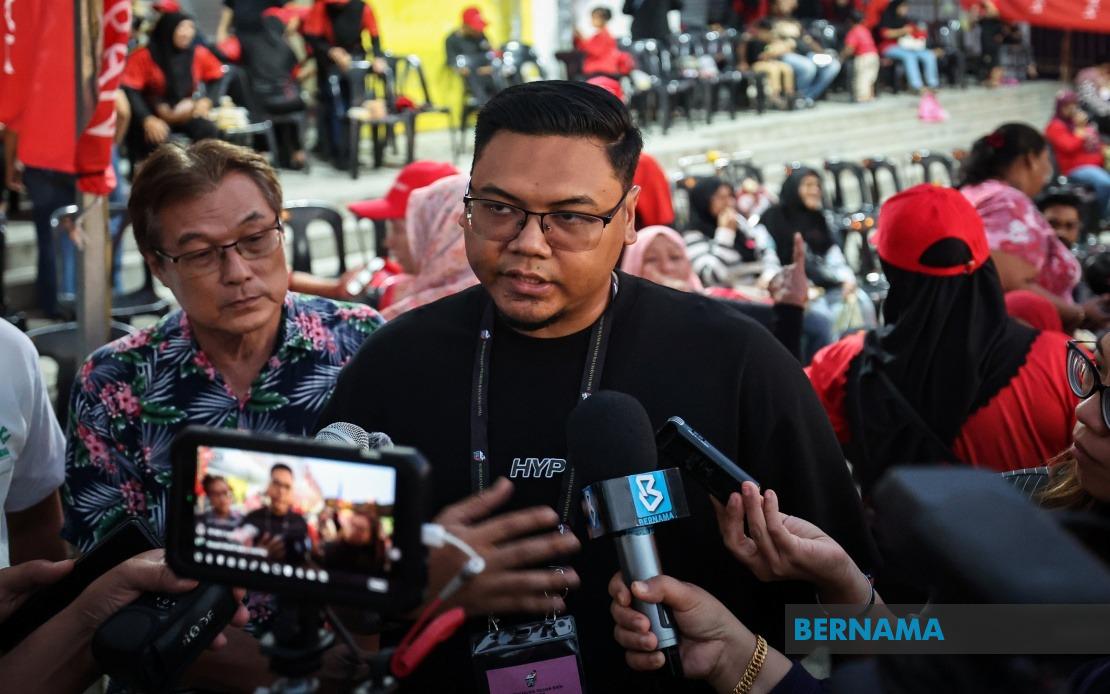
A significant defection from Bersatu to Pakatan Harapan unfolded in Johor Bahru on July 8, as more than 120 former party members and leaders from the Pulai division publicly announced their switch in allegiance, signalling potential momentum shifts in the state's electoral landscape ahead of the July 11 polling day. The announcement came through Muhammad Faezuddin Mohd Puad, the PH candidate contesting the Kempas state seat, who characterised the defection as the culmination of groundwork that had been underway for some time before being formally revealed.
The departing Bersatu contingent included several prominent division figures, among them Rafidah Ani, who had served as the Pulai Bersatu Srikandi Information chief, and Noriah Mat Daud, formerly the Pulai Srikandi secretary. Also joining the exodus was Mohd Suhimi Abdul Rahman, who previously held the position of Bukit Mewah Bersatu branch chief, alongside numerous other divisional and branch-level committee members. According to Muhammad Faezuddin, these individuals had privately communicated their intentions to support PH considerably earlier, but the leadership of Bersatu had already been informed of their decision well before the public declaration.
Muhammad Faezuddin, simultaneously serving as the head of Johor Angkatan Muda Keadilan, articulated a governance philosophy that he argued distinguished PH from rival coalitions. He contended that once elected to office or formed government, PH representatives would extend assistance to constituents regardless of their partisan background, delivering services to voters from Bersatu, UMNO, PKR, DAP, and other parties indiscriminately. This approach, he suggested, represented a deliberate departure from what he termed the old political culture, wherein elected officials directed resources primarily toward party loyalists and well-connected individuals. The receptiveness of former Bersatu members to this vision, Muhammad Faezuddin implied, stemmed from their weariness with exclusionary patronage structures.
Rafidah Ani's public explanation for abandoning Bersatu centred on what she described as a failure by party leadership to acknowledge and serve grassroots constituents effectively. Throughout her tenure within the party, she indicated a personal commitment to addressing the needs of vulnerable populations, particularly single mothers, yet consistently encountered obstacles in securing institutional support for such initiatives from her former party hierarchy. Her frustration crystallised around what she perceived as systematic marginalisation, characterising women's wing members as treated with the status of second-class participants whose contributions went unappreciated and whose voices remained subordinated within the broader party structure.
Mohd Suhimi Abdul Rahman articulated grievances centred on both interpersonal treatment and institutional performance. His departure from Bersatu, which had occurred informally following the 2022 Johor state election, reflected accumulated disappointment with how he had been handled by the party apparatus and, more broadly, the organisation's inability to mobilise resources and advocacy for local residents in his constituency. He pointed specifically to what he characterised as the contemporary political environment's pervasive uncertainty and the troubling tendency for factional interests to dominate party decision-making at the expense of constituent welfare and broader strategic objectives.
With the formal announcement of his defection, Mohd Suhimi articulated expectations regarding what a PH victory could deliver to the Kempas constituency. His priorities reflected concerns common among Malaysian voters: tangible economic development initiatives and enhanced healthcare infrastructure and service delivery. Beyond his immediate electoral support, Mohd Suhimi signalled intentions to contribute to strengthening PKR's organisational capacity within Kempas, particularly through recruitment efforts targeting residents of the Kempas People's Housing Project—a densely populated lower-income residential area where political mobilisation and service delivery messaging held particular salience.
The Kempas state seat contest into which Muhammad Faezuddin entered represented a three-way battle, with candidates fielded not only by PH and Bersatu's historical rival Barisan Nasional but also by Parti Bersama Malaysia, the newer political entrant whose intervention could fragment opposition votes and alter expected outcomes. The historical baseline for the constituency provided context: in the 2022 Johor state election, BN's Datuk Ramlee Bohani secured the seat with a majority of 3,514 votes, establishing the incumbent coalition's claim to recent electoral success in the district.
The broader Johor state election framework within which this contest occurred involved substantially more competition than the Kempas seat alone. The 16th Johor state election mobilised 172 candidates across 56 state assembly constituencies, generating a competitive landscape spanning the entire state apparatus. With 2,727,926 eligible voters registered across these constituencies, the electoral exercise represented a significant undertaking in democratic representation and legitimacy renewal, with outcomes dependent on the electoral behaviour of a population nearly three million strong.
The defection phenomenon evident in the Pulai Bersatu division's swing toward PH merits analytical attention within Malaysia's broader political economy. Bersatu, formed by Mahathir Mohamad as a splinter from UMNO, has experienced internal fracturing as members reassess alignment calculations given shifting coalition dynamics and governance performance evaluations. The turnover of over 120 party members suggests that at the grassroots level, material incentives—or their absence—significantly shape political loyalty. The emphasis placed by defectors on service delivery failures and marginalisation within party structures points toward an emerging electoral dynamic wherein voters and mid-level activists increasingly evaluate political homes through pragmatic lenses focused on tangible governance outcomes rather than ideological positioning or historical party identity.
For Pakatan Harapan, the Johor campaign represents a critical opportunity for electoral recovery in a state where it faced disappointing results in the 2022 election. The recruitment of experienced former adversaries, particularly those capable of mobilising community networks in lower-income constituencies like the Kempas PPR area, offers organizational advantages. The coalition's emphasis on inclusive, need-based service delivery—rather than partisan favouritism—presents a clear messaging distinction from its opponents and potentially resonates with a Malaysian electorate increasingly demanding tangible improvements in economic circumstances and public services.
The implications extend beyond the immediate Johor state election. If such defection patterns become widespread across the state and replicate in future electoral cycles, they could signal a permanent realignment in Malaysian electoral geography. The prominence of economic grievances and healthcare concerns among defectors suggests that subsequent campaigns, whether in Johor or elsewhere, must prioritize concrete policy platforms addressing these domains. Additionally, the movement of women's wing members from Bersatu to PH raises questions about how parties cultivate and retain female leadership and whether structural reforms might emerge as electoral battleground issues in coming contests.

