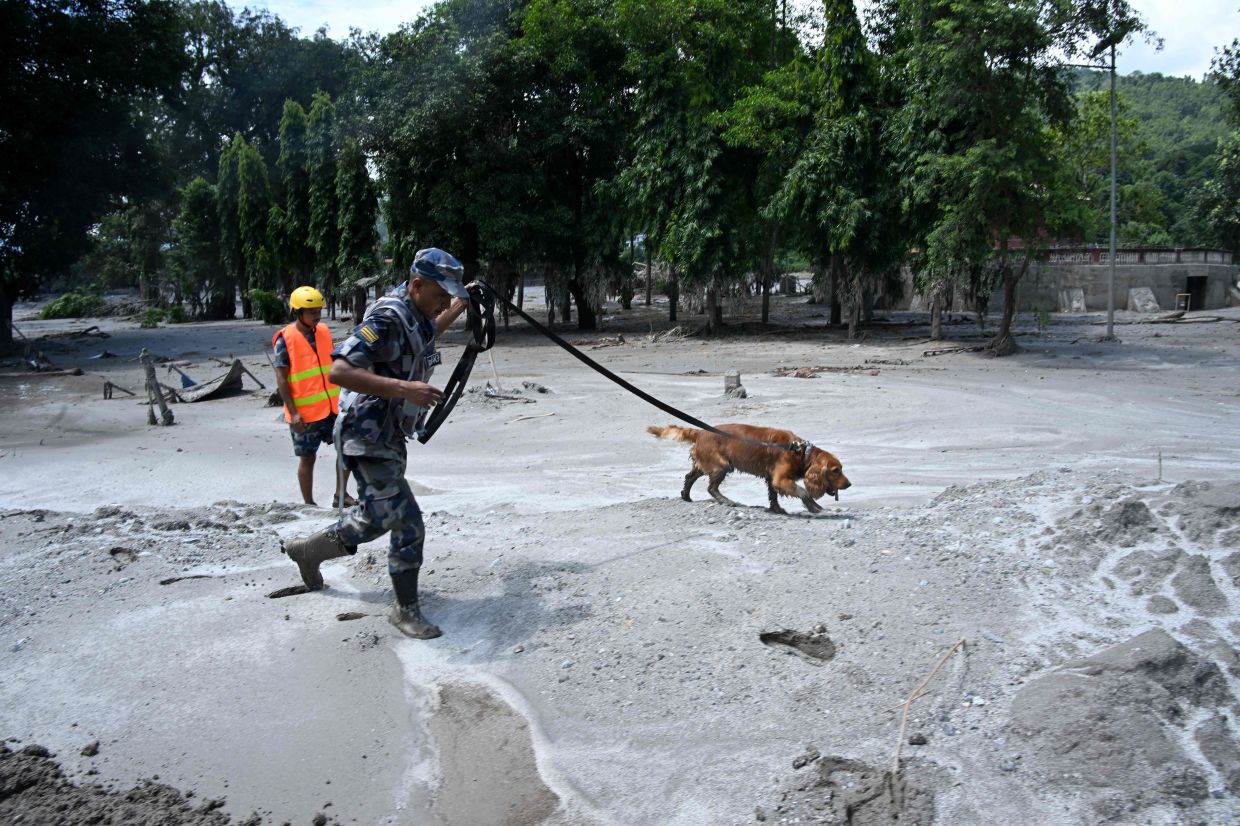
More than 1,400 people remain unaccounted for and 392 have been confirmed dead following catastrophic flash floods and landslides that struck the Nepal-Tibet border region, creating a humanitarian crisis affecting citizens from dozens of countries across Asia, Europe, and beyond. The disaster, which unfolded across an international frontier, has presented unprecedented coordination challenges for emergency responders and diplomatic authorities tracking missing nationals separated by geographical and bureaucratic boundaries.
The scale of the crisis has made precise accounting exceedingly difficult, with official figures subject to ongoing revision as the situation develops. Nepal's disaster agency reported 910 missing individuals as of Thursday, of which at least 517 were foreign nationals, though nationality breakdowns were not immediately provided. Concurrently, Chinese authorities disclosed that 558 people, including 260 foreigners, had gone missing on the Tibetan side of the border. When combined, these tallies yield approximately 1,468 unaccounted persons across the affected zone. Such variations between reports reflect the inherent confusion accompanying major disasters, where double-counting of individuals holding dual nationality, challenges in matching recovered bodies with missing persons lists, and the sheer logistical chaos of emergency response all contribute to numerical fluctuations.
Malaysia has been significantly impacted by the disaster. Prime Minister Anwar Ibrahim stated on Thursday that more than 50 Malaysians in Nepal were unreachable, with the Nepal Tourism Board subsequently confirming 51 missing nationals. This figure places Malaysia among the countries with substantial numbers of missing persons, underlining the peril faced by Malaysian tourists and residents in the region. The incident serves as a sobering reminder of the vulnerability of Malaysian travellers to extreme natural disasters in South Asian mountain terrain.
India has seen 178 of its nationals reported missing by the Nepal Tourism Board, though eleven Indians were successfully rescued during the initial emergency response. The large Indian contingent among the missing reflects India's significant tourism presence in Nepal and the substantial population of Indian workers in the border regions. Chinese authorities reported that nearly 100 Chinese nationals were missing in Nepal alone, though the Nepal Tourism Board's more conservative figure cited 24 Chinese unaccounted for, highlighting discrepancies that may reflect definitional differences in how missing persons are categorised by different agencies.
The United States has disclosed that 90 American citizens are missing, with the State Department confirming that three had been rescued and that no US fatalities had been verified at the time of reporting. Earlier estimates from the Nepal Tourism Board had suggested a lower figure of 65 unaccounted Americans, indicating evolving assessments as information flows from the disaster zone. Canada's government similarly reported awareness of 30 Canadians and permanent residents whose whereabouts remained uncertain, exceeding the Nepal Tourism Board's count of 25 missing Canadians, suggesting that official government channels may capture a broader range of individuals than tourism board registries.
Ukraine's foreign ministry revealed on Thursday evening that 56 Ukrainian nationals were classified as out of contact, though the ministry emphasised that according to verified information available at that time, no Ukrainians had been confirmed among the injured or deceased. This distinction reflects ongoing uncertainty about the status of those listed as missing, as rescue operations and body recovery efforts continue throughout the affected region. Australia's foreign minister Penny Wong reported that 39 Australian nationals were missing, a figure that had risen from earlier assessments, indicating that the full scope of the disaster was only gradually becoming apparent.
Other countries with significant numbers of missing nationals include the United Kingdom, where 33 citizens remain unaccounted for; South Korea, which reported nine hydropower workers out of contact in the Rasuwa district, though four were later rescued; New Zealand, with five missing nationals; and Japan, also reporting five missing. Smaller contingents from Latvia, Russia, Germany, South Africa, and France face similar anguish, with six Latvians and Russians each unaccounted for, eight Germans missing, six South Africans unconfirmed, and four French nationals among those whose whereabouts are unknown.
The multinational composition of the missing reflects Nepal's status as a major tourism destination, attracting mountaineers, trekkers, and adventurers from across the globe. The Nepal-Tibet border region, while offering spectacular natural beauty, presents inherent dangers during monsoon season when flash floods and landslides become increasingly probable. Many of those missing were likely engaged in tourism activities or worked in support industries when the disaster struck, suggesting that the disaster may have caught seasonal workers and holiday travellers at particular risk.
For Southeast Asian nations including Malaysia, the disaster underscores the need for robust travel advisory systems and coordinated emergency response protocols with Nepal. The significant Malaysian presence among the missing highlights how natural disasters in popular tourist destinations can rapidly create diplomatic incidents requiring government intervention. Regional countries may need to review their consular resources in Nepal and strengthen communication channels with Nepali authorities to facilitate rapid identification and repatriation of affected nationals.
The reliability of casualty and missing persons figures following major disasters typically improves over subsequent days and weeks as recovery operations progress and identification processes become more systematic. Authorities in both Nepal and China face the challenge of coordinating across a border that separates disaster response systems, complicating unified accounting. For families of missing persons, the current uncertainty represents anguish that may persist for weeks or longer as identification of deceased individuals advances through forensic processes. The international nature of this disaster means that the humanitarian and diplomatic implications will ripple across multiple countries and regions, requiring sustained international coordination and support for recovery and reconstruction efforts.

