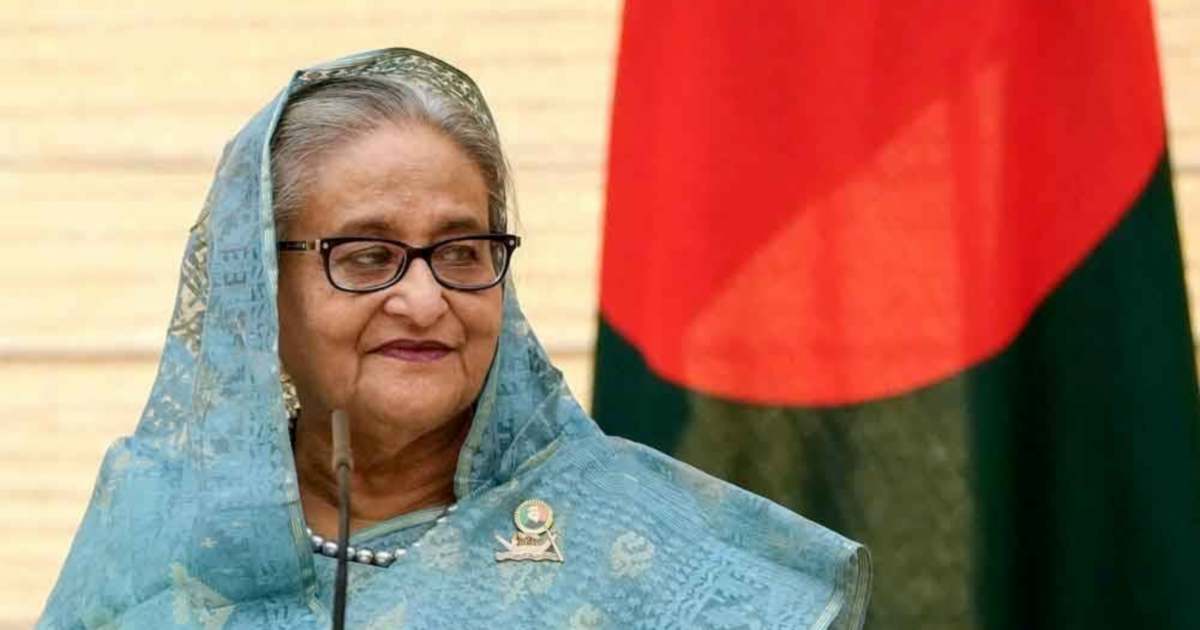
Sheikh Hasina, Bangladesh's ousted former Prime Minister, has declared her intention to return to her homeland before the year ends, standing firm against a capital sentence imposed while she remains in exile. In a defiant statement, Hasina characterised the death verdict as fundamentally flawed—describing it as illegal, unconstitutional, and a manifestation of political vendetta rather than legitimate justice. Her announcement signals an escalation in the brewing political tensions that have destabilised Bangladesh since her government's collapse and her subsequent flight from the country.
The sentencing of Hasina in absentia underscores the severity of criminal charges levelled against her by the interim administration now overseeing Bangladesh. The ruling represents not merely a legal proceeding but a symbolic act reflecting the deep fractures within Bangladeshi politics, where transitions of power have historically been accompanied by accusations and prosecutions of previous leaders. For Hasina, whose Awami League party long dominated Bangladesh's political landscape, the death sentence carries existential weight—both as a threat to her personal safety and as a mechanism to prevent her return and the resurgence of her political influence.
Hashina's defiant rhetoric presents a direct challenge to the current interim government and raises critical questions about judicial independence and the politicisation of the legal system. Her insistence that the proceedings lack constitutional legitimacy suggests she views the charges not as grounded in substantive wrongdoing but as orchestrated persecution designed to eliminate her as a political threat. This perspective resonates with a significant portion of her supporters, who perceive the charges as retribution rather than justice, further polarising an already fractured nation.
The implications of Hasina's vow extend well beyond personal political ambition. Should she attempt to return, Bangladesh faces the prospect of dramatic confrontation—either resulting in her arrest, which would intensify conflict with her supporters, or her successful return and mobilisation of opposition forces, which could destabilise the current interim administration. The stakes are sufficiently high that her statement cannot be dismissed as mere rhetoric; it represents a clear intention to reclaim political space within Bangladesh.
For Malaysian observers and Southeast Asian policymakers, the Hasina situation exemplifies a recurring challenge within the region: the instability that emerges when democratic institutions fail to establish durable mechanisms for peaceful political transition. Bangladesh's history of military coups, extra-constitutional changes of government, and subsequent prosecutions of defeated leaders reflects governance challenges that complicate regional stability and development. The country's inability to institutionalise orderly power transfers undermines investor confidence, disrupts development initiatives, and creates humanitarian concerns.
The death sentence in absentia, while carrying symbolic weight, confronts the international legal principle that capital punishment determined without the accused's presence raises serious questions about procedural fairness. Hasina's argument that the sentence violates constitutional norms gains credibility when examined against global standards of due process. This dimension of the dispute transcends domestic politics and touches upon Bangladesh's international standing and commitment to rule of law.
Hashina's announcement also complicates Bangladesh's relationship with its diaspora and international community. Many Bangladeshis residing abroad, particularly those affiliated with the Awami League, view the interim government with suspicion. Her pledge to return galvanises her supporters and demonstrates that she retains political agency despite exile. The emotional resonance of this declaration cannot be overstated—for Hasina loyalists, her homecoming represents potential vindication and the possibility of reversing what they consider a wrongful displacement.
The timing of Hasina's vow warrants scrutiny. By publicly committing to return this year, she removes any ambiguity about her intentions and forces the interim administration into response decisions. This tactical move constrains the government's options: accepting her return risks political upheaval, while blocking it invites accusations of authoritarian governance. The statement therefore functions as both a personal commitment and a political manoeuvre designed to regain initiative.
For Malaysia, which has experienced its own cycles of political transition and occasional prosecutions of former leaders, the Bangladesh situation offers cautionary lessons. While Malaysia's constitutional monarchy and federal structure have provided greater institutional stability, the principle that losing power can lead to legal jeopardy remains concerning. Hasina's case underscores the importance of establishing consensus on post-transition accountability mechanisms that balance justice with political reconciliation, preventing the weaponisation of courts against defeated opponents.
Looking forward, Hasina's return—should it occur—would fundamentally reshape Bangladesh's political trajectory. The interim government faces unprecedented pressure to demonstrate legitimacy and deliver measurable improvements in governance and economic performance. Simultaneously, Hasina's supporters increasingly view her exile as temporary, expecting her political rehabilitation. This dynamic creates a political powderkeg with significant consequences not only for Bangladesh but for regional stability and the broader Southeast Asian framework.
The coming months will reveal whether Hasina's pledge represents feasible political strategy or rhetorical defiance destined to remain unfulfilled. Regardless, her determination to challenge the verdict and return home signals that Bangladesh's political crisis remains fundamentally unresolved, with the fundamental tension between justice, accountability, and political reconciliation still demanding resolution.

