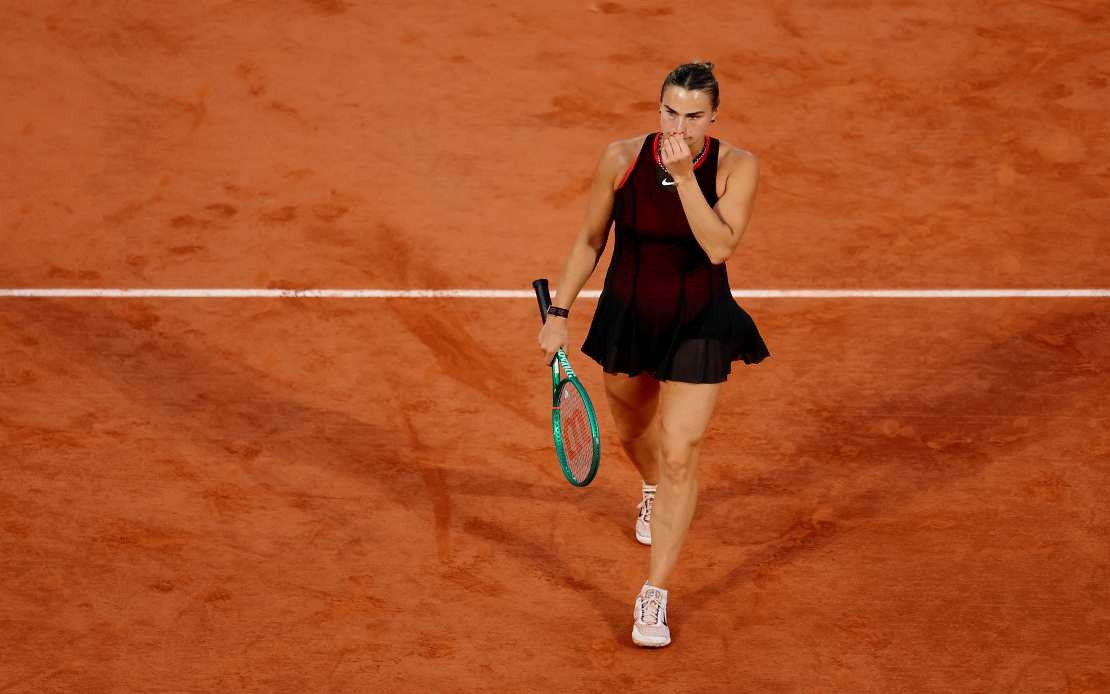
Naomi Osaka delivered a commanding performance at the All England Club on Sunday, eliminating Belarus's Aryna Sabalenka in the fourth round with a 6-2, 7-6(2) victory that signals a potential resurgence for the Japanese champion. The result marks a watershed moment in Osaka's Wimbledon campaign, propelling the 14th seed into the quarterfinals for the first time in her career and restoring her status as a genuine contender at one of tennis's most prestigious tournaments.
Osaka's breakthrough achievement carries particular significance for Japanese tennis. By reaching the last eight at Wimbledon, she became the first woman from Japan to accomplish the feat since Ai Sugiyama's run in 2004, nearly two decades ago. This milestone reflects not only Osaka's individual revival but also the broader challenges Japanese players have faced in consistently performing across the sport's traditional grass-court circuits, where Wimbledon remains the gold standard.
The victory assumes even greater resonance given the personal dynamics at play. Heading into the match, Osaka had suffered three consecutive defeats against Sabalenka, who entered as the tournament's top seed and remains the world's highest-ranked player. That streak included a fourth-round loss at the French Open earlier this year, a particularly stinging defeat on clay where Sabalenka's aggressive baseline play proved overwhelming. The psychological weight of such a losing sequence often compounds pressure in head-to-head rematches, yet Osaka systematically dismantled that narrative with her clinical execution on grass.
Osaka's approach against Sabalenka emphasised controlled aggression and tactical precision. The Japanese player's ability to dictate rallies and transition smoothly between offense and defense neutralised the Belarusian's typically dominant serve-and-volley strategy. Osaka's four Grand Slam titles suggest she possesses the technical foundation and competitive temperament to succeed at tennis's highest level, but recent seasons had seen her struggle for consistency. Sunday's performance demonstrated that the capacity for such breakthrough moments remains intact, provided the conditions align favourably.
The four-time Grand Slam champion reflected on her emotional state following the victory, emphasising how uncommon genuine enjoyment on the court has become for her. Such candour speaks to the mental and emotional toll that professional tennis exerts, particularly for players attempting to maintain elite status across multiple seasons. For Malaysian and Southeast Asian audiences watching Osaka's career trajectory, her willingness to acknowledge the psychological dimensions of sport offers valuable perspective on the human cost of excellence.
Osaka's path forward at Wimbledon presents both opportunity and challenge. She faces Czech player Karolina Muchova, seeded tenth, in the quarterfinals—a matchup that offers genuine intrigue. Muchova possesses the technical skill and unpredictability that can trouble established stars, yet Osaka's current form and the momentum generated by her victory over Sabalenka suggest the Japanese star enters as favourite. A run to the semifinals would further validate the notion that Osaka's recent fluctuations represent temporary struggles rather than permanent decline.
The broader context of Osaka's revival matters considerably for understanding her significance beyond tennis. As someone who has navigated intense media scrutiny, mental health challenges, and the pressures of representing her nation on the world stage, her resurgence carries symbolic weight. Southeast Asian sports audiences particularly appreciate athletes who demonstrate resilience and the capacity to overcome adversity, making Osaka's journey relevant beyond purely sporting considerations.
Meanwhile, Osaka was not the only Japanese representative making headlines at Wimbledon during the fourth round. Shintaro Mochizuki, ranked 151st in the world, entered the tournament as a qualifier and generated considerable interest as an underdog story. However, his campaign ended in the fourth round when he faced defending champion and top seed Jannik Sinner of Italy. Mochizuki's loss, delivered in straight sets at 6-3, 7-6(0), 6-3, highlighted the gulf between emerging challengers and the sport's elite performers. Sinner's clinical destruction of the qualifier demonstrated why the Italian has emerged as a generational talent and favourite to capture back-to-back Wimbledon titles.
The contrast between Osaka's upset victory and Mochizuki's early exit underscores a fundamental reality in professional tennis: consistency at the highest level separates champions from pretenders. While Mochizuki's qualifying run demonstrated admirable improvement trajectory, he encountered an opponent operating at a different level of sophistication and court management. For Malaysian fans with emerging players, this competition serves as practical illustration of the development pathway required to compete seriously at Grand Slam events.
Osaka's advancement to the Wimbledon quarterfinals should prompt reflection on the cyclical nature of tennis careers. Players routinely experience periods of doubt, injury, or tactical uncertainty before rediscovering form and confidence. The narrative surrounding Osaka in recent seasons emphasised her struggles and inconsistency, yet one decisive victory against the world's top-ranked player fundamentally reshapes perceptions. This volatility makes tennis endlessly compelling yet simultaneously demanding for athletes attempting to maintain psychological equilibrium throughout lengthy campaigns.
Looking forward, Osaka's performance at Wimbledon may represent the beginning of renewed competitive intensity. Japanese tennis has historically produced multiple world-class players simultaneously, and Osaka's resurgence contributes to a positive trajectory for the nation's representation in professional tennis. For Southeast Asian players and fans, Osaka's journey provides inspiration that career trajectories rarely follow linear paths, and that apparent downturns often precede breakthrough moments.

