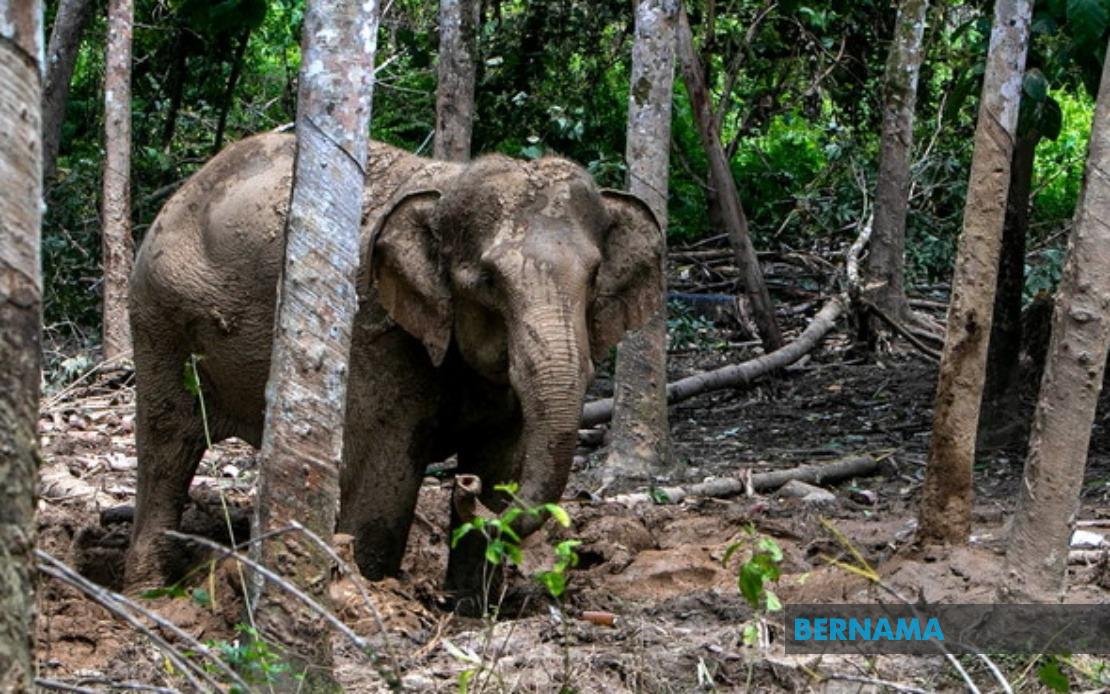
A resident of Kampung Orang Asli Perjek in the Legap Resettlement Scheme near Sungai Siput, Perak, is recovering in hospital after being severely injured in a confrontation with an elephant during a crop-raiding incident last Friday night. The attack highlights the escalating tension between rural communities and wildlife in peninsular Malaysia, particularly as expanding elephant populations continue to venture into agricultural areas in search of food.
The incident unfolded when approximately four elephants entered the area behind homes in the Orang Asli settlement and began feeding on cassava and banana crops that villagers depend on for both subsistence and income. Concerned about the damage to their livelihoods, the victim and several other residents decided to attempt driving the herd away from the village without professional assistance. This decision would prove costly when the situation rapidly deteriorated into a dangerous encounter.
During the attempted removal operation, the victim moved too close to the elephants and was suddenly attacked by one of the animals. The assault was severe enough to cause significant bleeding and render him unconscious at the scene. Quick-thinking villagers immediately came to his aid, rescuing him and ensuring he received medical transport to Raja Permaisuri Bainun Hospital in Ipoh, where he remains under observation in stable condition.
The Department of Wildlife and National Parks (PERHILITAN) Peninsular Malaysia responded to emergency reports at approximately 10 pm and deployed personnel from its Sungai Siput district office to investigate the situation and gather preliminary details. Officials employed drone technology to monitor the movements of the four elephants and confirmed they had subsequently departed the village area, suggesting the animals were likely seeking food elsewhere rather than showing territorial aggression.
While immediate danger has passed, the underlying issue of human-wildlife conflict in this region demands deeper examination. The Legap Resettlement Scheme houses Orang Asli communities who have been relocated from their ancestral lands and now depend on agriculture in areas that increasingly overlap with elephant migration corridors and feeding grounds. These resettled villages sit at the intersection of development pressures and conservation challenges that characterize modern Peninsular Malaysia.
The proximity of agricultural crops to forested elephant habitats creates an inherent friction point. As forests face continued degradation and fragmentation, wild elephants ranging across Perak and neighbouring states must travel greater distances in search of adequate forage. Agricultural settlements with abundant cassava and banana crops become attractive feeding grounds, particularly during seasons when natural food sources become scarce. This dynamic forces villagers into the unenviable position of defending their crops against large, dangerous animals.
PERHILITAN has emphasized that members of the public should never attempt to handle wildlife incidents independently, especially involving elephants, which can be unpredictable and lethal when provoked or cornered. The department's advice reflects international best practices in wildlife management, where trained personnel with proper equipment and expertise should always handle dangerous animal encounters. Community members attempting such interventions risk serious injury or death, as this incident grimly demonstrates.
The government has responded by offering assistance through the Wildlife Attack Victim Assistance initiative, a programme administered by the Ministry of Natural Resources and Environmental Sustainability. This scheme provides financial and medical support to citizens injured in wildlife attacks, helping families cope with medical expenses and lost income during recovery periods. Such measures, while helpful, represent reactive rather than proactive solutions to an increasingly common problem.
Moving forward, more comprehensive strategies are needed to address the root causes of human-elephant conflict in areas like Sungai Siput. These could include improved crop protection measures tailored to local agricultural practices, enhanced early-warning systems to alert communities when elephants approach settlements, and consideration of elephant corridor management to guide herds away from human habitation. For the Orang Asli communities most affected, ensuring their food security without exposing them to life-threatening wildlife encounters remains a critical development challenge.
Community members encountering wildlife incidents are encouraged to report them immediately through PERHILITAN's hotline at 1-800-88-5151 or via the Public Complaints Management System (SISPAA) on the department's official website. These reporting channels enable rapid professional response that prioritizes both human safety and animal welfare. The incident in Sungai Siput serves as a stark reminder that wildlife management requires coordination between government agencies, local communities, and conservation professionals to prevent tragic outcomes like this attack.

