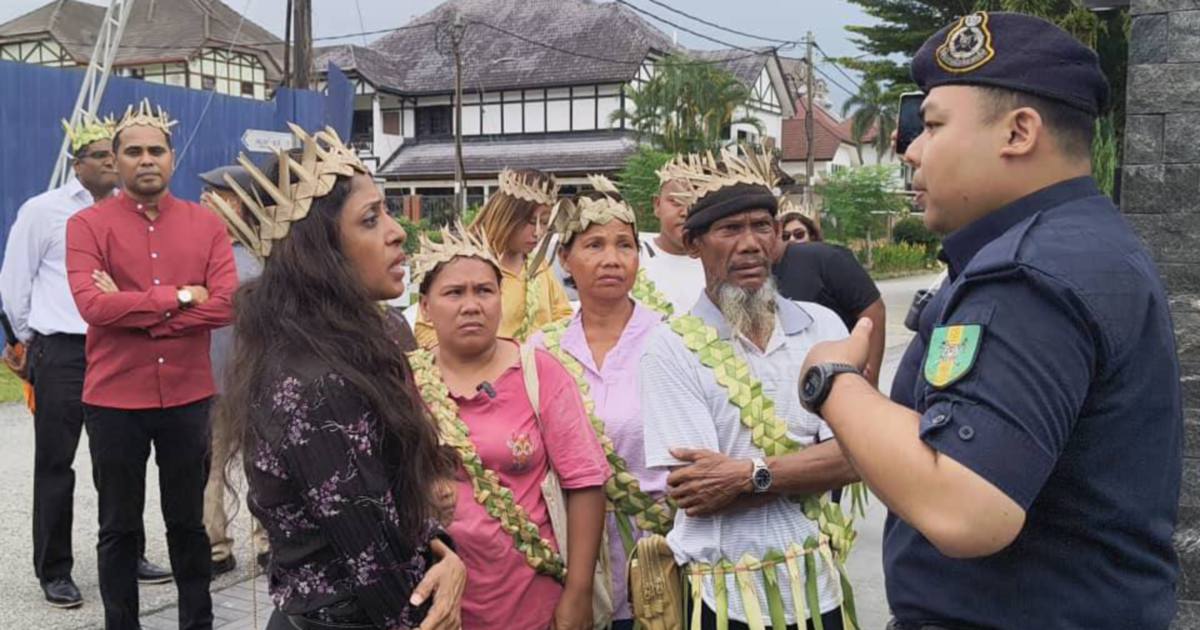
The Orang Asli community of Kampung Sungai Cot in Maran has expressed cautious optimism following a recent meeting with Prime Minister Datuk Seri Anwar Ibrahim, who pledged to personally intervene in their protracted battle over ancestral lands. The commitment represents a potential turning point for families who have endured years of uncertainty and displacement pressures, though sceptics within the community acknowledge that political promises require careful monitoring and consistent follow-through to yield tangible results.
The land dispute affecting Kampung Sungai Cot stands as one of Malaysia's most persistent indigenous rights cases, emblematic of broader challenges facing Orang Asli communities across the peninsula. These indigenous peoples have historically faced systematic marginalisation in land ownership and recognition, with competing claims from state governments, private developers, and federal authorities often overshadowing their customary land rights. The Pahang situation illustrates how administrative complexity, overlapping jurisdictions, and historical record-keeping gaps can compound indigenous grievances and delay justice for vulnerable populations.
Anwar's undertaking to raise the matter directly with Pahang authorities signals a shift toward higher-level political attention, which the community views as essential for breaking through years of bureaucratic stalemate. The Prime Minister's intervention carries particular weight given his administration's stated commitment to indigenous affairs and social inclusion. However, the real test will emerge in implementation, as state governments retain significant autonomy over land matters and may resist federal pressure if resolutions conflict with existing development plans or revenue interests.
For the families of Kampung Sungai Cot, this moment encapsulates the dual challenge facing Malaysia's indigenous populations: securing legal recognition of traditional territories whilst navigating a modern administrative system designed with little thought to communal land ownership patterns. The dispute has created genuine hardship, disrupting livelihoods, cultural practices, and community cohesion among residents who lack secure tenure for their homes and traditional resource-gathering areas.
The community's experience reflects systemic issues affecting Orang Asli across multiple states. Land surveys often fail to acknowledge indigenous occupation or historical use, government departments operate in silos without coordinated indigenous policy frameworks, and compensation schemes—when offered—frequently fall short of restoring lost livelihoods or cultural connections to ancestral territories. International observers have repeatedly noted that Malaysia's legal frameworks inadequately protect indigenous land rights compared to standards established in ILO Convention 169 and UN principles on indigenous peoples, despite Malaysia's status as a signatory to relevant international instruments.
Maran district sits within Pahang's sprawling geography, where competing interests in agriculture, timber, plantation development, and conservation create constant tension. Indigenous communities occupy these spaces as custodians with centuries of ecological knowledge and sustainable practices, yet development paradigms typically marginalise these perspectives in favour of extractive models. The Orang Asli's presence represents an alternative vision of land stewardship that could strengthen environmental outcomes, though this dimension rarely features in official policy discussions.
Anwar's commitment arrives amid growing regional and international scrutiny of indigenous rights protection in Southeast Asia. Malaysia's reputation as a moderate, developed nation increasingly depends on demonstrating genuine respect for minority populations and constitutional protections. The Kampung Sungai Cot case has attracted attention from human rights monitors and indigenous advocacy networks, adding diplomatic dimensions to what might otherwise remain a localised land dispute.
The mechanics of successful resolution will likely involve multiple layers of negotiation. Pahang authorities must be persuaded to recognise indigenous land claims, compensation mechanisms need establishment for historical injustices, and sustainable coexistence frameworks require development between state development priorities and indigenous needs. Transparent dialogue, independent verification of historical claims, and community participation in decision-making represent essential ingredients that previous attempts may have lacked.
Successful intervention could establish precedent for other embattled Orang Asli communities throughout Malaysia. Conversely, if Anwar's commitment dissipates without meaningful action, it would deepen indigenous cynicism about federal-level pledges and further erode trust in democratic institutions. The stakes extend beyond Kampung Sungai Cot, touching broader questions about whether Malaysia can genuinely deliver on constitutional promises of social justice and equal protection regardless of ethnicity or indigenous status.
The community's measured optimism reflects hard-won realism born from previous disappointments. They understand that ministerial visits and public assurances carry symbolic value but remain contingent on bureaucratic follow-through, political will, and sustained pressure. Moving forward, transparent timelines, regular progress updates, and genuine power-sharing in decision-making processes will determine whether this moment catalyses genuine transformation or merely extends false hope.

