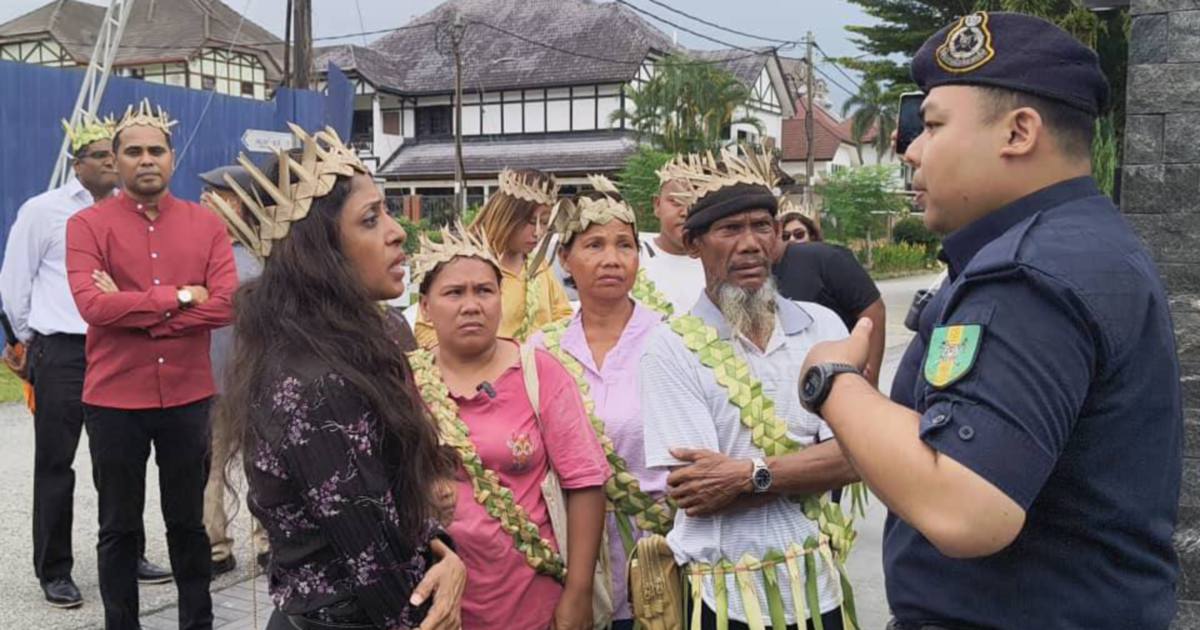
In a significant moment for Malaysia's indigenous communities, residents of Kampung Sungai Cot near Kajang saw their years of uncertainty transformed into cautious hope when Prime Minister Datuk Seri Anwar Ibrahim directly assured them of his personal involvement in resolving their land disputes. The assurance came as an unexpected turn for villager Juliana Jazlin Ismail and others whose families have fought protracted legal and administrative battles to retain their ancestral lands against competing claims and development pressures.
The Orang Asli, Malaysia's original inhabitants scattered across the peninsula, have historically occupied the margins of the nation's developmental narrative. Their land claims, rooted in customary occupation and use spanning generations, have frequently collided with state land classification systems and commercial interests. Kampung Sungai Cot represents one among numerous communities facing similar pressures, where formal title documentation struggles to capture the reality of indigenous land relationships.
Anwar's direct engagement with the community signals a potential recalibration of how the federal government approaches indigenous land matters, traditionally filtered through state governments and bureaucratic channels that have not always prioritised Orang Asli concerns. The Prime Minister's willingness to position himself as an interventionist force suggests recognition that the issue requires escalated attention beyond standard administrative processes.
For Juliana Jazlin and her neighbours, the significance lies not merely in political rhetoric but in the prospect of substantive action. Land disputes among Orang Asli communities operate across multiple jurisdictional layers, involving state land authorities, federal agencies, and occasionally private developers. This complexity has historically delayed resolution and exhausted community resources engaged in repeated appeals and petitions.
The pledge reflects broader international and domestic pressures regarding indigenous rights recognition. Malaysia remains signatory to various frameworks acknowledging indigenous land interests, yet implementation at ground level often lags aspirational policy language. Communities like Kampung Sungai Cot embody this gap between constitutional recognition of native customary land and practical enforcement mechanisms that protect such rights against competing claims.
The timing of Anwar's intervention coincides with increased visibility of Orang Asli issues within Malaysian public discourse. Civil society organisations, academic institutions, and media attention have progressively documented the precarity facing indigenous communities, creating political space for leadership to address grievances previously treated as marginal concerns.
However, the transformation of assurance into actionable outcomes will determine whether this moment represents genuine policy departure or momentary political gesture. Previous governments have similarly pledged commitment to Orang Asli welfare without delivering commensurate institutional reform. The test lies in whether the Prime Minister's office creates dedicated mechanisms, allocates specific resources, and establishes accountability structures for progressing land disputes towards resolution.
Community satisfaction will ultimately depend on tangible results: formal land recognition, cessation of competing claims, or compensatory arrangements reflecting the value of disputed territories. The Orang Asli have endured generations of land erosion through various mechanisms—gazetting for national parks, forestry reserves, development zones—often without consultation or equitable benefit-sharing arrangements.
For Malaysia's broader indigenous policy landscape, Anwar's pledge opens dialogue about how traditional land systems might receive legal protection equivalent to formalised title systems. Kampung Sungai Cot becomes a test case for whether customary occupation can overcome bureaucratic inertia and commercial interests in the government's prioritisation framework.
The regional dimension merits consideration too. Southeast Asian governments increasingly face international scrutiny regarding indigenous land rights. How Malaysia resolves cases like Kampung Sungai Cot influences the nation's standing among peers addressing similar issues, from the Philippines to Indonesia, where indigenous communities navigate comparable struggles.
Juliana Jazlin's relief reflects the emotional toll extracted by prolonged uncertainty. For indigenous communities, land represents not merely economic asset but cultural substrate, identity anchor, and intergenerational inheritance. Disputes reaching the Prime Minister's office symbolise exhaustion of ordinary channels and accumulated desperation within affected communities.
Moving forward, the federal government must demonstrate whether assurance translates into mechanisms: establishing clear timelines for investigation, appointing dedicated officials, ensuring transparent communication, and creating frameworks where Orang Asli communities exercise genuine agency in determining outcomes. Half-measures or protracted reviews will reinforce historical patterns of deferment that have characterised indigenous policy implementation.
The coming months will reveal whether Anwar's intervention represents transformative commitment or another chapter in Malaysia's inconsistent journey towards substantive indigenous rights recognition. For Kampung Sungai Cot and similar communities nationwide, the stakes transcend politics—they concern survival of ancestral territories and futures for upcoming generations.

