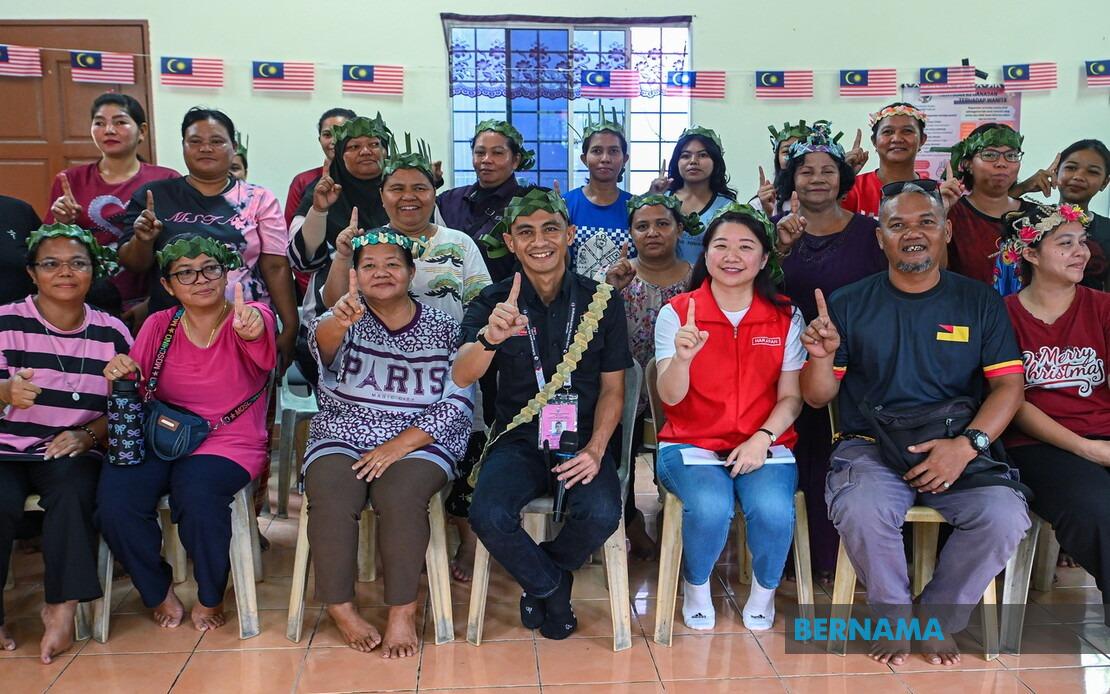
Pakatan Harapan's campaign for the Labu state seat has zeroed in on indigenous community development as a cornerstone policy platform, with candidate Datuk Ahmad Faez Abdul Razak committing substantial resources to enhancing the economic prospects and quality of life of the Orang Asli population in the constituency. Speaking after an outreach programme at Kampung Orang Asli Tekir, Ahmad Faez outlined an ambitious agenda that addresses longstanding grievances while creating pathways for sustainable income generation among residents who have historically been marginalised in development initiatives.
At the heart of Ahmad Faez's platform lies the contentious matter of customary land rights in Kampung Orang Asli Tekir, an issue he has pledged to formally escalate to the Negeri Sembilan State Legislative Assembly should voters grant Pakatan Harapan the mandate in the upcoming election. This commitment speaks to a broader regional challenge across Malaysia where indigenous communities face legal ambiguity and competing land claims that undermine property security and economic investment capacity. By positioning this as a legislative priority, Ahmad Faez is acknowledging that systemic barriers—not merely resource scarcity—constrain Orang Asli advancement, a recognition that resonates with civil society advocacy networks across Southeast Asia grappling with indigenous rights protections.
Basic infrastructure deficiencies remain acute in many Orang Asli settlements, and Ahmad Faez has identified road connectivity and internet access as critical interventions. These gaps disproportionately affect rural indigenous communities, restricting market access for agricultural products and limiting educational opportunities in an increasingly digital economy. The emphasis on digital connectivity particularly reflects contemporary understanding that broadband infrastructure functions as prerequisite infrastructure for economic participation, not merely amenity. For Kampung Orang Asli Tekir's 796 residents, such upgrades could transform participation in e-commerce and remote employment—avenues largely closed to communities without reliable connectivity.
Education and youth development feature prominently in the candidate's vision, acknowledging that demographic pressure and limited local employment have historically driven outmigration from Orang Asli settlements. By focusing on skills enhancement and income-generation pathways, Ahmad Faez's approach seeks to create conditions where young people might remain and contribute to community development rather than seeking opportunities in urban centres. This retention strategy carries implications for cultural preservation and community cohesion, dimensions often overlooked in purely economic development frameworks but crucial to indigenous community wellbeing.
The handicraft sector represents a particular focus area, with Ahmad Faez advocating expanded marketing channels for locally produced goods. Indigenous handicraft traditions across Malaysia possess substantial market demand, particularly among domestic consumers and regional tourists seeking authentic cultural products. However, production remains constrained by limited access to distribution networks and market information. By facilitating broader commercialisation pathways, the campaign recognises that indigenous knowledge and skills constitute economic assets requiring institutional support rather than charity. This framing shifts the narrative from dependency to economic agency.
Agricultural modernisation through fertigation systems constitutes another key initiative, representing technology transfer aimed at improving yield sustainability. Fertigation—drip irrigation combined with precision nutrient delivery—addresses water scarcity concerns in many rural areas whilst reducing chemical inputs, environmental impacts, and labour requirements. Introduction of such systems requires training, maintenance capacity, and access to equipment, dimensions that demand sustained institutional support beyond campaign rhetoric. The proposal signals recognition that Orang Asli agricultural productivity lags not through inherent limitation but through systemic deprivation of modern inputs and technical expertise.
Ahmad Faez emphasises continuity of engagement, claiming two years of community presence preceding the electoral contest. This assertion attempts to distinguish his candidacy from opportunistic politicians who materialise only during campaign periods, a perception widely held regarding Malaysian electoral politics. Establishing credibility through extended community presence carries particular weight in constituencies where residents have experienced repeated unfulfilled promises. The candidate's framing implicitly critiques competitors' engagement patterns whilst positioning himself as committed to sustained rather than episodic advocacy.
Kampung Orang Asli Tekir's village chief Nasir Musil has endorsed Ahmad Faez's development orientation, simultaneously articulating the community's priority concerns including stray cattle management—a practical issue affecting road safety that touches on resource management and land use conflicts. Recognition of such localised concerns demonstrates understanding that development cannot be imposed top-down but must address specific community-identified challenges. The village chief's support lends credibility to the candidate's claims of genuine community collaboration rather than externally designed programming.
The Labu contest will unfold as a three-way race, with Ahmad Faez confronting incumbent Mohamad Hanifah Abu Baker of Parti Pribumi Bersatu Malaysia and Barisan Nasional's Siti Nur Umaira Hasim. This three-cornered contest reflects broader Malaysian electoral fragmentation, with no single opposition bloc dominating state-level politics. For Orang Asli voters in the constituency, the election presents opportunity to evaluate competing visions for indigenous development, though historical patterns suggest indigenous communities' electoral leverage remains underutilised relative to their policy concerns.
The Negeri Sembilan state election's scheduling—early voting on July 28 with general polling on August 1—creates compressed campaign periods that privilege candidates with established community relationships. Ahmad Faez's emphasis on pre-existing engagement thus assumes strategic importance, as candidates lacking community presence struggle to gain traction within condensed timeframes. For Orang Asli voters accustomed to being courted superficially during elections, demonstrated prior commitment distinguishes serious candidates from those seeking electoral exploitation.
Regionally, this campaign reflects broader Southeast Asian patterns wherein indigenous communities increasingly assert electoral agency and demand concrete commitments addressing historical marginalisation. Malaysian Orang Asli, like indigenous populations across Thailand, Laos, and Cambodia, face comparable pressures from land encroachment, resource extraction, and cultural erosion. Positioning indigenous development centrally within campaign platforms—as Ahmad Faez has done—acknowledges this shifting political landscape where indigenous constituencies cannot be taken for granted or relegated to peripheral policy consideration.
The integration of customary land rights advocacy, infrastructure development, skills training, and market access within a coherent campaign framework demonstrates sophisticated understanding of multidimensional indigenous development challenges. Rather than fragmentary initiatives addressing isolated concerns, Ahmad Faez's platform articulates systemic reform addressing legal barriers, physical infrastructure, human capital, and economic integration simultaneously. Whether such ambition translates into implementation remains uncertain, but the comprehensive approach signals recognition that indigenous advancement requires coordinated intervention across multiple policy domains rather than superficial gestures.

