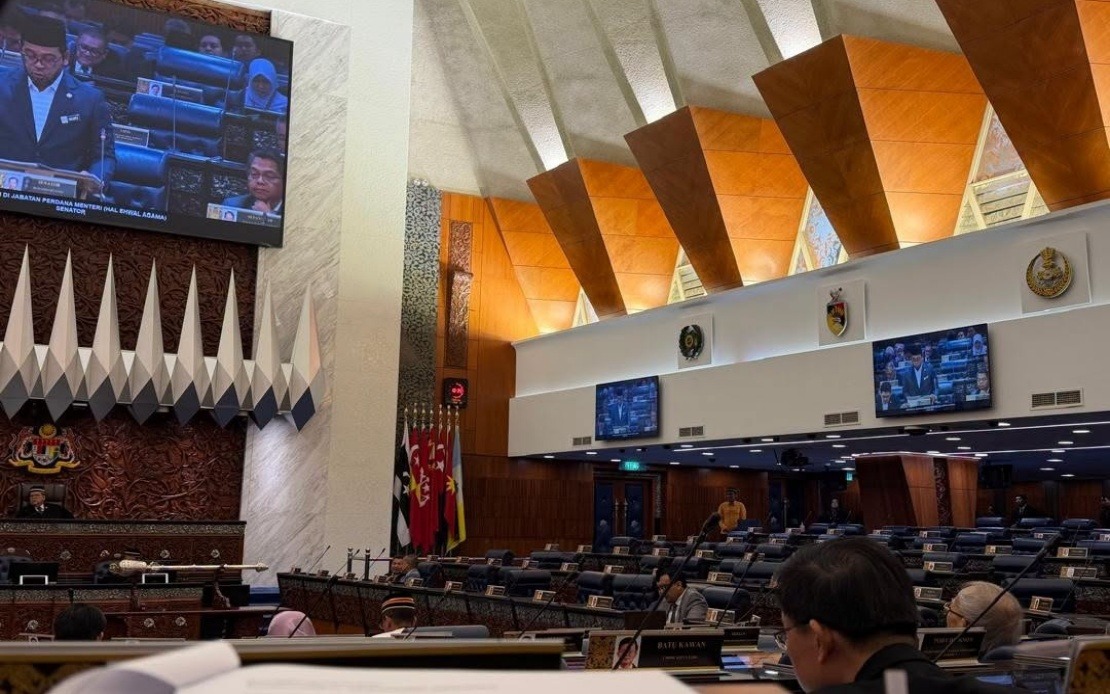
The opposition's decision to leave the Dewan Rakyat during a special sitting convened to discuss the Royal Commission of Inquiry findings on Lembaga Tabung Haji has drawn sharp rebuke from government ranks. Datuk Seri Dr Zaliha Mustafa, chairman of the MADANI Government Backbenchers Club, characterized the walkout as emblematic of what she sees as performative rather than substantive opposition politics. Speaking on August 11, she argued that the departure, which occurred before Minister in the Prime Minister's Department for Religious Affairs Dr Zulkifli Hasan could present the government's position on the report, represented a missed opportunity to engage with the findings and defend constituents' interests.
The parliamentary drama unfolded after opposition lawmakers objected to Speaker Tan Sri Johari Abdul's decision to proceed with the briefing despite the absence of Prime Minister Datuk Seri Anwar Ibrahim and Deputy Prime Minister Datuk Seri Fadillah Yusof, both receiving medical treatment. Perikatan Nasional chief whip Datuk Seri Takiyuddin Hassan had formally proposed postponing the session, but the Speaker allowed proceedings to continue. This procedural decision prompted the collective exit by opposition members, transforming what was intended as a substantive policy discussion into a constitutional standoff.
Dr Zaliha's critique cuts deeper than merely documenting the walkout. She highlighted what she characterizes as a fundamental contradiction in opposition rhetoric versus parliamentary practice. For years, she noted, opposition figures have presented themselves as the authentic defenders of Islam and Muslim interests in Malaysia. Yet when Parliament provided a formal arena to interrogate the RCI report—to question its conclusions, challenge its methodology, and advance alternative perspectives supported by evidence—the opposition chose theatrical protest over engaged deliberation. This disconnect, she suggested, raises uncomfortable questions about whether opposition priorities truly align with the stated commitment to transparency and accountability.
The Tabung Haji matter carries particular weight in Malaysian politics because it touches on the stewardship of substantial savings accumulated by hundreds of thousands of Muslim depositors nationwide. The lembaga operates as a pilgrimage savings institution and investment vehicle with deep roots in the Muslim community's financial life. An RCI investigation into its management therefore affects real household finances and touches on public trust in religious institutions. Dr Zaliha emphasized that this substantive dimension makes the walkout particularly indefensible, characterizing opposition departure as a political stunt unworthy of the serious governance questions at stake.
From a procedural standpoint, the opposition's position faced genuine constraints. The absence of the Prime Minister during a major policy briefing did represent an unusual situation, and their request for postponement reflected legitimate parliamentary practice concerns. However, Dr Zaliha's counterargument suggests that opposition MPs faced a choice between principled objection and strategic engagement. Had they remained, they could have questioned the minister, demanded clarity on specific RCI recommendations, highlighted gaps in the government's response, and created a parliamentary record of their substantive concerns. Instead, by withdrawing, they forfeited the opportunity to shape public understanding of the RCI's findings through direct parliamentary examination.
The PKR vice-president and Sekijang MP pointed out that serious scrutiny of Tabung Haji governance requires detailed factual argument, not symbolic protest. Opposition members could have presented evidence-based counter-narratives regarding RCI conclusions, defended the previous administration's stewardship decisions if they believed such defense warranted, or advanced specific policy recommendations. Parliament provides the institutional mechanism for such contestation, with official records, broadcast proceedings, and media coverage amplifying opposition voices. Walking away surrendered these advantages entirely.
Dr Zaliha's formulation of the central question—"what does the opposition actually want?"—reflects frustration that opposition conduct provided no clear answer. If the walkout intended to signal that Parliament lacked legitimacy without the Prime Minister's presence, the message was muddled by opposition MPs' failure to articulate this constitutional principle consistently or to advance alternative procedural solutions. If it aimed to highlight government dysfunction, it simultaneously prevented the opposition from demonstrating superior alternative approaches through reasoned parliamentary debate. The tactical choice therefore appeared to serve neither principled constitutional objection nor effective opposition politics.
For Malaysian observers, this episode illuminates persistent weaknesses in parliamentary opposition function. Malaysia's Westminster-derived system depends on opposition parties serving as vigilant challengers to executive power, armed with forensic parliamentary questioning and the authority of public scrutiny. When opposition MPs vacate the chamber rather than deploy these tools, they diminish Parliament's institutional role and weaken mechanisms through which citizens can observe power being contested. The Tabung Haji RCI findings warrant rigorous examination precisely because depositor interests and institutional accountability intersect with religious governance—domains where public trust requires robust oversight.
The broader political context matters as well. The government coalition's careful management of parliamentary mechanics, the Prime Minister's medical absence, and the Speaker's procedural decision all reflect current coalition dynamics and the delicate parliamentary arithmetic that characterizes Malaysian politics following recent elections. Opposition responses must navigate these constraints while maintaining credibility as serious alternative governance actors. Strategic walkouts risk appearing reactive rather than forward-looking, and they forfeit the moral authority that comes from exhausting legitimate parliamentary channels.
Dr Zaliha's intervention also reflects government backbencher assertiveness within the ruling coalition. Backbenchers often function as a check on executive overreach and as validators of government policies through their own considerable parliamentary voices. By questioning opposition commitment to serious governance, government backbenchers position themselves as institutional advocates for Parliament's proper functioning, regardless of partisan considerations. This framing allows them to critique opposition tactics without appearing merely defensive of government actions.
Moving forward, the substantive questions raised by the Tabung Haji RCI remain unresolved in public parliamentary discourse. Whether opposition MPs will find subsequent opportunities to contest specific RCI findings, whether government implementation of RCI recommendations proves satisfactory to depositors and stakeholders, and whether Parliament develops clearer conventions about executive participation in major briefings—all these issues demand attention. The August 11 walkout postpones rather than resolves these questions, leaving depositors and the broader public with incomplete parliamentary examination of findings that affect millions of Muslims' financial security and institutional trust.
Ultimately, Dr Zaliha's critique reflects a particular view of opposition responsibility within parliamentary democracy. Her argument holds that serious contention requires presence and engagement, not absence and protest. Whether opposition MPs accept this framing or maintain that procedural objections justified their withdrawal will likely continue shaping parliamentary discourse and opposition strategy in coming months. The Tabung Haji issue, touching both financial governance and religious institutional stewardship, seems unlikely to disappear from political debate regardless of current procedural controversies.

