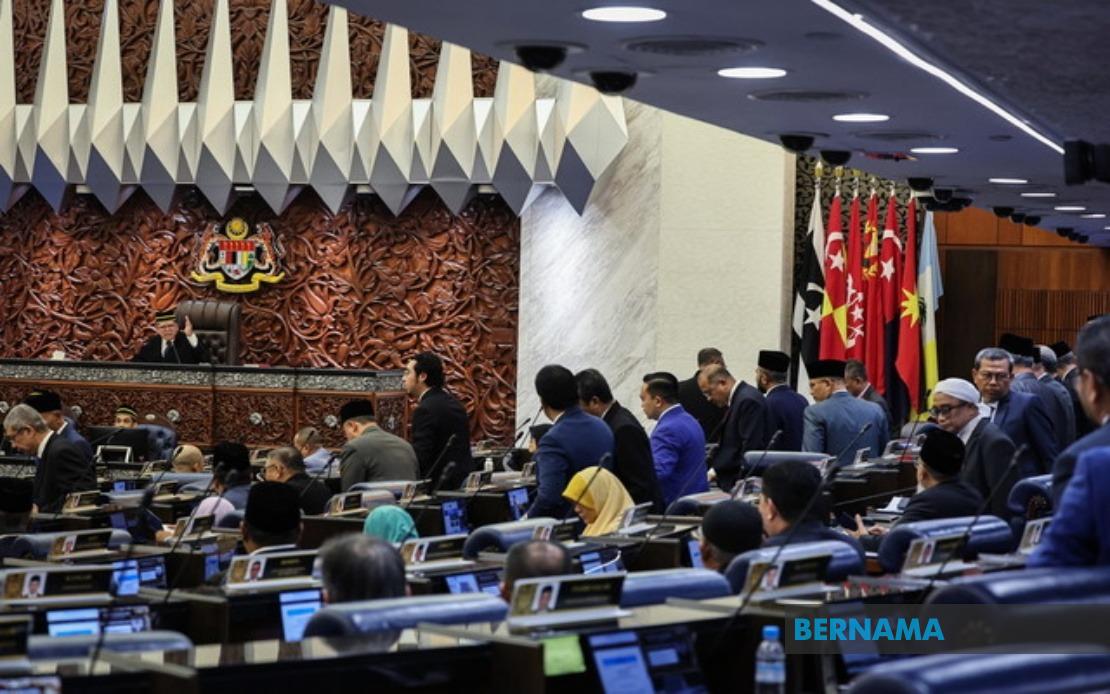
The decision by Perikatan Nasional (PN) members of Parliament to stage a mass walkout from the Dewan Rakyat during the special sitting on the Lembaga Tabung Haji (TH) Royal Commission of Inquiry report has ignited fresh debate about the balance between parliamentary protest and substantive legislative engagement. Opposition Leader Datuk Seri Hamzah Zainudin led the departure alongside PN Chief Whip Datuk Seri Takiyuddin Hassan and PN chairman Datuk Seri Dr Samsuri Mokhtar, marking a significant moment in the chamber's proceedings on an issue deeply affecting millions of Malaysian depositors.
The exodus followed Takiyuddin's proposal to adjourn the special sitting, prompted by the absence of Prime Minister Datuk Seri Anwar Ibrahim and Deputy Prime Minister Datuk Seri Fadillah Yusof, both currently receiving medical treatment. This development has raised uncomfortable questions about whether parliamentary opposition to government positions ought to take the form of theatrical departure or sustained engagement through debate and the legislative record. Academic observers argue that the distinction between these approaches carries profound implications for how Parliament functions as an institution of democratic accountability.
Professor Datuk Dr Sivamurugan Pandian from Universiti Sains Malaysia's School of Social Sciences provided a pointed assessment of the opposition's strategy, suggesting that while the walkout captured media attention, it simultaneously risked undermining the very cause it purported to champion. By vacating the chamber rather than pressing their case through debate, PN members surrendered their most powerful tool for shaping public discourse and establishing an official parliamentary record. The distinction matters enormously in Malaysian politics, where Hansard records serve as authoritative documentation of government accountability and opposition scrutiny.
The TH matter itself carries extraordinary significance for Malaysian society, with hundreds of thousands of depositors holding savings accumulated over decades. The RCI report, released publicly on July 29 after the government determined its findings warranted disclosure to citizens, represents a watershed moment for institutional transparency regarding the pilgrimage fund's management. The special sitting convened specifically to allow legislators to examine these findings and engage in substantive analysis. Against this backdrop, choosing to depart rather than participate represents a strategic calculation with genuine costs.
Sivamurugan observed that leaving the debate on such a consequential issue risked constructing a damaging political narrative, one suggesting that opposition politicians prioritised theatrical protest over genuine commitment to depositor interests. This framing matters because public perception of legislative commitment shapes electoral prospects and institutional legitimacy. The walkout may have demonstrated displeasure at the Prime Minister's absence—a legitimate symbolic concern given the sensitive nature of the discussion—but it simultaneously surrendered the opportunity to advance concrete arguments, cite empirical evidence, and propose alternative solutions on the parliamentary record.
The complexity deepens when acknowledging that not all opposition MPs embraced the walkout strategy. Some PN members elected to remain in the chamber and participate in debate, indicating genuine divisions within the opposition bloc regarding tactical effectiveness. These lawmakers apparently judged that engagement produced greater value than departure. This fracture itself merits scrutiny, as it suggests the opposition leadership did not command unanimous conviction regarding the protest's necessity or appropriateness. Parliamentary unity on procedural matters typically signals collective judgment, whereas dissent within opposition ranks suggests uncertainty about the chosen approach.
Sivamurugan acknowledged the legitimate symbolic dimension of the protest, recognizing that the Prime Minister's absence from a debate concerning one of Malaysia's most troubled financial institutions carries genuine political meaning. Parliament expects the nation's leader to personally defend government positions on matters of national consequence. Boycotting such proceedings represents a statement about standards of executive accountability. However, he contended that symbolism divorced from substantive argument loses force. A walkout accompanied by no competing vision, no alternative proposals, and no documented opposition positions fails to utilise Parliament's most valuable function.
The academic's core argument rests on distinguishing between parliamentary protest as symbolic gesture and parliamentary protest as platform for advancing alternatives. Remaining in the chamber, presenting comprehensive critiques of the RCI findings, questioning government responses, and proposing reform mechanisms creates an enduring record that shapes future deliberations and public understanding. Such engagement establishes the opposition's intellectual position and demonstrates serious commitment to institutional problem-solving. A walkout, by contrast, gains immediate publicity but sacrifices the opportunity to build that authoritative record.
For Malaysian depositors and broader civil society, the implications prove significant. The TH crisis extends beyond any single parliamentary sitting; it implicates long-term institutional reform, regulatory mechanisms, and government accountability structures. Opposition input into these discussions matters because healthy democracies benefit from competitive scrutiny of policy responses. When opposition chooses gesture over engagement, depositor interests potentially suffer. The public loses access to robust parliamentary examination of reform proposals, regulatory safeguards, and institutional restructuring options.
Sivamurugan's assessment suggests that the opposition faced a genuine strategic choice between two incompatible approaches. Protesting the Prime Minister's absence required accepting the cost of forfeited debate time. Conversely, utilising the parliament sitting to maximum effect required either accepting the PM's absence without dramatic response or accepting the reputational cost of proceeding despite that absence. The elected path attempted both simultaneously, gaining neither full symbolic victory nor substantive advantage. In parliamentary systems, such compromise tactics frequently satisfy neither objective.
The governance question extends beyond this single debate. Malaysia's legislative culture increasingly features walkouts, boycotts, and procedural disruptions alongside substantive legislative work. Understanding which approach serves democratic purposes most effectively remains contested. Academic analysis suggests that democracies strengthen through accumulation of documented debate, establishing precedents and records that constrain future governments and inform public judgment. Symbolic protest serves important signalling functions but cannot substitute for this institutional memory.
Looking forward, the opposition faces recurring choices about engagement versus withdrawal on controversial matters. The TH debate represents merely one instance among many where government actions provoke opposition objections. Establishing consistent, defensible principles for deciding when walkouts serve democratic purposes—and when they undermine them—would serve Parliament and the public better than ad-hoc tactical calculations. The depositors affected by TH's troubles deserve opposition advocacy grounded in sustained institutional engagement rather than episodic protest theatre.
Ultimately, Sivamurugan's critique invites reflection on Parliament's fundamental purpose in Malaysian democracy. If the institution exists primarily as a stage for symbolic protest, walkouts make perfect sense. If Parliament's core value derives from creating authoritative records of government scrutiny, from building evidentiary cases for reform, and from offering platforms for competing visions of policy solutions, then debate engagement proves more valuable. The opposition's choice on the TH sitting reflected an implicit judgment about Parliament's role. Whether that judgment served Malaysian democracy and depositor interests remains debatable.

