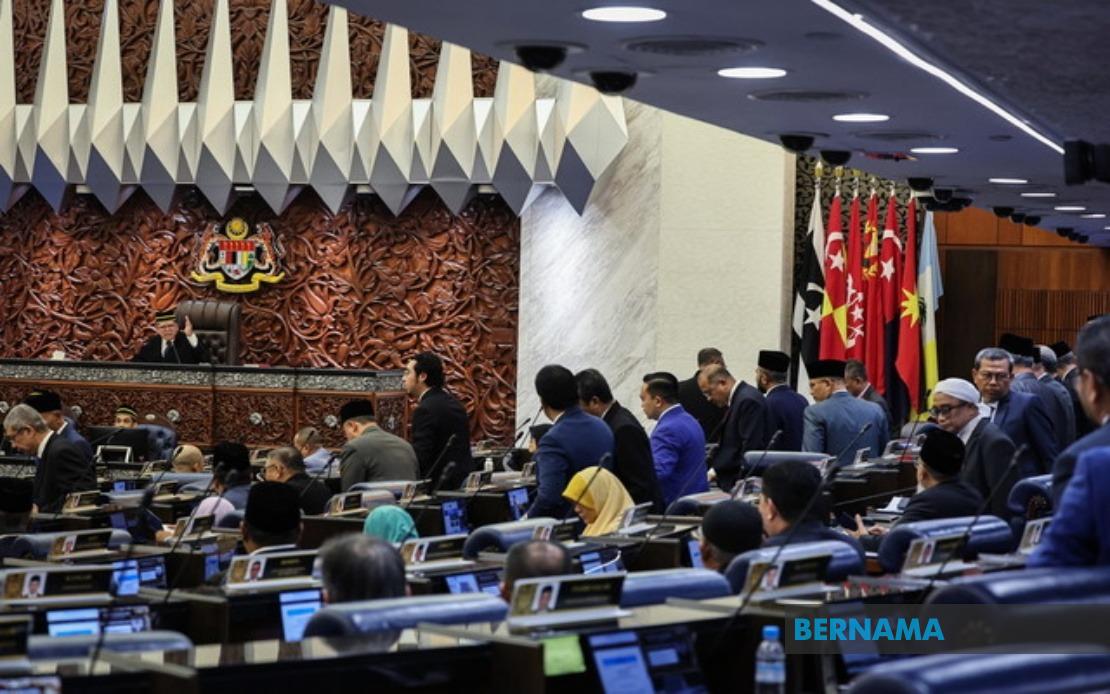
Opposition Members of Parliament staged a dramatic walkout from the Dewan Rakyat during a special sitting devoted to briefing lawmakers on the Royal Commission of Inquiry report examining Lembaga Tabung Haji's operations and financial management. The coordinated exit reflected growing parliamentary tensions as the opposition questioned the legitimacy and utility of proceeding with crucial deliberations without the nation's senior leadership present.
The incident unfolded after Speaker Tan Sri Johari Abdul ruled that the scheduled ministerial briefing would proceed as planned, despite the absence of Prime Minister Datuk Seri Anwar Ibrahim. Opposition lawmakers, dissatisfied with what they characterised as inadequate justification for the leadership vacuum, chose to demonstrate their displeasure through collective departure rather than participate in proceedings they deemed compromised.
Perikatan Nasional opposition chief whip Datuk Seri Takiyuddin Hassan had formally proposed that the special sitting be postponed given the simultaneous absence of both Anwar and Deputy Prime Minister Datuk Seri Fadillah Yusof. Both senior officials were receiving medical treatment, creating an unusual situation where Parliament was called to examine a major governance inquiry without the Prime Minister or his deputy present to answer questions or provide strategic direction on the government's response.
Speaker Johari responded to the growing acrimony by invoking his prerogative to allow members to participate or abstain according to their consciences. His remarks, inviting those with reservations to leave while noting that public scrutiny would judge their choices, underscored the high political stakes surrounding the Tabung Haji situation. The RCI report carries significant implications for Islamic finance governance in Malaysia, touching on a pilgrimage savings scheme that millions of Malaysian Muslims depend upon.
With the opposition benches emptied, Minister in the Prime Minister's Department (Religious Affairs) Dr Zulkifli Hasan proceeded to deliver the government's briefing to the remaining members. This arrangement allowed the administration to present its position on the RCI findings and outline remedial measures, though the absence of the Prime Minister himself limited the government's ability to provide comprehensive strategic responses or address broader questions about ministerial accountability.
The walkout highlights underlying frustrations within the opposition coalition regarding parliamentary procedure and the government's management of critical briefings. For opposition lawmakers, the absence of the Prime Minister signalled either insufficient seriousness about the matter or an attempt to manage parliamentary scrutiny under conditions favourable to the government. Such perceptions, whether justified or not, undermine public confidence in Parliament's capacity to exercise robust oversight.
Tabung Haji itself remains a sensitive political topic in Malaysia. As the official hajj savings institution for Muslim pilgrims, its financial health and governance standards carry religious, social, and political dimensions. Any RCI report examining its operations inevitably raises questions about regulatory effectiveness, investor protection, and the broader health of Malaysia's Islamic financial sector. These were precisely the issues opposition MPs wished to interrogate through direct engagement with senior government representatives.
The timing of the briefing, with key officials absent, presented an awkward optics challenge for the government. While medical treatment for serving ministers deserves consideration and respect, the convergence of absences during a critical parliamentary session created the appearance of avoidance or deprioritisation. Whether intentional or purely circumstantial, the effect was to diminish the perceived importance of the proceedings and fuel opposition narratives about government accountability.
Parliamentary procedure in Malaysia grants the Speaker significant discretion in managing chamber proceedings, and Johari exercised that authority by permitting the sitting to continue. Yet the episode illustrates the tension between executive convenience and legislative assertiveness. When Parliament summons itself to address matters of genuine public concern, the presence and engagement of executive leadership carries symbolic and practical weight that cannot easily be substituted through subordinate ministerial representation.
For Malaysian citizens invested in Tabung Haji, the parliamentary machinations surrounding the RCI briefing may seem peripheral to substantive questions about their savings and the institution's financial viability. Yet the quality of parliamentary oversight directly affects the accountability mechanisms available to ordinary investors. When opposition parties find themselves unable to properly interrogate major governance reports because key officials are absent, the entire system of checks and balances weakens.
The incident also reflects broader challenges within Malaysia's coalition government. With Prime Minister Anwar's administration juggling competing factions and managing parliamentary mathematics across diverse political groupings, maintaining coherent responses to major governance issues requires sustained engagement and leadership presence. The Tabung Haji situation demanded precisely that kind of attention, making the simultaneous absence of Anwar and Fadillah particularly problematic from a governance standpoint.
Moving forward, the government will need to determine whether a supplementary briefing with full ministerial participation might be warranted. Rebuilding confidence in the handling of the RCI recommendations and Tabung Haji's future direction may require more comprehensive engagement with parliamentary opposition than a hastily arranged session without the Prime Minister could provide. The credibility of Malaysia's response to any governance failings identified by the RCI may ultimately depend on the depth and transparency of parliamentary scrutiny that follows.

