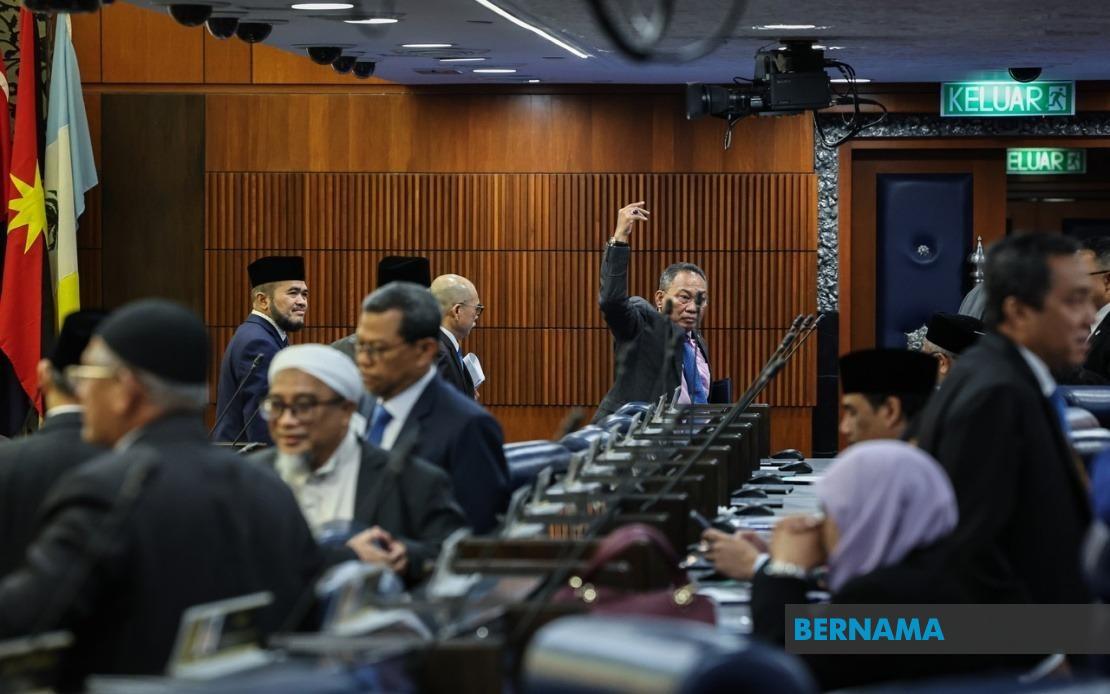
The opposition's refusal to participate in yesterday's Dewan Rakyat debate on the Tabung Haji Royal Commission of Inquiry report has drawn sharp criticism from governance experts, who argue that the boycott represents an abdication of Parliament's fundamental responsibility to scrutinise government actions and protect public interest. The walkout, led by Perikatan Nasional MPs including Opposition Leader Datuk Seri Hamzah Zainuddin, occurred during a special sitting called to hear Minister in the Prime Minister's Department (Religious Affairs) Dr Zulkifli Hasan's briefing on the RCI's findings regarding management weaknesses at the Islamic pilgrimage fund between 2014 and 2020.
According to Assoc Prof Dr Mazlan Ali of Universiti Teknologi Malaysia, the opposition's withdrawal from the chamber deprives the 10 million Tabung Haji depositors of their elected representatives' advocacy at a critical juncture. Rather than engaging substantively with the government's response to the RCI report's findings, the boycott suggests a prioritisation of political theatre over institutional responsibility. Mazlan contended that Parliament remains the appropriate venue for detailed examination of such matters, where ministers can be directly questioned and held accountable for policy implementation and reform measures.
The opposition's stated justification—that Prime Minister Datuk Seri Anwar Ibrahim's absence due to hospitalisation rendered the briefing insufficiently important—does not withstand scrutiny in parliamentary practice, Mazlan suggested. The Minister in the Prime Minister's Department possesses the requisite authority and portfolio knowledge to address substantive questions about Tabung Haji's governance, particularly regarding the institutional measures being undertaken to restore financial stability and address operational deficiencies identified by the inquiry. The presence or absence of the Prime Minister, while symbolically significant, does not diminish the minister's ability to provide comprehensive explanations to Parliament.
Dr Nazreena Mohammed Yasin, a senior lecturer in the Department of Social Sciences at Universiti Tun Hussein Onn, reinforced this perspective by emphasising that active parliamentary participation represents the most robust mechanism for executing legislative oversight. The Dewan Rakyat debate on the Tabung Haji RCI report offered an institutional platform uniquely suited to examining the inquiry's findings, posing detailed questions, and demanding government accountability. Through such parliamentary processes, the principle of governmental accountability—central to democratic governance—is reinforced and made tangible, as ministers must explain their actions and policy decisions to elected representatives before a public record.
The boycott carries significant reputational consequences for the opposition's credibility on matters affecting ordinary Malaysians. For depositors who have entrusted their life savings to Tabung Haji, the absence of opposition scrutiny and questioning during parliamentary debate could reasonably create an impression that the opposition lacks genuine commitment to their welfare. Given that Tabung Haji's sustainability and institutional management require sustained, rigorous oversight by all parliamentary stakeholders, the withdrawal undermines confidence in the legislative branch's willingness to execute this duty consistently and impartially.
Nazreena further noted that parliamentary accountability transcends dependency on any single figure's attendance, a principle that the opposition's conditional participation threatens to erode. Each relevant minister bears individual responsibility for answering MPs' questions and defending government decisions, a distributed accountability mechanism that functions precisely to prevent concentration of power or institutional capture. By conditioning their participation on the Prime Minister's attendance, the opposition effectively signals that accountability becomes negotiable based on political calculations rather than institutional necessity.
The timing and context of the RCI report itself underscores the stakes involved. The inquiry examined a period spanning 2014 to 2020, encompassing significant institutional challenges that required management reform and financial restoration efforts. The parliamentary briefing and debate served as an essential mechanism through which the government would outline its response strategy, including governance improvements, financial recovery measures, and structural reforms designed to restore depositor confidence. Opposition MPs' presence during these explanations would have permitted them to publicly record concerns, propose alternative approaches, and ensure that follow-up action remained subject to parliamentary monitoring.
The broader implications for Malaysia's legislative effectiveness merit consideration. If opposition MPs routinely boycott parliamentary sessions based on the absence of particular government figures, the institution's ability to function as an effective forum for representative democracy becomes compromised. Parliament's strength as a check-and-balance mechanism depends fundamentally on consistent, good-faith participation from all stakeholders, particularly during debates addressing matters with direct implications for public welfare. The precedent established by yesterday's walkout could encourage similar tactical withdrawals on future occasions, gradually degrading Parliament's institutional capacity.
Moreover, the boycott occurs against a backdrop of growing concerns about financial literacy and consumer protection among Tabung Haji depositors. Many contributors to the fund are individuals of modest means or retirees dependent on these savings for pilgrimage aspirations or emergency funds. The RCI's identification of management and operational weaknesses heightens the need for thorough public scrutiny and transparent explanation of corrective measures. Opposition participation would have ensured that depositors could read parliamentary records detailing both government reforms and parliamentary questioning, thereby enhancing their understanding of protective measures implemented on their behalf.
Dr Mazlan emphasised that constructive opposition participation would have permitted immediate questioning and debate, allowing disagreements over government explanations to surface transparently within Parliament's official record. Should opposition MPs have identified gaps in the government's reform strategy or questioned the adequacy of proposed measures, these concerns would have been documented publicly, creating accountability for government follow-through. Instead, the boycott prevents such questioning from entering the parliamentary record and forecloses opportunities for opposition-led monitoring of government implementation.
The PN Chief Whip's initial proposal to postpone the sitting, subsequently overridden when other government MPs proceeded with the debate, reveals the calculated nature of the opposition's stance. Rather than engaging with the substance of the RCI findings or the government's response strategy, the opposition effectively signalled that it would participate only on conditions unrelated to the institutional substance at hand. This approach conflicts with the responsibility vested in opposition parties to represent constituent interests, particularly regarding matters affecting millions of voters who depend on institutions like Tabung Haji.
Excellence in parliamentary opposition requires distinguishing between legitimate criticism of government policy and tactical obstruction that abandons constituent service. The opposition's walkout, in the view of governance analysts, falls into the latter category. Malaysian voters who have entrusted their savings to Tabung Haji and elect opposition MPs to safeguard their interests may reasonably question whether yesterday's boycott advances their welfare. Going forward, the opposition faces pressure to demonstrate renewed commitment to substantive parliamentary engagement, particularly on matters affecting public finances and social institutions integral to Malaysian citizens' lives.

