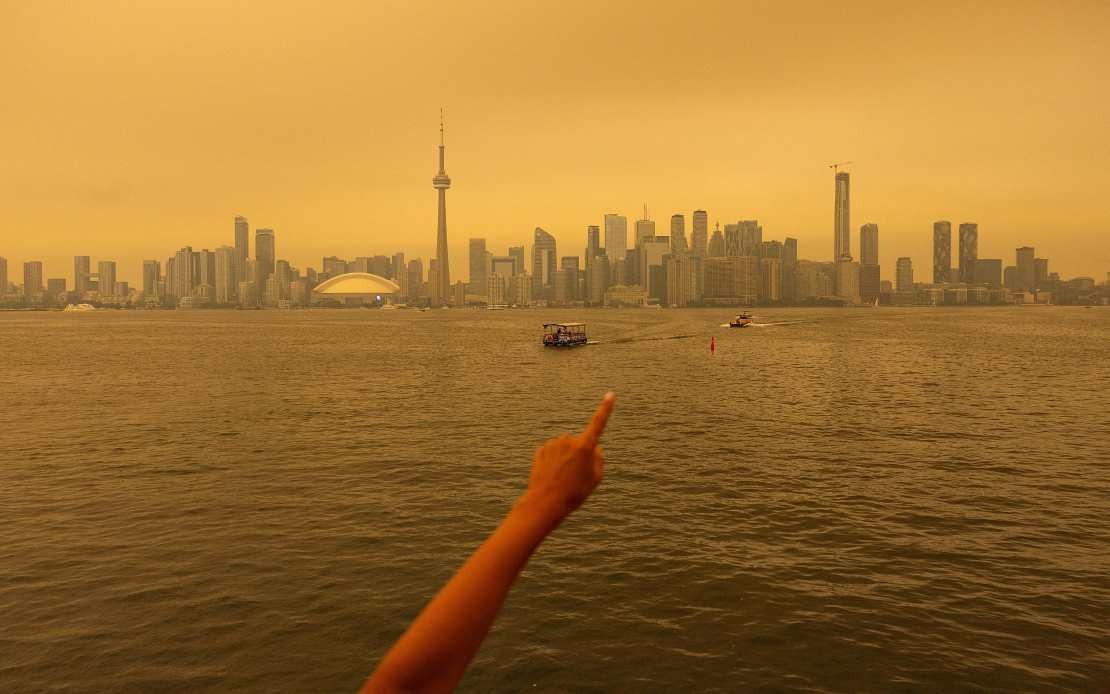
Unprecedented wildfires spreading through northwestern Ontario have plunged Canada's most populated regions into a hazardous haze, with the smoke blanketing both Ottawa and Toronto under conditions that triggered widespread health warnings. The situation has deteriorated sharply over recent days, leaving residents in the nation's capital and its largest city facing severely compromised air quality that poses genuine risks to public health. The phenomenon underscores the vulnerability of even developed nations to environmental crises originating from natural disasters far removed from urban centres.
On Wednesday morning, Toronto's air quality measurements placed it among the worst-performing cities globally when comparing pollution indices. Environment Canada's assessments classified Toronto's Air Quality Health Index at a "very high risk" level, a designation reserved for conditions where virtually all residents face potential health complications from prolonged outdoor exposure. Simultaneously, Ottawa authorities issued formal air quality alerts, warning the public about combined threats from wildfire smoke and elevated humidity levels that trap particulate matter near ground level. The visual impact has been striking, with observers reporting a distinctly yellow cast across city skies—a visible manifestation of air pollution typically associated with developing regions experiencing industrial crises or extreme weather events.
The scale of the fire emergency across Ontario's northwest remains substantial, with more than one hundred active fire zones continuing to burn across the region. This concentration of simultaneous fires has forced several communities to undertake emergency evacuations as flames approached residential areas, creating additional pressure on provincial emergency response systems already managing the broader air quality crisis. The fires have expanded beyond their immediate geographic origin to create transnational air quality impacts, with meteorological models indicating that prevailing wind patterns will carry the smoke further afield over multiple days.
The disruption extends beyond health concerns into Canada's freight transportation networks. A dramatic video that circulated widely on social media platforms depicted a Canadian National train surrounded by raging flames near Armstrong, Ontario, captured by locomotive crew members late Monday evening. The footage showed towering infernos consuming forest on both sides of the rail line while casting an intense red illumination through the locomotive's windows—a stark reminder of the fire's proximity to critical infrastructure. Canadian National confirmed the video's authenticity on Wednesday and reported that all train crew members had been evacuated safely from the immediate danger zone.
Following this incident and ongoing fire threats throughout the region, CN announced a temporary suspension of train operations across the affected section of its network. This disruption carries implications beyond immediate logistics, as rail freight forms a crucial component of North America's continental supply chains. Suspensions of major rail corridors can create cascading delays in commodity movement, particularly affecting time-sensitive goods and perishable cargo dependent on reliable transportation schedules. For Malaysian importers relying on Canadian agricultural products, minerals, or manufactured goods, such disruptions can create unexpected supply chain complications requiring alternative routing or temporary inventory adjustments.
The meteorological outlook presents little immediate relief for affected populations. Weather authorities have warned that atmospheric conditions will sustain the smoke plume across populated areas for several additional days. The combination of stalled high-pressure systems and prevailing wind directions means that dispersal of the smoke layer will occur gradually rather than through rapid clearing. This extended duration amplifies health risks for vulnerable populations, including the elderly, young children, and individuals with respiratory conditions, who face prolonged exposure to hazardous air quality that advisories recommend they avoid outdoor activity.
Canada's experience with these Ontario wildfires reflects broader patterns of increasing wildfire intensity across North America, a phenomenon scientists attribute to warming temperatures, prolonged drought cycles, and altered precipitation patterns. The ability of such fires to simultaneously impact multiple major metropolitan areas demonstrates how climate-driven disasters can overwhelm even advanced infrastructure and public health systems. For Malaysia and Southeast Asia, the Ontario situation offers instructive parallels to transnational haze phenomena the region has experienced, particularly from Indonesian and Malaysian peatland fires that have periodically blanketed neighbouring countries in dangerous smoke.
The incident also highlights the critical importance of early warning systems, coordinated evacuation protocols, and real-time air quality monitoring for modern urban populations. Ontario's ability to rapidly assess fire threats, communicate health risks through established frameworks like the Air Quality Health Index, and coordinate transportation sector responses represents a developed nation's institutional capacity to manage environmental emergencies. Nonetheless, the severity and speed with which the air quality deteriorated across Ontario's major population centres demonstrates that even technologically advanced societies face genuine challenges in mitigating natural disasters of sufficient scale.
For the broader context of North American resource and supply chain management, the Ontario wildfires underscore how environmental disruptions can ripple through integrated economic systems. Rail freight networks, agricultural shipments, and industrial production dependent on reliable transportation face inevitable delays when major corridors close due to fire proximity or smoke hazard concerns. Malaysian businesses engaged in North American trade will monitor the situation closely, as extended rail suspensions could require re-routing of cargo through alternative channels or temporary warehouse accumulation of goods awaiting safe transport conditions.
Looking forward, the resolution of Ontario's wildfire crisis will depend on rainfall, which has remained scarce across the affected region, and on continued effectiveness of firefighting efforts. Provincial authorities are mobilizing resources to contain the blazes, but the current scale of simultaneous fires across a vast geographic area stretches emergency response capacity. As Canadian officials manage the immediate humanitarian and environmental dimensions of this crisis, the situation serves as a reminder of climate change's tangible impacts on daily life in developed nations and the economic interdependencies that mean distant disasters can affect markets and consumers globally.

