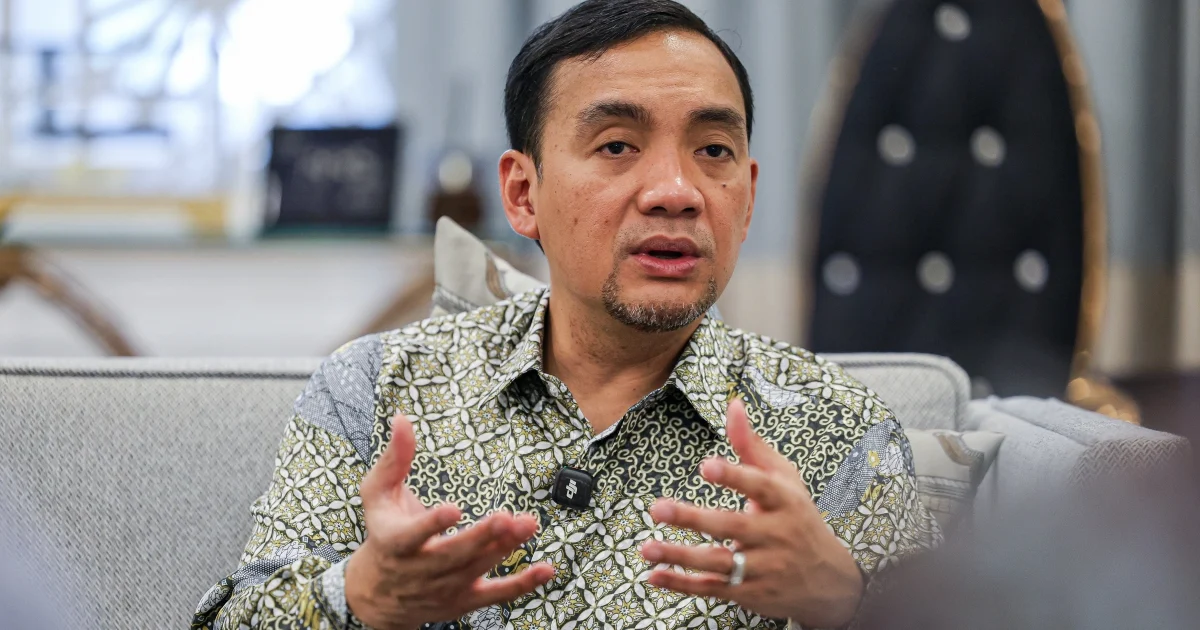
Caretaker Johor Menteri Besar Datuk Onn Hafiz Ghazi has rejected allegations that he attributed the state assembly's dissolution to a directive from the palace, moving to distance himself from claims made by Datuk Dr Mohd Puad Zarkashi regarding his purported statements on the matter.
The denial comes amid ongoing scrutiny of how the decision to dissolve the Johor state assembly came about, with various political figures offering differing accounts of the circumstances that led to the move. The controversy highlights the complex interplay between state administrative decisions and the role of the Johor palace in governance matters, a relationship that typically operates with considerable discretion and constitutional protocol.
Datuk Dr Mohd Puad Zarkashi had previously suggested that Onn Hafiz had indicated the palace had formally ordered the assembly's dissolution, a characterisation that carries significant constitutional implications. Such a claim would suggest that the dissolution was not initiated through standard governmental procedures but rather mandated by the palace—a distinction that carries weight in Malaysia's constitutional framework where the ruler's role, while important, operates within defined parameters.
Onn Hafiz's clarification addresses a sensitive area of state politics. The Johor Menteri Besar, in his caretaker capacity during the period leading to fresh elections, has sought to establish clear parameters around decision-making authority. His rejection of the characterisation indicates an effort to position the dissolution as arising from the government's own assessment of circumstances rather than external royal mandate, though the exact motivations behind the dissolution remain a matter of political debate.
The disagreement between the two figures reflects broader tensions within Johor's political landscape, where questions about how major governmental decisions are made continue to generate speculation and commentary. In Malaysian politics, clarity on the distinction between palace prerogative and executive decision-making carries constitutional importance, as it establishes the proper functioning of the separation between the ceremonial and administrative functions of state leadership.
From a regional perspective, these developments underscore how Malaysian state governments navigate their relationship with their respective rulers. Unlike in other democracies, the Malaysian constitutional monarchy grants significant ceremonial and residual powers to the sultans, making the characterisation of any major state decision—whether it originates from the executive or involves palace consultation—a matter that requires careful delineation and explanation to the public.
The timing of Onn Hafiz's denial is noteworthy, coming during a period when the Johor state government was operating under a caretaker arrangement pending fresh elections. During such transition periods, maintaining public confidence in the legitimacy and proper grounding of governmental decisions becomes particularly important, as the state apparatus must function without the full authority of an elected government. Any suggestion that decisions were made outside normal procedures or through improper channels could undermine public trust in the interim administration.
For Malaysian and Southeast Asian observers monitoring state-level governance in Malaysia, this incident illustrates the importance of transparent communication about decision-making processes in monarchical constitutional systems. The distinction Onn Hafiz appears to be drawing—between palace involvement in the constitutional sense and palace directive over executive decisions—reflects a constitutional nuance that many democracies do not need to navigate but which remains relevant to Malaysia's particular system of government.
The broader context of state assembly dissolutions in Malaysia shows that such decisions typically involve consultation with multiple stakeholders, including the ruler or their representatives. However, the legal and constitutional responsibility for recommending dissolution ultimately rests with the government of the day. Onn Hafiz's pushback against the characterisation that the palace "ordered" the dissolution seems aimed at preserving the distinction that while the palace may have been consulted or informed, the decision itself fell within the remit of state executive authority.
Political observers in Johor and beyond will likely continue to scrutinise the actual decision-making process behind the assembly dissolution. Such controversies, while sometimes appearing to focus on semantic distinctions, actually touch on fundamental questions about how power is exercised and distributed within Malaysia's constitutional framework. The outcome of this particular disagreement between Onn Hafiz and Datuk Dr Mohd Puad Zarkashi may influence how future state leaders communicate about significant governmental decisions affecting their respective assemblies.
Looking forward, this episode reinforces the need for Malaysian political leaders to provide clear public explanations when significant constitutional actions are taken. As Malaysia's federal system continues to evolve and as state governments face increasing scrutiny from media and public alike, establishing transparent protocols for decision-making—particularly in matters involving consultation with palace authorities—will become increasingly important for maintaining institutional credibility and public confidence in governance.

