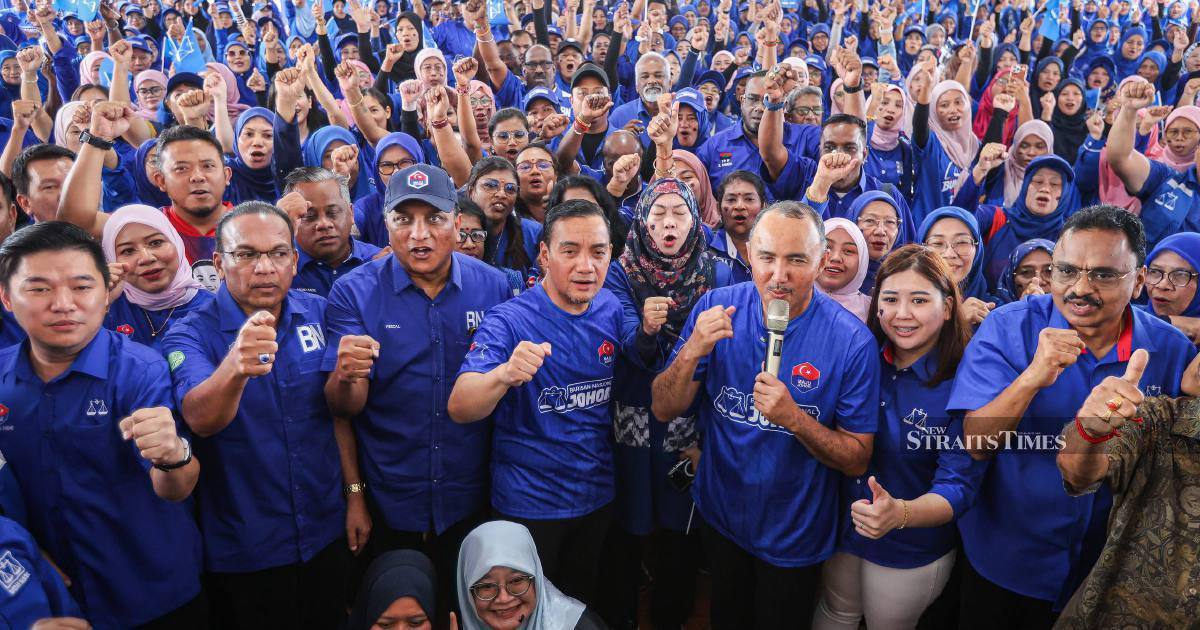
Johor's caretaker Menteri Besar Datuk Onn Hafiz Ghazi has made a direct appeal to voters to resist what he characterises as a coordinated opposition strategy relying on inflammatory accusations, inflammatory messaging, and commitments that cannot realistically be delivered. Speaking in Kluang as the state election campaign moved into its concluding phase, Onn Hafiz framed the electoral choice in stark terms, positioning his administration's track record against what he depicted as opposition tactics designed to manipulate voter sentiment through divisive rhetoric.
The appeal reflects broader tensions in Malaysian state politics, where the Johor election has become a test of voter sentiment across the broader political landscape. For the ruling coalition, maintaining control of the southern state represents both a symbolic and strategic imperative. Johor remains Malaysia's second-most populous state and has traditionally served as a stronghold for the Barisan Nasional-aligned parties, making any slippage in support a significant signal about electoral momentum heading toward potential federal contests. Onn Hafiz's intervention in the final campaign week suggests concern within the ruling coalition about voter susceptibility to opposition messaging.
The timing of Onn Hafiz's remarks underscores the critical nature of final-week campaigning in Malaysian elections. With voters likely approaching their decision-making phase, both government and opposition strategists intensify their messaging. The caretaker Menteri Besar's specific focus on opposition campaign tactics—characterising them as reliant on provocation and undeliverable pledges—attempts to inoculate supporters against competing narratives while potentially discouraging wavering voters from switching allegiance.
From a political strategy perspective, Onn Hafiz's framing carries implications for how the ruling coalition intends to defend its record. Rather than emphasizing specific policy achievements or development initiatives, the focus on opposing what he termed false claims suggests an election increasingly fought on the terrain of credibility and trustworthiness. This defensive posture may reflect internal polling data indicating vulnerability in particular constituencies or demographic groups that have proven receptive to opposition messaging.
The opposition's campaign strategy, by extension, appears to have concentrated on highlighting grievances and presenting alternative visions for Johor's development. Whether framed as slander or legitimate criticism, such messaging has evidently registered sufficiently among voters to prompt this high-profile counter-response from the caretaker Menteri Besar. This dynamic is typical of competitive state elections in Malaysia, where incumbents often find themselves responding to challenger narratives rather than controlling the election agenda entirely.
For Johor voters, particularly those undecided heading into the final campaign period, Onn Hafiz's remarks function as both a clarification of his administration's position and an implicit acknowledgement that opposition arguments have gained traction. The appeal for voters to apply critical scrutiny to opposition promises—assessing their feasibility and funding mechanisms—suggests an attempt to frame the election as a choice between pragmatic governance and unrealistic populism. This narrative aligns with common incumbent strategies in Malaysian elections.
The reference to provocative language also carries weight given Malaysia's sensitivity to communal and divisive rhetoric. By invoking this concern, Onn Hafiz attempts to position his coalition as the mature, responsible choice compared to opposition parties willing to deploy inflammatory tactics. Such framing can resonate with moderate voters concerned about political civility, though it also risks appearing dismissive of genuine grievances if applied too broadly to opposition criticism.
Regionally, the Johor election outcome will likely influence dynamics in other southern Malaysian states. Successful opposition inroads in Johor could embolden challenges in neighbouring Pahang and Negeri Sembilan, while a strong ruling coalition performance would reinforce perceptions of incumbent strength in peninsular Malaysia's southern tier. For Southeast Asian political observers, the election also serves as an indicator of voter sentiment in Malaysia's most economically developed state outside the federal territories, providing data points for understanding Malaysian electoral trends.
The final week of campaigning will likely see intensified engagement from both camps, with the opposition presumably continuing to advocate for change and present alternative agendas, while the ruling coalition doubles down on Onn Hafiz's message encouraging voters to evaluate claims critically. The effectiveness of these competing appeals will become apparent on election day, though the caretaker Menteri Besar's intervention suggests genuine concern about the electoral contest remaining genuinely competitive in Johor.

