Johor's Menteri Besar Datuk Onn Hafiz Ghazi has framed the recent reshuffle of the state executive council as a strategic administrative renewal aimed at driving the state forward while honouring the legacy of those departing their posts. Speaking on the changes affecting the State Executive Council membership, Onn Hafiz emphasised that the restructuring represents a continuation of sound governance principles rather than a departure from established practices, underscoring the importance of both experience and fresh perspectives in state administration.
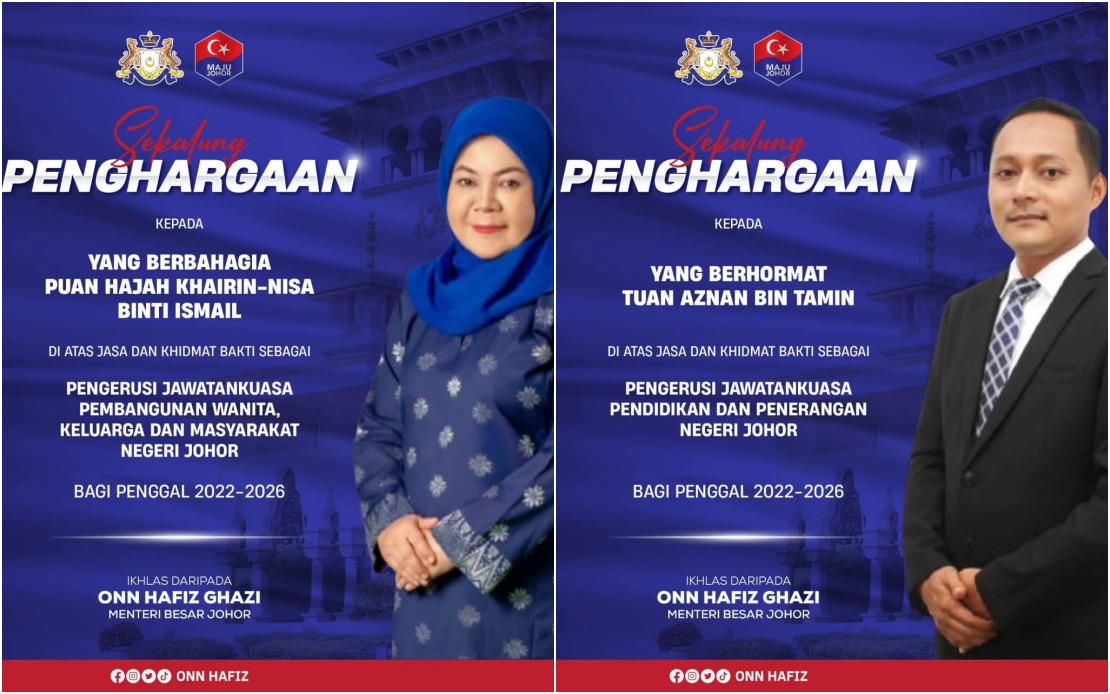
The Johor leadership recognised four outgoing Exco members—Datuk Zahari Sarip, K. Raven Kumar, Aznan Tamin and Khairin-Nisa Ismail—for their service during the 2022-2026 term. Onn Hafiz publicly acknowledged the sacrifices, dedication and intellectual contributions these individuals made to their respective portfolios, positioning their departure not as a removal but as a natural progression within the state's governance cycle. His remarks sought to preserve their reputations and maintain goodwill across the political establishment, a consideration particularly important in Malaysian state politics where former government figures often transition into other roles or retain influence within their parties.
The Menteri Besar's statement reflects a broader understanding within Malaysian governance that cabinet reshuffles, while sometimes politically contentious, serve legitimate administrative purposes. The notion that experience and wisdom accumulated through previous service remain valuable assets—even outside formal ministerial positions—represents an attempt to frame the changes as developmental rather than punitive. This messaging strategy is designed to prevent the perception that departing members have been sidelined or politically diminished, a concern that carries real consequences for internal party cohesion and morale.
The new Johor Exco lineup introduces four fresh faces to the administration while retaining six sitting assemblymen in their existing portfolios. The decision to maintain continuity for six members suggests a strategic approach balancing stability with renewal. Retaining experienced hands in key positions helps preserve institutional knowledge and ensures that critical policy initiatives continue without disruption, while the introduction of new members injects different perspectives and potentially addresses demographic or political representation considerations within the cabinet structure.
All ten assemblymen underwent formal appointment procedures, being sworn in before Tunku Mahkota Ismail, the Regent of Johor, at Istana Bukit Serene in Johor Bahru. The ceremonial nature of these proceedings underscores the constitutional significance of executive council membership in Malaysian state governance. The presence of the regent at the oath-taking ceremony carries symbolic weight, affirming that the reshuffled administration operates within established constitutional frameworks and maintains the confidence of the state's constitutional monarchy.
For Malaysian observers, Johor's executive council reshuffle carries particular significance given the state's economic importance and political weight within the federation. Johor remains one of Malaysia's largest contributors to federal revenue and serves as a critical industrial and commercial hub in the southern region. The composition of its state executive council therefore has implications extending beyond Johor's borders, influencing business confidence, investment decisions and the state's capacity to implement federal-state development programmes.
The reshuffle also reflects broader patterns in Malaysian state governance, where periodic cabinet changes occur to manage succession planning, address performance issues, balance internal party factions or respond to changing political circumstances. Onn Hafiz's emphasis on administrative renewal suggests that the changes were driven by governance considerations rather than factional disputes, though in Malaysian politics such distinctions are often blurred and subject to multiple interpretations depending on observers' political perspectives.
The Menteri Besar's public appreciation of the outgoing members serves a diplomatic function within state politics. By publicly documenting their contributions and pledging that their service will be remembered, Onn Hafiz creates a formal record that may be referenced if these individuals subsequently seek new positions or if questions arise about their political fortunes. This approach helps maintain the goodwill necessary for future cross-party cooperation or inter-factional harmony within the Johor Umno machinery.
The integration of four new Exco members into the administration raises questions about their priorities and policy focus areas. While the original statement does not specify their portfolio assignments, new cabinet members typically bring fresh energy to areas requiring acceleration or reform. In Johor's context, emerging priorities such as economic diversification, digital transformation, sustainable development and addressing cost-of-living pressures may feature prominently in the new administration's agenda.
Onn Hafiz's framing of the reshuffle as part of ensuring continuity while refreshing the administration attempts to reconcile potentially contradictory objectives. Continuity appeals to stakeholders concerned with stability and predictability, while renewal language addresses those seeking change and fresh approaches. This dual messaging reflects the political reality that state administrations must simultaneously maintain existing programmes and pursue new initiatives to satisfy diverse constituencies.
The timing of the Johor Exco reshuffle, occurring in mid-2024, positions the administration for the remainder of Onn Hafiz's current term. Should the reshuffled team successfully implement key state initiatives and navigate upcoming challenges, it may establish a template for future governance transitions. Conversely, if difficulties emerge, critics may question whether the changes strengthened or weakened the administration's effectiveness.
For Malaysian political watchers, the Johor reshuffling illustrates how state executives manage personnel decisions within constitutional constraints and political realities. Unlike Westminster parliaments where cabinet changes often trigger media speculation about ideological shifts or leadership struggles, Malaysian state executives typically characterise such moves in technocratic terms emphasising administrative efficiency and service delivery improvements. Whether such characterisations reflect genuine governance motivation or mask political calculations remains an interpretive question for analysts and observers.

