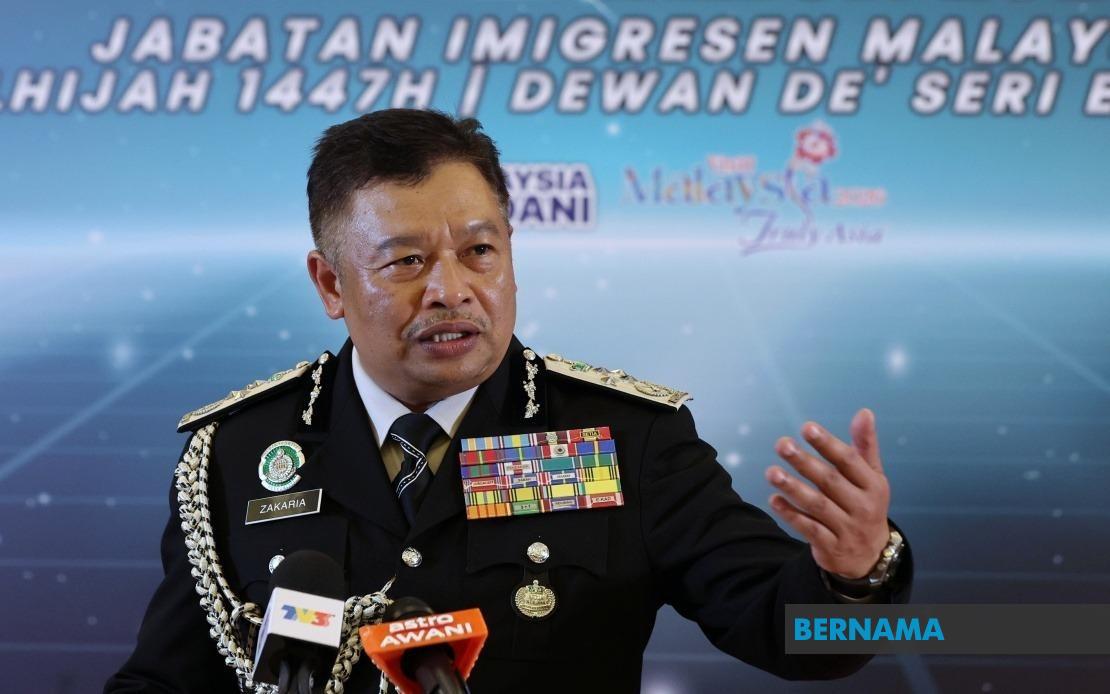
The technical glitch affecting some international carriers' ability to process Malaysian passports with validity periods beyond 10 years remains confined to just two airlines, according to Immigration director-general Datuk Zakaria Shaaban. Speaking at a press conference in Putrajaya, Zakaria clarified that the problem is fundamentally a systems compatibility issue rather than any international rejection of Malaysian travel documents, a distinction that carries important implications for Malaysian travellers and the country's reputation in aviation circles.
Zakaria's statement comes amid growing concern among Malaysian passport holders about potential travel disruptions. The clarification is significant because it addresses a key misunderstanding: while Malaysia has temporarily suspended issuing passports with validity exceeding 10 years, this reflects an isolated technical problem rather than a broader diplomatic or administrative failure. The two airlines experiencing difficulties are processing Malaysian travel documents through systems that fail to accommodate the extended validity period, though Zakaria acknowledged that more carriers might face the same issue without yet reporting it to the Immigration Department.
The director-general emphasized that the Immigration Department bears no responsibility for the airline system incompatibilities, particularly since these platforms operate globally across multiple jurisdictions. Significantly, other airlines have demonstrated no such problems handling Malaysian passports with 10-year-plus validity periods, indicating the issue is neither systemic nor widespread across the aviation industry. This distinction matters for Malaysian travellers, who can generally expect smooth processing at most major carriers despite the temporary suspension affecting new applications.
The core of Malaysia's revised passport policy centres on the standard 10-year validity period for Malaysian International Passports, which continues unchanged and has never been discontinued. What has been temporarily suspended is the additional validity extension that previously pushed total validity beyond the standard decade. Prior to this suspension, the Immigration Department practised a customer-friendly approach whereby applicants renewing their passports within six months of expiration could receive an extra six-month validity extension, accounting for remaining time on their previous document. This practice reflected an effort to maximize value for citizens and reduce the administrative burden of frequent renewals.
Understanding the mechanics of this suspension requires examining the specific circumstances that prompted it. Applicants who still possessed substantial remaining validity on old passports—more than six months—received an additional six-month extension when renewing to minimize wastage of paid validity. The additional period exceeding 10 years thus accumulated through this process, creating document validity periods that some airline reservation and check-in systems cannot process. Rather than representing a fundamental change in Malaysia's passport standards, the suspension represents a pragmatic response to technical limitations in third-party systems beyond the Immigration Department's direct control.
Recognizing the potential hardship caused by the sudden suspension, the Immigration Department has implemented a remedial measure allowing holders of passports already issued with 10-year-six-month validity to exchange them without charge for new documents. This proactive approach demonstrates official concern for protecting Malaysian citizens from disadvantage while resolving the underlying technical issues. The free replacement programme addresses a fairness concern: passport holders who obtained extended-validity documents in good faith should not bear the costs of airline system incompatibilities they could not have anticipated.
The broader context involves international aviation standards and protocols. The Immigration Department is coordinating with the International Civil Aviation Organization (ICAO), which establishes global standards for travel documents and passenger processing systems. This engagement suggests the issue transcends simple bilateral concerns between Malaysia and specific carriers, potentially affecting multiple countries whose passport systems similarly provide variable validity periods. ICAO's involvement indicates the problem receives attention at the level of international aviation governance, where technical standards for machine-readable travel documents must accommodate diverse national practices.
For Malaysian travellers and businesses dependent on international mobility, the practical implications remain modest in immediate terms. The vast majority of flights operate through airlines without the reported system problems, meaning most Malaysians should experience no travel disruptions. However, the suspension does affect citizens planning renewals who might have otherwise benefited from the extended validity option. Individuals holding passports approaching expiration within the next few years should monitor official Immigration Department communications for updates on when standard validity periods might be adjusted or when the extended-validity option returns.
The revelation that only two airlines face documented issues—with the possibility of others remaining unreported—highlights a broader challenge in modern government administration. Large organizations often lack comprehensive real-time visibility into how third parties interact with their products and systems. The Immigration Department's acknowledgment of this uncertainty demonstrates commendable transparency, though it underscores the need for systematic mechanisms to identify and resolve such problems across the entire aviation ecosystem. As more travellers renew documents under the new regime, additional airlines might surface similar technical issues.
Looking forward, resolution requires technical coordination between Malaysian authorities, affected airlines, and ICAO to either modify airline systems or adjust passport validity parameters to achieve universal compatibility. This process typically unfolds through firmware updates to check-in systems and modification of data fields in machine-readable documents. The timeline for resolution remains unspecified, creating uncertainty for Malaysians who might need travel documents beyond the current 10-year standard before compatibility issues are fully resolved across all carriers.
For regional context, Malaysia's experience reflects challenges faced by other countries with modern passport systems offering variable validity options. Airlines increasingly adopt standardized global systems designed for efficiency, sometimes creating friction when national preferences diverge from default configurations. The suspension and subsequent problem-solving effort demonstrate how administrative policies must sometimes adapt to technological realities beyond direct government control, even when those realities emerge from third-party systems rather than domestic regulatory failures.

