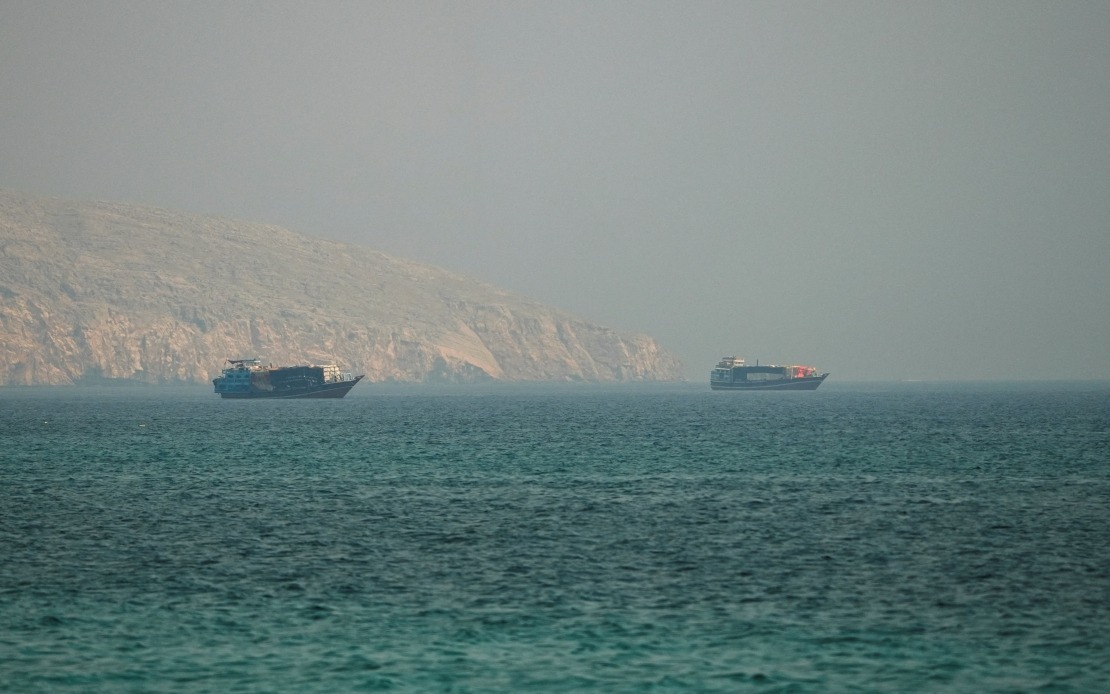
Oman has formally declared its opposition to imposing compulsory transit fees on ships navigating the strategically critical Strait of Hormuz, signalling instead a preference for voluntary service arrangements with shipping companies. The position was articulated by an Omani delegate during proceedings at the 137th International Maritime Organisation Council session held in London this week, underscoring Muscat's commitment to the longstanding principle of free passage through international waterways enshrined in maritime law.
The announcement carries particular significance given mounting tensions over maritime toll collection in one of the world's most vital shipping corridors. Through the Strait of Hormuz passes roughly one-third of globally traded seaborne oil and liquefied natural gas, making the waterway essential to energy security across Asia, Europe, and beyond. Any disruption or imposition of transit charges could reverberate through international markets and supply chains, affecting economies as distant as Malaysia and beyond.
According to reports citing sources familiar with the discussions, Oman has submitted a proposal to the United States and other Western nations outlining a framework whereby shipping firms would voluntarily contribute fees for navigational assistance services rather than face mandatory toll collection. This approach represents a middle-ground position between free passage and compulsory charges, attempting to balance revenue generation with the principles of open maritime commerce.
The Omani proposal deliberately draws inspiration from existing voluntary contribution models operating in the Strait of Malacca, the narrow waterway between Malaysia and Indonesia that channels roughly one-quarter of global maritime trade. That arrangement has functioned for years as a mechanism for funding safety and security operations while maintaining the voluntary nature of contributions. For Southeast Asian nations including Malaysia, this reference point is significant, as it demonstrates how regional maritime corridors can implement sustainable financing for maintenance and safety without resorting to coercive toll systems that might invite retaliation or circumvention.
Oman's diplomatic intervention addresses a brewing crisis precipitated by recent reports that Iran has begun collecting transit fees from vessels transiting through its territorial waters in the Strait of Hormuz. Such actions, if sustained and expanded, could fundamentally alter maritime commerce practices and potentially invite counter-measures from major shipping powers. The United Arab Emirates, alongside several other nations, formally submitted a condemnatory proposal during the London council session, explicitly objecting to Iran's reported toll collection practices.
Iran's response to these criticisms has been to submit its own proposal asserting that it maintains ongoing consultations with Oman regarding management arrangements and coordination mechanisms for the waterway, all framed within the boundaries of international law and applicable national regulations. This assertion suggests that Muscat is engaged in delicate negotiations with Tehran, attempting to find arrangements acceptable to all parties while preserving the corridor's fundamental openness to international shipping.
Oman's positioning as a mediator reflects its geographical and geopolitical circumstances. The sultanate shares the Strait of Hormuz with Iran and maintains relationships with both Western powers and regional actors. Its proposal for voluntary arrangements represents a pragmatic attempt to forestall escalation whilst acknowledging legitimate concerns about funding maritime safety infrastructure. The voluntary model allows for cost-sharing without the overt coercion that would transform passage through the strait into a toll corridor, which many maritime nations view as a violation of the United Nations Convention on the Law of the Sea.
For Malaysia and other Southeast Asian economies, the outcome of these negotiations matters considerably. Malaysia administers portions of the Strait of Malacca and has institutional experience with balancing maritime security funding against maintaining the corridor's viability for international commerce. The precedent established in the Strait of Hormuz could influence how other chokepoints are managed regionally and globally. Should mandatory tolls become normalized, Malaysia and other states controlling strategic waterways might face pressure to implement similar systems, fundamentally altering the economics of maritime trade.
The Omani delegate reiterated during the council session that Muscat remains committed to international maritime law principles governing transit passage, whilst pledging continued cooperation with the International Maritime Organisation, member states, and international partners. This emphasis on legal frameworks and multilateral engagement signals that Oman views lasting solutions to waterway management as requiring consensus-building rather than unilateral action.
The broader context encompasses escalating geopolitical tensions in the Middle East, through which not only oil flows but also manufactured goods destined for or originating from Asia. Any disruption to the Strait of Hormuz directly impacts regional supply chains and energy prices. Malaysia's position as a maritime nation with significant shipping interests means that decisions affecting the Strait of Hormuz indirectly influence Malaysian commerce and regional stability.
The voluntary contribution framework proposed by Oman offers a template for balancing multiple interests: coastal states receive resources for maintaining safe passages, shipping companies avoid punitive mandatory charges that might be passed to consumers, and the principle of free passage is preserved nominally whilst acknowledging that maritime infrastructure requires funding. Whether this compromise proves acceptable to Iran, Western powers, and the broader maritime community remains uncertain, but Oman's diplomatic initiative at the International Maritime Organisation represents an important attempt to prevent the Strait of Hormuz from becoming a flashpoint for broader economic conflict.

