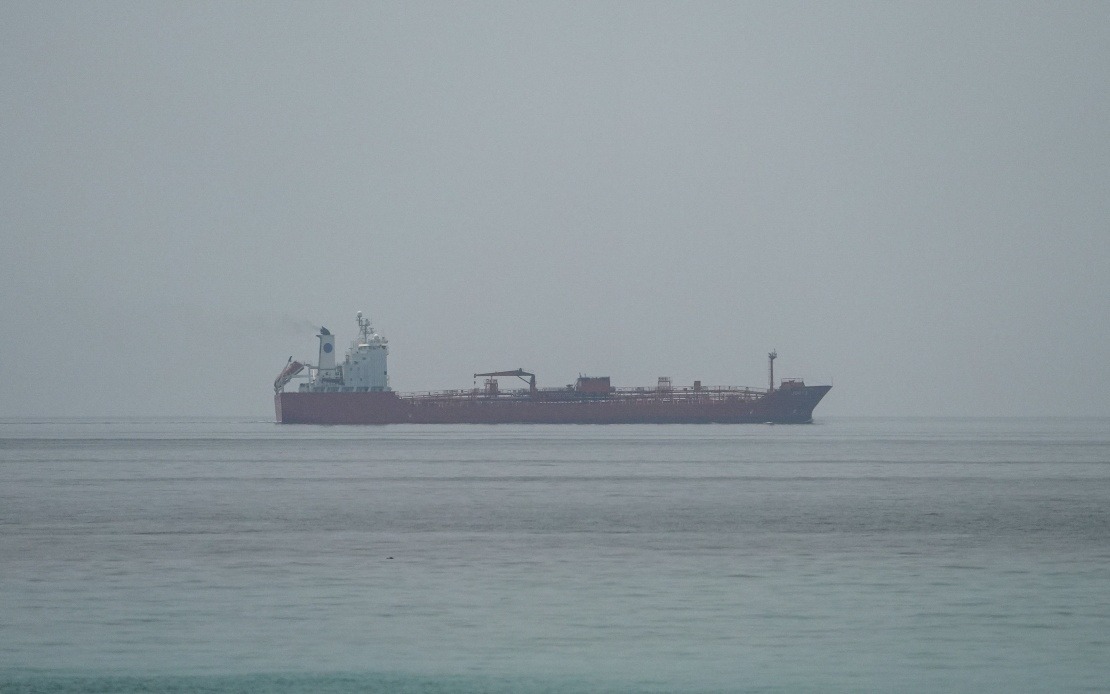
Oman has thrown its weight behind the recently concluded memorandum of understanding between Iran and the United States, with Muscat's foreign ministry using a high-level Gulf Cooperation Council meeting in Bahrain to underscore the accord's potential to stabilise one of the world's most strategically vital maritime corridors. The endorsement carries particular weight given Oman's geographical position and diplomatic history as a facilitator in regional disputes, positioning the sultanate as a key stakeholder in maintaining the integrity of the Strait of Hormuz.
Omani Foreign Minister Badr Albusaidi articulated his country's position during the joint ministerial gathering between the GCC and the United States, emphasising that Oman's status as a coastal state bordering the strait imposes a special obligation to champion security measures aligned with established international maritime law and the UN Convention on the Law of the Sea. This framing reflects Muscat's traditional diplomatic approach of anchoring its regional engagement within recognised legal frameworks, thereby lending legitimacy to its advocacy for the accord while distancing itself from any perception of partisan alignment.
Crucially, Albusaidi made explicit commitments regarding future governance arrangements for the strategic waterway. He stated unequivocally that any forthcoming frameworks affecting the Strait of Hormuz would not incorporate toll or transit fee mechanisms, reaffirming Oman's commitment to preserving the corridor as a freely accessible conduit for international commerce and energy transport. This declaration holds particular resonance for Southeast Asian nations, especially Malaysia and Singapore, whose economies depend heavily on unobstructed passage through similar chokepoints and whose shipping industries would suffer measurably from any imposed tariffs on transit.
The agreement itself represents the culmination of intensive mediation efforts by Pakistan, entering force on June 18 following electronic signatures from Iranian President Masoud Pezeshkian and US President Donald Trump. The 14-point understanding addresses multiple dimensions of regional conflict, encompassing provisions for cessation of hostilities across multiple theatres, reopening of the Strait of Hormuz, and removal of the US naval blockade that has constrained Iranian maritime commerce since the breakdown of previous diplomatic arrangements.
The timing of Oman's public backing reflects broader efforts by GCC states to stabilise the regional environment following months of escalating military exchanges. The crisis intensity peaked in late February when coordinated US and Israeli strikes on Iranian targets precipitated retaliatory Iranian attacks against Israel and regional locations housing American military installations. These tit-for-tat operations had raised speculation about potentially wider military confrontations and prompted international anxiety about disruptions to energy supplies and global trade routes.
For Malaysian policymakers and business leaders, Oman's commitment to fee-free Hormuz transit carries direct implications. Approximately one-third of seaborne traded oil transits the strait, making it marginally more critical to global energy security than the Strait of Malacca, through which Malaysian commerce substantially flows. Any destabilisation or imposition of toll arrangements in the Persian Gulf route would inevitably ripple through regional energy pricing and shipping costs, affecting Malaysia's manufacturing competitiveness and import bills.
The GCC-US dialogue mechanism has evolved into a regular fixture for coordinating responses to developments across West Asia, reflecting Washington's sustained strategic commitment to the Gulf region despite periodic oscillations in diplomatic engagement. These consultations encompass not merely security matters but also political coordination and economic partnership frameworks, positioning the grouping as a primary vehicle for translating geopolitical understanding into practical arrangements.
Oman's particular role in this equation merits consideration. Unlike some GCC members whose positions fluctuate more visibly with changing administrations or regional alignments, Muscat has cultivated a reputation for consistent diplomatic engagement across sectarian and political divides. The sultanate maintains cordial relations with Iran despite GCC tensions with Tehran, positions it uniquely as a bridge actor capable of translating agreements into durable implementation mechanisms.
The commitment to maintaining free passage through the Strait of Hormuz without revenue extraction represents a significant diplomatic concession by Iran, which had previously explored alternative governance structures that might have generated state revenues. Oman's public affirmation of this principle serves to lock in these understandings by making them a matter of GCC-wide commitment rather than bilateral Iranian-American arrangements subject to unilateral reinterpretation.
For Southeast Asian nations monitoring regional developments, Oman's stance provides reassurance that major powers and regional stakeholders remain committed to rules-based maritime governance principles. This alignment with international maritime law conventions strengthens precedents that could constrain future attempts by any actor to weaponise chokepoint control for economic extraction. The explicit invocation of UN maritime law frameworks suggests that any future disputes will be adjudicated within established legal mechanisms rather than through coercive power politics.
The broader implications extend to supply chain stability and energy security across the Indo-Pacific region. Malaysia, as both a significant oil importer and a maritime trading nation, has vested interests in both maintaining Hormuz access and ensuring that precedents for passage rights remain intact. Oman's declaratory position thus contributes to the regional security architecture that underpins Malaysian economic interests.
Looking forward, implementation of the Iran-US accord will require sustained diplomatic attention from Oman and other GCC states to manage the inevitable tensions and technical complications that arise when major powers transition from confrontation to negotiated coexistence. Oman's early and emphatic backing suggests Muscat intends to remain engaged in this process, positioning itself as a guarantor of the arrangements rather than a passive observer.

