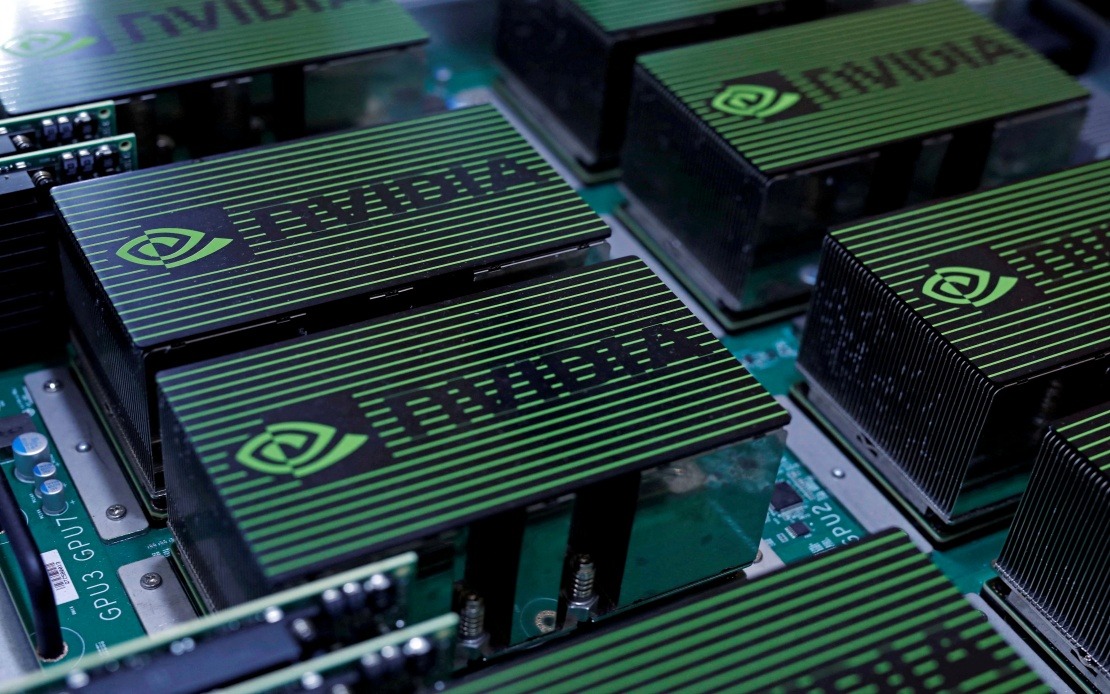
Nvidia's roster of authorised customers for cutting-edge artificial intelligence processors across Asia has contracted dramatically in recent months, with the American technology company slashing its buyer list by more than half. The development reflects escalating efforts by Washington to prevent sophisticated AI hardware from reaching Chinese entities through alternative supply routes, as existing direct export bans have proven insufficient to stem the flow.
The semiconductor firm implemented more rigorous customer vetting procedures across key regional hubs including Singapore, Malaysia, and Japan, according to reporting on the regulatory shift. The stricter authentication process has resulted in the removal of many previously approved purchasers from the company's distribution network, though Nvidia has indicated that these entities may address deficiencies in their applications and resubmit for approval.
Among those caught in the widened net are numerous neocloud operators—specialised service providers that furnish computational infrastructure specifically optimised for artificial intelligence model training and deployment. These intermediate cloud platforms have become critical infrastructure layers in Asia's rapidly expanding AI ecosystem, offering researchers and enterprises access to expensive processing capabilities without requiring direct hardware ownership. Their sudden exclusion from Nvidia's sales channels threatens to disrupt emerging AI development initiatives across the region.
The timing of Nvidia's customer purge coincides with Washington's expanding campaign to restrict Beijing's access to advanced semiconductor technology. Previous blanket bans on certain chip architectures proved inadequate as foreign middlemen and cloud intermediaries continued facilitating access to embargo-listed products. By tightening downstream customer controls rather than relying solely on export category restrictions, US policymakers hope to create multiple enforcement layers that make circumvention costlier and riskier.
Malaysia and its neighbours occupy an increasingly delicate position within this technological bifurcation. As regional economies seek to develop homegrown AI capabilities and attract foreign investment in semiconductor-adjacent industries, heavy-handed export enforcement creates friction. Malaysian cloud providers and AI startups may discover themselves unable to procure essential components through legitimate channels, potentially pushing them toward workarounds or alternative suppliers outside the American ecosystem.
The financial implications for affected Asian companies are substantial. Neocloud platforms operate on razor-thin margins, leveraging capital-intensive infrastructure to provide services at competitive rates. Sudden procurement restrictions force costly operational restructuring—migrating to alternative processors, renegotiating supplier relationships, or relocating computational operations to jurisdictions with fewer restrictions. These transition costs disproportionately burden smaller operators lacking the capital reserves of multinational technology corporations.
Nvidia's implementation of regional screening represents a strategic pivot from previous policy frameworks. Rather than blanket prohibitions on specific technologies or destination countries, the company now evaluates individual customer legitimacy through criteria that remain opaque to the broader market. This discretionary approach grants Nvidia considerable leverage over regional business ecosystems while simultaneously creating uncertainty for companies seeking to navigate compliance obligations.
The broader geopolitical dimension reflects deepening technology decoupling between American-led and Chinese-led ecosystems. Southeast Asia has historically benefited from positioning itself as a neutral zone where both systems coexist, but such middle-ground accommodation becomes increasingly untenable as technology bifurcation accelerates. Companies operating across both spheres face mounting pressure to choose allegiances, a choice many regional enterprises are unprepared to make.
Regulatory observers suggest the customer list reductions signal Washington's willingness to leverage American companies' market dominance to enforce foreign policy objectives directly. Rather than relying purely on government-to-government export controls, policymakers effectively delegate enforcement to private corporations possessing detailed customer knowledge and distribution networks. This approach bypasses traditional diplomatic channels but raises concerns about corporate gatekeeping and market fairness.
For Malaysian policymakers, the development underscores the strategic importance of cultivating domestic semiconductor capabilities and reducing dependence on American-controlled supply chains. While immediate alternatives to Nvidia's products remain limited, long-term economic resilience demands reducing vulnerability to extraterritorial export enforcement. Regional cooperation on AI infrastructure and semiconductor development might offer partial insulation against such disruptions, though comprehensive independence remains decades away.
The situation also illustrates how technology policy intersects with trade relationships and investment flows. Companies reassessing their Asian operations may shift resources toward jurisdictions offering more predictable regulatory environments or alternative sourcing options. This calculus could reshape regional competitive dynamics, potentially accelerating investment flows toward Southeast Asian nations perceived as geopolitically aligned with Washington.

