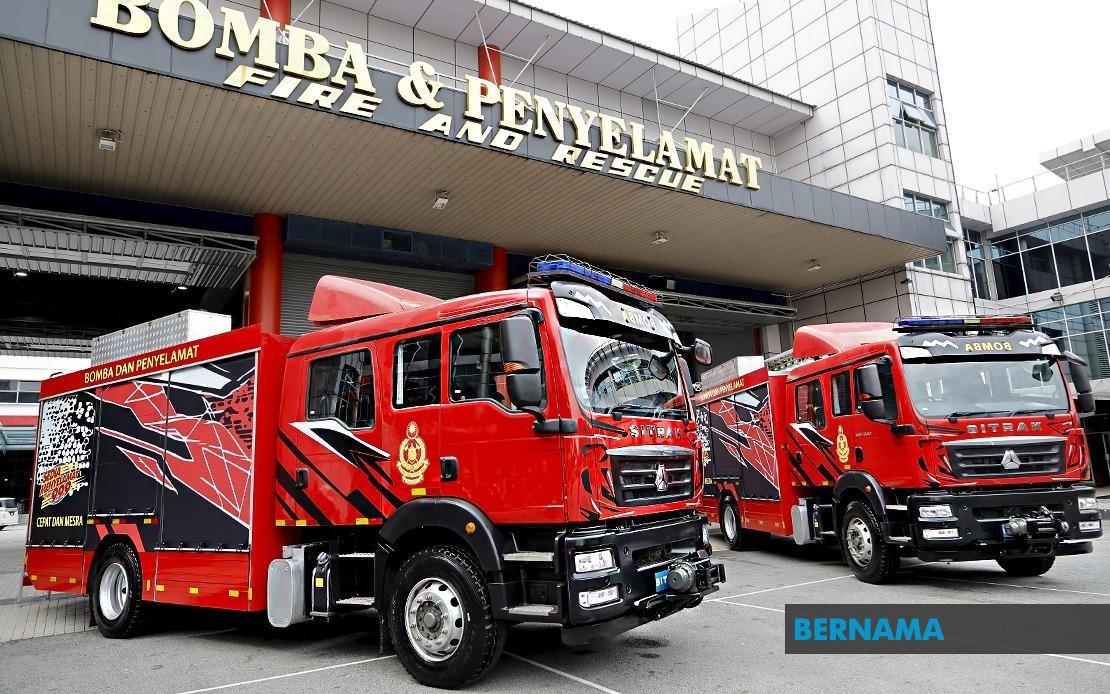
A 5.7 magnitude earthquake centred roughly 55 kilometres southwest of Langsa in North Sumatra triggered alert responses across the greater Kuala Lumpur area on Monday afternoon, with Malaysia's Fire and Rescue Department (JBPM) attending to multiple reports of tremors felt in commercial and institutional buildings. The seismic event, registered at 12.18 pm, was sufficiently powerful to be detected across the Strait of Malacca and into the densely populated Selangor region, though Malaysian authorities reported no injuries or significant structural damage from the incident.
The JBPM's Selangor division fielded three formal reports within minutes of the tremor, beginning with a call concerning the Kajang Municipal Council building at 12.31 pm. A second emergency notification arrived shortly after regarding INTI International College Subang on Jalan SS15 at 12.40 pm, prompting the despatch of inspection teams from both the Kajang and Subang Jaya fire stations. According to Selangor JBPM assistant director of operations Ashrul Riezal Asbar, both teams completed comprehensive structural assessments and determined that neither facility had sustained cracks or other damage that would compromise safety.
Parallel to the Selangor responses, the Kuala Lumpur division of JBPM received an emergency call at 12.32 pm about tremors experienced at Menara B2 Maju Link, situated along Jalan Lingkaran Tengah 2 in Bandar Tasik Selatan. A team dispatched from the Sungai Besi station discovered that building occupants had independently evacuated to designated assembly areas out of an abundance of caution. The tremor's duration—roughly 15 seconds—was sufficient to prompt this protective behaviour among office workers, though subsequent inspection revealed the structure remained entirely intact and suitable for continued occupation. Officials stated that no cracks or architectural irregularities were detected during their thorough examination.
The earthquake's impact on the Klang Valley demonstrates how seismic activity in the broader region, though originating outside Malaysia, can generate measurable consequences for the country's urban infrastructure and daily operations. North Sumatra has long been situated along the Sunda Strait subduction zone, a tectonically active region prone to significant earthquakes. The 5.7 magnitude reading places this event in the moderate range—sufficiently strong to be felt across considerable distances but typically not destructive in properly constructed modern buildings. Malaysia's building codes, which have been progressively strengthened over recent decades, appear to have served their intended purpose in protecting the three structures assessed on Monday.
Social media platforms, particularly Threads, became a real-time information nexus as residents across the Shah Alam and surrounding districts sought to understand and contextualize the tremor. User 'nabilaishah', located in Section 26, posted brief observations about the shaking, while another user, 'nadiaxzailan', described initially attributing the vibrations to workplace circumstances before consulting colleagues and online sources to confirm an earthquake had occurred. This pattern reflects how contemporary Malaysians leverage digital platforms to validate unusual physical sensations and obtain rapid confirmation of natural phenomena. The absence of widespread panic or confusion in social media responses suggests public familiarity with earthquake procedures and general confidence in building safety standards.
The JBPM's coordinated response across three separate incidents within an extended urban area underscores the department's operational readiness and the effectiveness of Malaysia's emergency dispatch infrastructure. By deploying teams from multiple stations and conducting thorough structural evaluations at each location within a compressed timeframe, the department provided both objective safety verification and public reassurance. The consistency of findings—no structural damage across all three buildings—likely reflects both modern construction standards and the moderate intensity of the earthquake at Malaysian distances.
From a regional perspective, this incident highlights the interconnected seismic environment of Southeast Asia. Sumatra's position at the convergence of the Indo-Australian and Eurasian tectonic plates creates conditions for frequent earthquake activity, with magnitude variations ranging from minor tremors to major seismic events. Malaysia, though positioned further from the primary subduction zone, remains within the sphere of influence for significant tremors. The country's early-warning capabilities and rapid institutional response mechanisms continue to be tested by such events, providing ongoing opportunities to refine emergency protocols and infrastructure resilience standards.
The incident also illustrates the importance of building design and occupational safety culture in Malaysia's commercial sector. The spontaneous evacuation decision by Menara B2 Maju Link's occupants reflected appropriate preparedness awareness, while the subsequent all-clear determination by professional inspectors demonstrated the complementary relationship between individual vigilance and institutional authority. Such coordination between public response and official verification is essential in maintaining public confidence during natural events that generate uncertainty and require informed decision-making.
Looking forward, Monday's earthquake serves as a practical reminder of the necessity for continued investment in seismic monitoring infrastructure, building code compliance, and public education regarding earthquake safety. Malaysia's relative geographic distance from major subduction zones provides some protection compared to Indonesia's experience with larger seismic events, yet the Klang Valley's concentration of high-rise commercial buildings and dense residential areas means that even moderate tremors warrant immediate professional assessment. The JBPM's demonstrated capacity to mobilize teams, conduct inspections, and communicate findings transparently reinforces the systems that underpin public safety in Malaysia's growing metropolitan areas.

