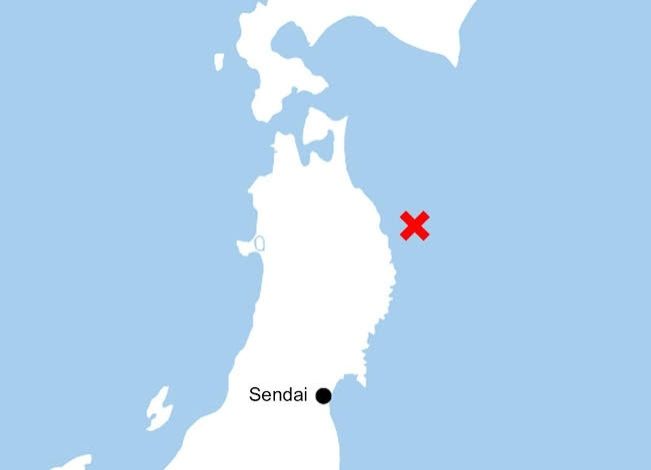
A powerful 7.2-magnitude earthquake jolted northern Japan on Thursday (June 25), unsettling residents across a vast region but causing minimal structural damage and no reported fatalities. The tremor, which occurred at 7:30 am local time approximately 44 kilometres beneath the seabed off Iwate prefecture on Honshu's eastern coast, was felt as far away as Tokyo, several hundred kilometres to the south. The Japan Meteorological Agency (JMA) initially recorded the magnitude as 6.9 before revising the figure upward to 7.2, reflecting the considerable energy released by the underwater rupture. Fortunately, authorities found no grounds to issue a tsunami warning, sparing the region from the additional hazards that could have accompanied such a natural disaster.
The real-world impact across affected communities proved remarkably contained despite the earthquake's impressive magnitude. Television footage captured the characteristic indoor chaos familiar to seismic zones: cupboards disgorging their contents, shelves ejecting goods, and personal items scattered across floors in homes and retail establishments. Mutsumi Shimohata, a 61-year-old employee at a food processing company in Hashikami, Aomori prefecture, experienced the quake firsthand and reported that her household sustained nothing more than a fallen picture frame. What struck her most was the duration and the immediacy of the smartphone alarm system that alerted residents to the danger, reflecting Japan's sophisticated early warning infrastructure. Her workplace proved less fortunate, however, with an automatic door mechanism failing to function and portions of the office ceiling collapsing, prompting management to order employees to remain home on standby.
The earthquake triggered a cascade of minor operational disruptions across the affected prefectures. Some shinkansen bullet train services were suspended as a precautionary measure, a standard response in Japan's railway system when seismic activity occurs. Local schools also took preventive action: a primary school principal in Hashikami informed NHK that classes were temporarily halted following the quake, illustrating how thoroughly earthquake safety protocols permeate Japanese society. Emergency services received at least four distress calls in the Hashikami and Hachinohe area, with reports indicating that individuals became trapped in an elevator, a not uncommon consequence of sudden seismic movement. Additionally, responders dealt with reports of doors jamming and a tanker truck overturning, creating scattered cleanup tasks for authorities but nothing approaching a disaster scenario.
Government officials moved quickly to assess the situation and coordinate response efforts. Minoru Kihara, the chief government spokesman, stated that authorities had found no evidence of human casualties at that stage but pledged to continue monitoring for any emerging information about structural damage or injuries. Prime Minister Sanae Takaichi issued directives instructing all relevant ministries and government agencies to maintain close coordination with prefectural and municipal authorities, ensuring that any emerging problems would be promptly addressed. Through her official X account, Takaichi urged residents in heavily affected areas to remain vigilant regarding the possibility of powerful aftershocks, a legitimate concern given Japan's seismic patterns. The Nuclear Regulation Authority reported no abnormalities at nuclear facilities in the region, providing reassurance to residents mindful of Japan's fraught nuclear safety history.
In Aomori prefecture, the tremor registered as upper six on Japan's seven-level Shindo intensity scale, a measurement focused on human perception and structural effects rather than purely scientific magnitude. At this intensity level, people typically cannot stand without assistance and may be forcibly thrown to the ground, while unsecured furniture tends to overturn and windows are likely to fracture. Despite these potentially severe effects, the region escaped with minimal harm, suggesting either that building construction standards proved adequate to the challenge or that the precise location and depth of the earthquake reduced surface-level damage. NHK footage of Hachinohe city showed traffic moving normally with traffic lights functioning correctly, indicating that basic urban infrastructure had weathered the event successfully.
Japan's position as one of Earth's most seismically active regions reflects its geological reality: the island nation sits atop a convergent boundary where four major tectonic plates meet along the western margin of the Pacific Ring of Fire. This configuration guarantees that the archipelago, inhabited by approximately 125 million people, will experience constant low-level seismic activity alongside occasional major earthquakes. The JMA records hundreds of earthquakes annually across Japanese territory, and Japan alone accounts for roughly 18 per cent of the world's total seismic energy release, a striking concentration of planetary geological activity. Most of these earthquakes register as minor tremors that cause no discernible damage, though their frequency and the nation's susceptibility to major quakes have shaped every aspect of Japanese engineering and emergency planning.
Memories of catastrophic earthquakes weigh heavily on Japanese consciousness and policy. The 9.0-magnitude Tōhoku earthquake of March 2011 remains a watershed moment in national disaster history. That undersea rupture triggered a tsunami that killed or left missing approximately 18,500 people and caused the catastrophic failure of the Fukushima Daiichi nuclear power plant, an event that fundamentally altered Japan's approach to nuclear energy and disaster preparedness. More recently, on April 20, 2024, a 7.7-magnitude earthquake struck northern Japan, injuring at least ten people and shaking large buildings in Tokyo enough to prompt widespread concern. That April event prompted the Nuclear Regulation Authority and meteorological authorities to issue a special advisory warning of elevated risk for earthquakes measuring 8.0 magnitude or stronger, a warning that persisted for one week before being lifted.
Thursday's earthquake arrives in a context of heightened seismic vigilance across Japan. The April warning, though temporary, underscored ongoing scientific uncertainty about earthquake timing and clustering, phenomena that Japanese seismologists continue to study intensively. The fact that this 7.2-magnitude event occurred without the catastrophic consequences that might theoretically accompany such power reflects the cumulative success of decades of engineering advancement, rigorous building code enforcement, and public education about earthquake safety procedures. However, it also demonstrates that even substantial earthquakes in well-prepared nations need not result in deaths or major damage if geological and structural conditions align favourably. For regional observers in Southeast Asia, Japan's experience illustrates both the immense challenges posed by seismic activity and the possibility of minimising human suffering through comprehensive preparedness systems.

